As many Hot Air readers know, I am planning an Anti-Communist Film Festival for 2026. We have a budget, a theater we want to rent, and are arranging licensing through folks in Hollywood.
Before turning to the nuts and bolts of putting on the festival, I want to share with readers what many friends have shared with me in private. We want the Anti-Communist Film Festival to be an annual event. We want it to grow, attract young filmmakers and celebrities, to become a celebrated part of American culture. We want it to be artistic and fun and have liberals attend.
The reaction to the idea for the festival has been great, but I’m still not sure people realize how powerful a force this could become in inoculating young people against a poisonous and destructive false god. As a friend of mine who called the other day said, “These are movies. They get into the soul and the subconscious like nothing else. God bless the conservatives who are working at think tanks and writing books and giving lectures, but none of that will come close to the effect of this. Nothing.”
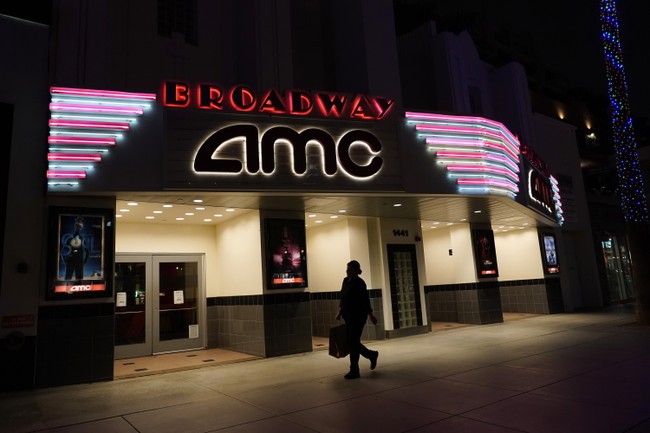
Movies change lives. In the Heat of the Night taught me about racial tolerance. My father took us to the Star Wars in 1977 when I was twelve. I worked in a movie theater in Maryland when I was in college, the Bethesda Cinema and Drafthouse. The Drafthouse had originally been the Bethesda Theatre. It was designed and built in 1938 by the firm of John Eberson, dean of American Theatre Architects. The theater was designed in the historic Streamline Moderne style, and still has some of the art deco illustrations — spinning stars, planets, suns — on the walls.
In 1983, the Bethesda reopened as the Bethesda Cinema and Drafthouse. We featured “second-run” movies, films that were no longer in wide release but had yet to come out on VHS video. The interior of the Drafthouse had been reconfigured, the old rows of seats removed and replaced with round tables and low, comfortable swiveling chairs. The Drafthouse served beer, wine, and pub food – pizza, nachos, and sandwiches. I saw hundreds of films over and over again. Like Quentin Tarantino working in the video store, I learned about movies by watching movies. I understand good music cues and the importance of good editing. I still remember seeing Blood Simple, the Cohen Brothers’ first film, and Back to School, Top Gun, Blue Velvet, Broadcast News, Revenge of the Nerds, Aliens, Little Shop of Horrors, Joe Versus the Volcano, Harold and Maude, To Live and Die in L.A., Big Trouble in Little China, and Beverly Hills Cop, among others. I was a bartender and worked the popcorn machine, gingerly walked around the wagon-wheel-sized platters where the film spun out in the projector booth (really more of a large room), and once mounted a new marquee that only required two letters: F/X — a great 80s thriller. Once I witnessed a film actually snap during a showing — American Anthem, the cheesy 1986 vehicle for gymnast Mitch Gaylord. When the film broke, the screen flickered and then went blank, and the audience applauded.
I saw people laugh, fall in love, and have their beliefs challenged or reaffirmed. In her poetry book 4:30 Movie, Donna Masini captures the spiritual magic of going to a movie:
The Lights Go Down at the Angelika
and you press into the dark, imagine
the stranger two rows back, that fragile
chance you’ll forget in the second trailer.Now it’s quiet, still
this burden of being watcher and screen
and what floats across it–light pouring outits time and necklines and train wrecks.
What a relief to yield to the EXIT
sign red “I” blinking like a candle.Soon the enormous figures moving
across rooms, the emphatic narrative
arcs. (There’s the thrum of the subway,its engine of extras.) Here now
the beginning of trivia tests. Warning puppets
with brown-bag faces and fringy hair.You’re almost here. But what you want
is the after. How yourself you are now
walking into the night, full moon over Houston Street,at the bright fruit stand touching the yellow
mums. Here you are: Woman with Cilantro
listening to the rattle of the wrap,the paper sound paper makes after you
have heard movie paper. Apples are more apples.
Paper more paper. Cilantro, its sweaty green self.
Masini understands that movies are not only escapism, but a heightened close-up of our spiritual lives. In “The Blob” she remembers her pregnant mother and how the condition found a matinee analog in a horror movie classic:
I’m a blob, our mother used to say, pregnant again with that
blobby wobble. We had siblings. We knew how a blob became a baby, the mother bulb
oozing out another child, and now there are fourand it’s Steve McQueen Week on the 4:30 Movie, The Blob
ending with its ominous question. The End? This was before
I understood irony. We’d seen the drunk old manprod the ooze and disappear, watched it grow and roll, a little dog
barking its warning … barking, barking, then the barking stops
and the blob rolls on, insistent, engulfing the doctor.
We want to change ideas and souls.
Editor’s note: We now have the room to run syndicated commentary by some of our favorite and most provocative thinkers on the Right. That only happens because of the support of our readers, who ensure that we have the resources to keep providing an independent platform and independent voices in a sea of Protection Racket Media domination.
Help us maintain that fight! Use the promo code MERRY to get 74% off your VIP membership!