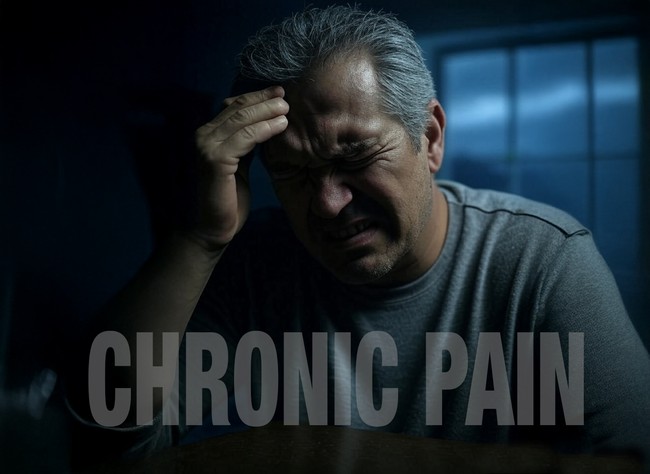
Let me tell you something you’ve long known: there was a change in American medicine regarding patients living with chronic pain, and it didn’t happen through any kind of a vote.
In 2016, the CDC released prescribing guidelines for opioids. Dr. Debra Houry later clarified that those recommendations were never intended to be rigid limits, simply meant to guide clinical judgment, not replace it.
Unfortunately, those guidelines didn’t stay suggestions; they systematically hardened.
State medical boards, insurers, and pharmacy chains began treating dosage thresholds as fixed ceilings. The language of “recommendation” became the reality of “denial.”
Three authors of the Centers for Disease Control and Prevention’s (CDC) controversial 2016 guideline on opioid prescribing now say their advice has been misused in ways that can harm patients.
These misapplications “include inflexible application of recommended dosage and duration thresholds and policies that encourage hard limits and abrupt tapering of drug dosages, resulting in sudden opioid discontinuation or dismissal of patients from a physician’s practice,” wrote the CDC’s Deborah Dowell, MD, MPH, Tamara Haegerich, PhD, and Roger Chou, MD, in a New England Journal of Medicine essay, “No Shortcuts to Safer Opioid Prescribing.”
Why it matters for patients and physicians: Patrice A. Harris, MD, President-elect of the AMA and chair of the AMA Opioid Task Force, noted in response that the CDC guideline recommendations have been “wrongly treated as hard-and-fast rules, leaving physicians unable to offer the best care for their patients.”
The guideline authors’ essay “underscores that patients with acute or chronic pain can benefit from taking prescription opioid analgesics at doses that may be greater than the guidelines or thresholds” outlined by government agencies, payers, pharmacy chains, pharmacy benefit managers (PBMs) or other bodies, she added.
Physicians who exceeded those numbers faced audits, scrutiny, and, in some cases, threats to their licenses. What started as guidance became something far more binding in practice.
Dr. Roger Chou helped shape earlier federal pain guidance and later acknowledged the risks of rigid interpretation. Clinicians were supposed to tailor care. Instead, many felt boxed in by numbers that left little room for individual need.
ROGER CHOU: The guidelines have always been meant to be just that. They’re guidance. They’re not regulations, you know? They’re not laws.
STONE: But many states did use the guidelines as the basis for new prescribing laws and regulations. Some of these set caps on how much doctors could prescribe and for how many days.
CHOU: The guideline never said that you can’t prescribe doses higher than X amount. It says, make an individualized decision, but understand the risks and benefits.
STONE: But that’s not what many doctors did.
STEFAN KERTESZ: Something really harmful happened.
Unsurprisingly, the effects didn’t stay confined to policy: they reached exam rooms.
Doctors began practicing cautiously, often lowering doses or declining new chronic pain patients altogether. Not because they lacked compassion or skill, but because the cost of being wrong had grown too high. A prescribing decision no longer stood as a medical judgment alone; it carried legal, financial, and professional consequences.
That was a shift that pain patients immediately felt.
Long-term treatment plans changed unexpectedly, stable regimens were reduced or cut off, appeals dragged on, and pharmacies questioned prescriptions that once moved without issue.
What had been a conversation between doctor and patient became a process involving multiple layers of approval.
Dr. Andrew Kolodny has argued for tighter prescribing to address addiction risk, while Dr. Stefan Kertesz has warned that forced tapering and rigid limits can hurt patients who rely on consistent pain control. Both realities exist at the same time, but the system often treats one as the only priority.
For course correction, the CDC, in 2022, updated its guidance. Dr. Christopher Jones emphasized flexibility and warned against strict dose thresholds. The agency made clear that patient-centered care should lead every decision.
By then, however, the system had already adapted to the earlier model. Insurance policies, pharmacy protocols, and institutional rules don’t shift overnight. Many still reflect the older, stricter interpretation.
For patients, that meant the update exists on paper while daily care continues under older assumptions. What we ended up with is a kind of shadow policy.
No law was passed that set universal limits on pain treatment, and there was no national vote that decided how much relief a person could receive. Yet the outcome feels the same: a framework that began as advice now functions as a boundary, enforced through systems that reward caution and penalize deviation.
That shift reshaped responsibilities.
Doctors once held primary authority over treatment decisions. Now they work within constraints set by institutions that never examine the patient sitting in front of them. Or, more importantly, institutions are creating a system where they would actually see a patient. The closer a case gets to complexity, the more those constraints tighten.
Funny enough, pain hasn’t disappeared; it’s still there in exam rooms and homes where daily life has narrowed. The difference is how the system responds to it, where relief now depends not only on diagnosis but also on whether a treatment fits inside rules that were never meant to be rules.
That structure wasn’t created by legislation; it built itself, one policy decision at a time.
I Want to Hear From You
These chronic pain columns exist because people are willing to speak honestly in a system that often punishes honesty.
Read My Chronic Pain Series here.
If you’re living with chronic pain and have had to learn to stay quiet just to survive care, your experience matters. Whether your story is long or short, clinical or personal, it helps expose what life inside the system actually looks like.
If you choose to share, you grant PJ Media permission to edit, publish, and use your submission without compensation. Any edits will be limited to grammar and clarity, never substance or meaning.
To submit, visit the Contact Us page and put “Dave Manney: Chronic Pain” in the subject line.
You may request anonymity or use a first name only. A few honest paragraphs about your condition, care, and how your life has been reshaped are more than enough.
Remember: Silence protects broken systems; your voice helps challenge them.
There’s a larger story here that doesn’t get told often enough. Policy doesn’t always arrive with a vote or a headline. Occasionally it forms in layers, spreads through systems, and settles into place before anyone realizes what changed.
If you want deeper reporting that connects those dots and keeps pressure where it belongs, consider joining PJ Media VIP—you get a strong discount by using promo code FIGHT at checkout.