Mail ordering chicks or picking them up at the feed store is not always the best solution for several reasons. The chicken industry has a dark side.
Note that the outcome is strongly dependent on the individual birds, the feed store location or the hatchery the store contracted. Many consumers have wonderful experiences and others have frustrating ones depending on whether or not the feed store or hatchery is careful.
Red flags for feed store chicks
1. Some feed store chicks have a “pasty butt” problem.
“Pasty butt” is life-threatening because it blocks chicks’ digestive tracts and puts the chick in a position where it cannot absorb its food, because it cannot defecate. The caretaker needs to wipe the poop off the chick’s bottom every day.
“Pasty butt” chicks sometimes have less “baby fat” than others and can be tinier. They could be considered the runts of the litter.
Unfortunately, “pasty butt” chicks cannot always be distinguished from their healthy siblings without an examination for feces uncomfortably stuck close to their tails. Depending on the specific feed store location and breeds of chicks, “pasty butt” can be a fairly common issue.
2. Feed store chicks could have had a stressful mail order journey before arrival.
Petting and cuddling chicks is beneficial to their development. The mother hen is affectionate to them and they reciprocate by lightly pecking and climbing on her. Chicks also bond with humans because the birds attach to them as a “mother figure” when they are in the imprinting window of 1-5 days, and almost all chicks consider social interaction with a “mother figure” or each other comforting. Calm chicks will make these happy peeps.
However, it is unlikely that feed store chicks are talked to or have fresh food and water during the mail order trip en route to the store. Many feed store chicks eat and drink soon after they get there, likely because they went 1-2 days without eating. There is not an excuse to mail chicks without food or water, according to research, as their yolk sacs are just a short-term “supplement” to assist the chicks in obtaining vitamins when eating solid food for the first time.
Further, feed store chicks spend a significant part of the day sleeping because the mail order process made them tired.
Feed store chicks will be in just as much trouble as mail order chicks because the store needed to order them online and have them delivered.
3. Chickens raised by their mothers know how to “be chickens” and turn out mentally and physically healthier than feed store chicks.
Those chickens “instructed” by their mothers may get along better with different flockmates they encounter as the mother seemingly tells them the “dos” and “dont’s.”
The newly hatched chick’s first task, from hatching to a week old, is to remain under its mother’s downy, insulating feathers, which seems easier said than done for an inquisitive chick yearning to explore a big new world, but is a survival tactic for the mother to watch out for birds of prey taking the chicks. After a first attempt to roam around without Mama Hen’s permission, the chick receives a light but firm peck and will likely not go exploring without approval again.
In nature, the chicks learn to eat, drink, and dust-bathe under their mother’s watchful eye. Each chick closely studies the mama hen pecking, scratching, and rolling in the dirt, and imitates her to learn these skills for themselves. “Chicken school” is seldom out of session.
In many cases, chicks can have a strict, non-negotiable bedtime well before sunset, mirroring the adults. The mother leads the chicks to bed herself, which the babies soon imitate. This trains the chick to sleep in sync with the other chickens and may be a “safety in numbers” defense.
Mother-raised roosters can be less likely to become aggressive or abuse their dominance. Mother-raised hens probably also have an easier time fitting in with others, as the mother’s instruction tells hens and roosters what to do and what not to do as they learn in her protective setting. Chicks set up the pecking order between themselves upon reaching 2-3 weeks of age and many hens keep their ranks the same, but the mother is a role model of how to properly interact in the dominance hierarchy; when chicks are behaving too roughly, the mother warns them not to do so with a firm peck.
Chickens raised by their mothers will be physically healthier also.
4. Chicks are crying in incubators.
Hatcheries store thousands of newborn chicks and fertilized eggs in large incubators. Feed stores contact the hatchery to make large orders for “Chick Days” events close to the Easter season, as families frequently use them for gifts.
During several years’ worth of big-name hatchery tour videos dating from the early 2020s to today, there are many chicks sitting in the incubators and audibly making clearly unhappy chirps while the host talks to a guest. Some hatcheries have simply put the chicks in a box upon removing them from the incubator in preparation to deliver mail orders.
This widely-known chick stock sound effect is really of a frightened chick.
Keep in mind that content chicks make quiet “conversational” noises and can be seen roaming the brooder box or scratching for food, but unhappy chicks will chirp very loudly and sit down. Happy chicks will play and explore near their friends, but unhappy chicks might occasionally be away from them.
Red flags for grocery store eggs
1. Untrue language
Egg farms don’t have a lot of legal regulation on how they label the origin points of eggs. As a result, egg manufacturers can dishonestly use labels like “cage-free” or “pasture-raised,” ignoring that their eggs were still produced by stressed and overcrowded hens. The website Nourish Food Club cautions to avoid eggs with these vague labels and instead find labels such as Animal Welfare Approved or Humane Certified, which are more likely to have come from hens that were treated properly.
2. The dark secrets of battery hens
Pullets, meaning hens who are not yet one year old, get their beaks cut or burned off without pain relief in the battery farm environment, says the Mad Turkey Farm. Those beaks are heartlessly cut off to prevent hens from pecking each other, a normal response to high stress and overcrowding.
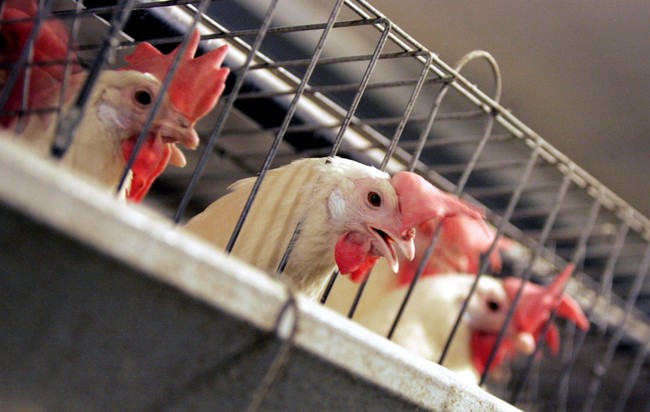
Battery hens are crammed into tiny cages and have little room to move around. Five to eleven hens can be shoved into the same cage. There is no space to roost, fly, or dust bathe, resulting in bone problems like osteoporosis, according to Sentient Media. Hens lose a lot of feathers, making them look like skeletons because they compulsively pluck them off as a response to the stress of battery farm life.
Being deprived of all their natural instincts, battery hens feel fear, anxiety, and depression, says the Humane League. To soothe themselves, these hens mime normal instincts such as nesting. This is called “vacuum nesting” and, like pecking, it is a response to unendurable stress. The Humane League adds that chickens become claustrophobic in tiny spaces.
More than 300 million hens have lived in battery farms and it has been an industry practice since the 1900s. Without the Humane Certified or Animal Welfare Approved labels, it is likely that many eggs found in the grocery store were produced by these sweatshop hens and it is hard to tell what food the hens ate or what environment they lived in.
One more red flag of hatchery mail orders
1. Packing peanuts
Some hatcheries have put extra chicks in the box as “packing peanuts” or filler, to hastily provide a heat source and ensure chicks can be warm for a small portion of the springtime.
Depending on how large the order is, however, the “packing peanuts” might make all the chicks too hot, because the chicks had little room to move around. Up to four chicks can smoothly fit in feed stores’ and hatcheries’ provided boxes.
Enjoying PJ Media’s insightful reporting? Become a VIP! Use promo code FIGHT to get 60% OFF your PJ Media VIP Membership today!