If you spend some time watching how a county line gets redrawn, you’ll learn how small marks make big changes. Shift the boundary by a few feet, then a family votes in a different precinct, pays different taxes, and is represented by different officials.
The U.S. Census works the same way, except the lines shape congressional seats, federal dollars, and political power across the entire country.
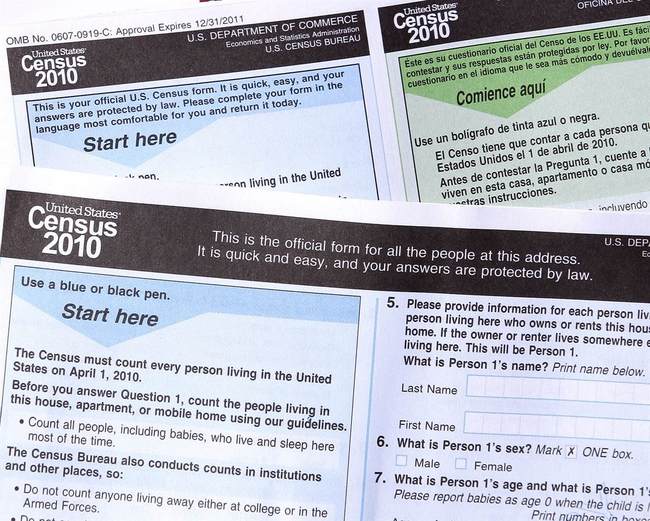
A federal lawsuit moving through the courts could force the U.S. Census Bureau to count only actual people rather than rely on statistical sampling. A ruling may arrive early this year, and the outcome could decide which states gain or lose congressional seats for the next decade.
What the Lawsuit Seeks
On the surface, the case seems simple: calling on actual enumeration during a census, not modeled estimates. Plaintiffs argue that the Census Bureau used statistical tools during the 2020 census that inflated some populations and shrunk others. The legal challenge goes after practices known as group quarters imputation and differential policy.
Leading the lawsuit is Gene Hamilton, serving as Executive Director of America First Legal.
“When the federal government manipulates census data, it manipulates political power,” said Hamilton. “This case is about stopping illegal methods that undermine equal representation and ensuring the next Census complies with the Constitution.”
Sitting at the other table are the U.S. Department of Commerce and the Census Bureau. The lawsuit claims that estimates were used to replace actual headcounts in specific areas, shifting representation without voter consent.
In 2020, the Census Bureau ignored this mandate and instead relied on two deeply flawed methods: Group Quarters Imputation and Differential Privacy.
- Group Quarters Imputation: Fabricated residents at dormitories, nursing homes, and other institutions that were empty on Census Day. In some cases, individuals were even double-counted — once at home and again at facilities they had already left.
- Differential Privacy: Injected statistical errors throughout the Census data, producing negative and illogical values and disproportionate errors that punished rural communities in particular.
The use of these flawed statistical methods violated Article I, Section 2, Clause 3 of the U.S. Constitution, the Fourteenth Amendment, and 13 U.S.C. § 195. AFL’s lawsuit alleges that through these methods, the Census Bureau skewed state redistricting and caused congressional seats to shift, distorting representation in Florida and ultimately altering political power across the country.
Why Numbers Shape Power
Numbers count, pardon the pun. Data from the census determines how many seats a state receives in the U.S. House of Representatives and also drives totals for the Electoral College and the amount of federal funding available.
A minor numerical distortion moves seats from one state to another.
During the 2024 hearings, members of the House Oversight Committee raised concerns about census accuracy. Committee Chairman, Rep. James Comer (R-KY) cited internal Census Bureau documents showing known undercounts in fast-growing states.
Rep. Byron Donalds (R-FL) added his voice to the lawsuit, arguing that Florida lost representation from census miscounts.
Sampling Versus Counting
Statistical sampling uses models to fill gaps instead of door-to-door verification. Sampling, supporters argue, helps count hard-to-reach populations, while critics argue it replaces reality with assumptions.
Adding intentional noise to data sets is a form of differential privacy that protects privacy, preventing individual identification, according to Census officials. The argument against differential privacy is that it distorts totals used for apportionment.
Court rulings have allowed limited imputation but barred sampling for congressional seat allocation, unless authorized by Congress. This lawsuit argues modern methods continually cross that line.
A Quiet Story With Loud Consequences
The public seems unaware of the stakes; debates about the census lack spectacle, but the impact reaches deeper than many headline-grabbing policy fights, where a single seat can swing committee control, shaping budgets, investigations, and legislation.
When estimates replace headcounts, the highest risks lie with quickly growing states, while rural and suburban areas absorb the loss, and urban districts tend to gain from the modeled population boosts.
Once seats change, it’s locked in for ten years.
What Happens If Plaintiffs Win
If the plaintiffs win, it could force stricter census methods for future counts and reopen debates about mid-decade corrections and oversight reforms.
Abandoning statistical tools could lead to a loss of accuracy, one of the warnings from opponents. At the same time, supporters counter that accuracy begins and ends with counting people, rather than adjusting numbers after the fact.
Either way, the decision will shape how political power gets measured long after the courtroom empties.
Final Thoughts
When boundaries move, people aren’t aware of it because they don’t announce themselves. A quiet shift changes who will vote where, gets heard, and holds influence for years.
Census numbers work the same way; when estimates replace people, representation drifts without any debate or consent.
An impending court decision could decide whether future censuses draw firm lines or allow numbers to slide in ways that permanently reshape political power.
PJ Media’s YUGE Christmas and New Year’s sale is on — now at our lowest rate of the year! This huge sale on our VIP Memberships ends on January 1, so make sure you join the club to get our special behind-the-scenes look at the news. Receive 74% off by following this link and using our promo code MERRY74.