The Department of the Air Force’s March 19 decision to correct the records of airmen and guardsmen discharged over the COVID-19 mandate deserves real praise.
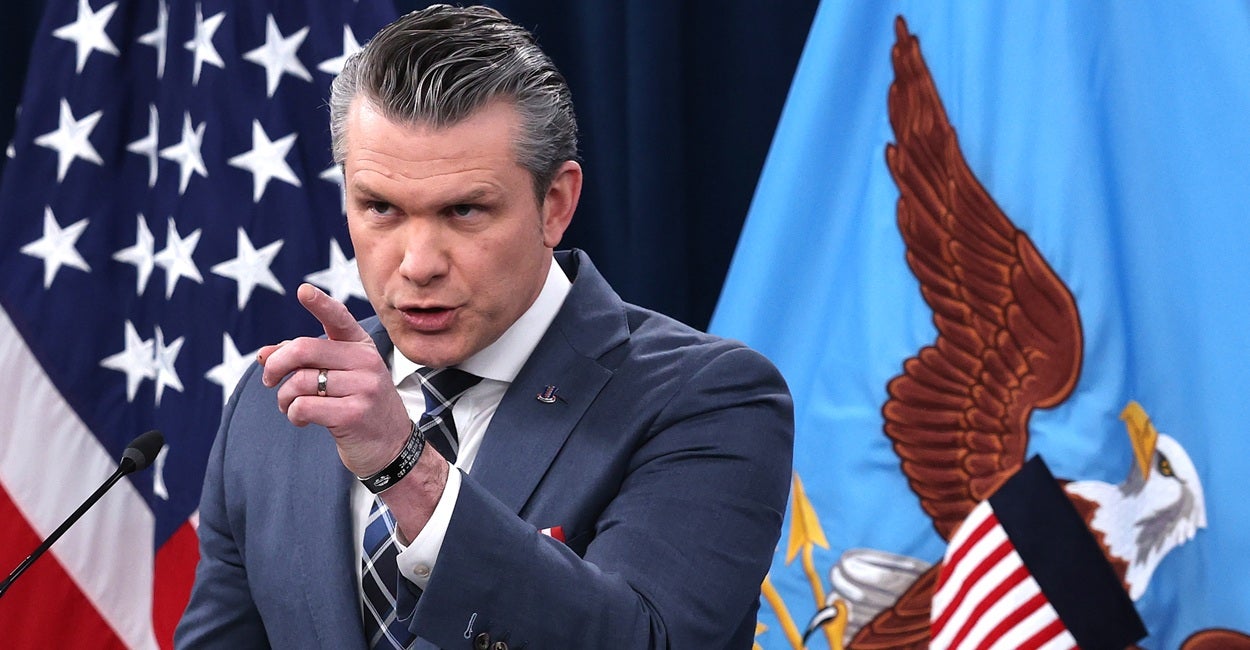
At Secretary of War Pete Hegseth’s directive to conduct a review, the Air Force Review Boards Agency examined and upgraded the records of nearly 600 airmen, changing them to “Honorable” service, restoring reenlistment eligibility, and replacing stigmatizing separation language, such as “for misconduct” and with “Secretarial Authority.”
Many service members, such as the Navy SEALs and other sailors represented by First Liberty Institute in a class action suit, received relief as a result of litigation. But others, such as Navy SEAL Blake Martin—who gave stirring testimony to the Religious Liberty Commission last December—were left with no pensions, marred records, and an unresolved breach of trust.
The Air Force’s review was completed nine months early, and it restores concrete benefits, including eligibility for the VA home loan and the Post-9/11 GI Bill. This update is the beginning of justice.
Many of these service members had sincere religious objections—often grounded in religiously-formed conscience or in opposition to the use of abortion-derived fetal cell lines in testing or development associated with the vaccines. Air Force chaplains frequently confirmed that those beliefs were sincere.
Under the Religious Freedom Restoration Act and under the military’s own regulations, the government may not substantially burden religious exercise unless it can satisfy the most demanding legal test: a compelling interest advanced through the least restrictive means, applied to the individual person before it.
Yet the data shared by the Air Force at the time revealed its own disregard for this standard. In Dec. 2021, the service said it had received more than 8,600 religious accommodation requests and had approved none of them, while it had granted nearly 1,900 medical and administrative exemptions. In ensuing religious liberty litigation, a federal appeals court agreed with airmen that the Air Force had applied a de facto policy of rejecting religious accommodation requests.
The War Department Inspector General effectively confirmed this. In a June 2022 report, the IG found a “trend of generalized assessments rather than the individualized assessment required by Federal law and DoD and Military Service policies.” It found that denial memoranda generally did not reflect a true individualized analysis as required by law.
In one Air Force example, a general officer denied an airman’s request with a one-sentence statement invoking a regulation and nothing more. Worse still, the IG found that general officers were processing an average of 50 appeal denials per day over 90 days—about 12 minutes per package—which it said seemed insufficient for genuine individualized review, especially while those generals were still performing all the other duties of their demanding senior-level roles. In effect, this was a rubber-stamp process disposing of religious claims.
With this discreditable history, the Air Force’s present action should be applauded. These troops did not abandon their duty. They asked their government to respect the very freedoms they had sworn to defend and were met with disregard for their core religious civil liberties.
Still, a full account must note that accountability has lagged behind correction. Gen. Kenneth Wilsbach, who led Pacific Air Forces during the period when command-level authorities were central to this denial structure, is now Chief of Staff of the Air Force. Adm. Daryl Caudle, who as Fleet Forces commander helped defend the Navy’s vaccine regime in court, is now Chief of Naval Operations—even as the Navy, like the Air Force, pursued a policy of near-total denial of religious accommodation requests in 2021-2022. Promotions came; accountability did not.
But last week’s Air Force action is still worth celebrating. It restores honor where honor was wrongly denied. It acknowledges that faithful troops were not the problem. The problem was generals who didn’t follow the law and their own regulations as they should have.
The Air Force has now taken an important step toward making these veterans whole, and the other services will hopefully soon follow. It should be commended for that step—and urged never to forget why it became necessary.
We publish a variety of perspectives. Nothing written here is to be construed as representing the views of The Daily Signal.