Merriam-Webster’s word of the year is “slop,” a term that has come to define a growing resistance to all things artificial intelligence — from massive, energy-hungry data centers to simulated actors and television commercials and an endless stream of online fakery.
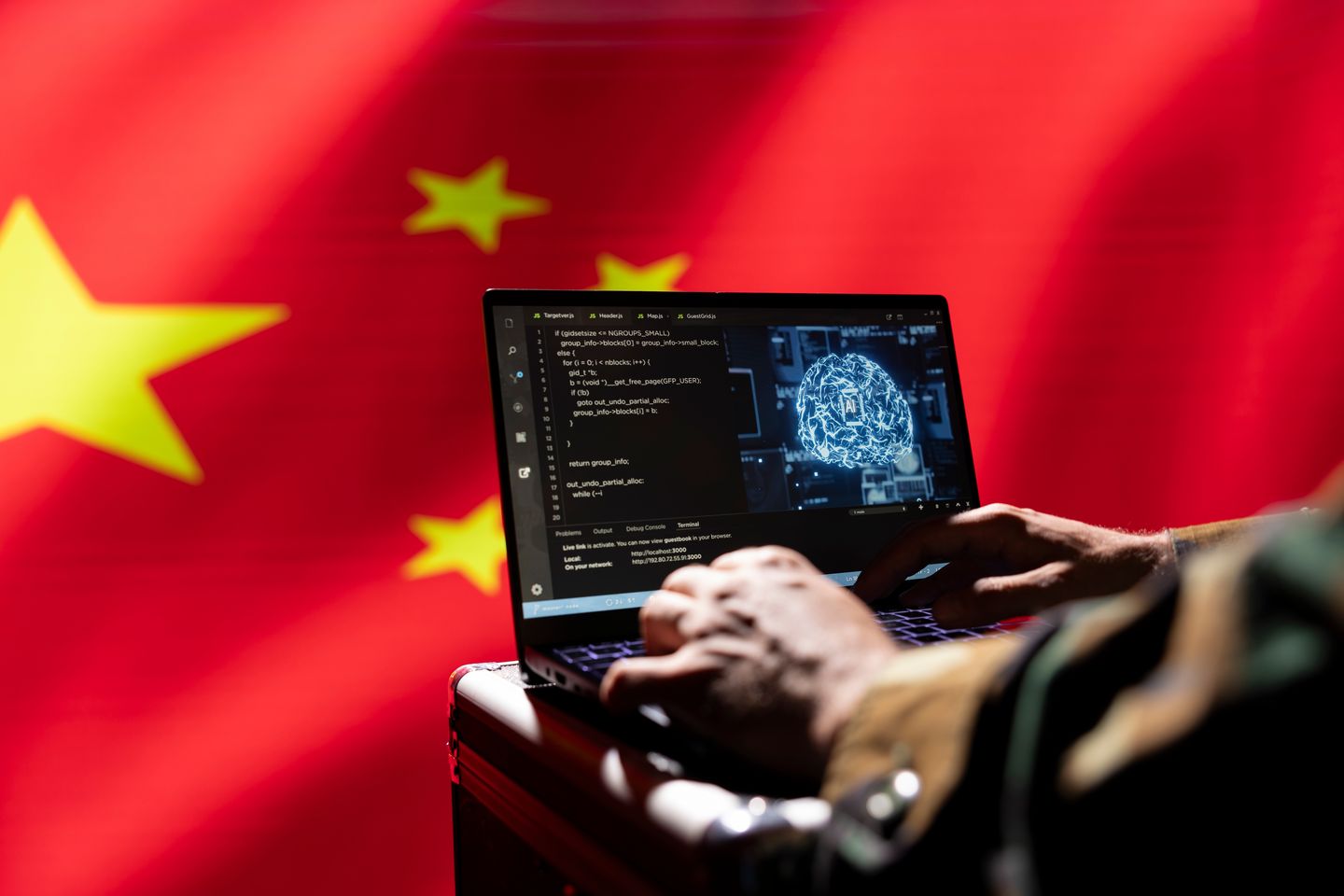
Days after taking office, President Trump issued an executive order aimed at ensuring the United States, and not China, becomes “the global leader in AI.”
His initiative faces an increasing number of Americans who fear AI technology will destroy jobs and degrade society, not to mention drive up energy costs and drain water resources.
“I’m not buying the narrative that they are trying to sell us on this,” Florida Gov. Ron DeSantis said at a recent roundtable on AI development in the Sunshine State.
The public is souring on some of the promises of artificial intelligence.
Two weeks before Christmas, McDonald’s pulled down a 45-second, AI-generated holiday ad that viewers deemed cringey. It featured fake people amid fake winter scenery bemoaning AI-generated Christmas chaos and finding solace in a fake McDonald’s restaurant lobby serving digitally created customers.
The takeover of AI-generated material has advanced so quickly that Merriam Webster’s human editors in December picked “slop” as their word of the year, defining it as “digital content of low quality that is produced usually in quantity by means of artificial intelligence.”
AI-generated videos have saturated social media, leaving scrollers wondering if anything they are viewing is real. AI-generated songs are emerging, including all-AI bands that have generated hits.
“AI music is now clearly part of the mainstream conversation in music, and it is competing in the marketplace with human-made works,” the music media site Billboard reported in December.
Zebracat, an AI software company, estimated that AI-generated videos now make up 40% of video content on social media platforms. The company said that more than half of consumers “prefer” AI-generated content over generic videos, but national surveys show the public has a very mixed view of the technology, and most people distrust it.
A Pew Research Center survey found many U.S. adults have soured on AI and believe it will worsen people’s ability to form meaningful relationships. More than half of adults, the survey found, are worried about the increase in AI in daily life. A poll released in November by Gallup found 77% of adults do not trust businesses to use AI “responsibly.”
The rise in AI chatbots has increased risks to children. Chatbot platform Character.AI recently banned anyone under 18 from conversing with its chatbots. It followed a lawsuit filed by Texas mother Mandi Furniss who said the platform’s AI characters used sexualized and violent language that led her autistic son to harm himself.
Mr. DeSantis, a Republican, summed up his disdain for the technology at an AI roundtable event he hosted recently at Florida Atlantic University.
“All that stuff is mindless slop, and if that floats your boat, OK. But don’t tell me that is what we need to beat China — fake songs, fake videos and all these other things.”
The pushback is happening as Mr. Trump takes steps that he believes will ensure the U.S. wins the AI race against China.
It’s not just churning out slop.
Artificial intelligence has helped make advances in science and medicine, improved government efficiency and helped U.S. intelligence agencies analyze threats. It’s accelerating research into diseases such as Alzheimer’s and Parkinson’s, according to the National Academies of Sciences, Engineering and Medicine. Advances in AI help everyday Americans more than most realize, automating tasks like smart home management and driving directions.
Mr. Trump said in December that AI companies, among them Meta, Amazon, Google and Microsoft, are poised to invest trillions of dollars in the U.S. but could be hobbled by the patchwork of state laws that might block the industry.
The president directed his administration this month to block states from regulating artificial intelligence and to create federal guidelines that would dictate the nation’s artificial intelligence policy.
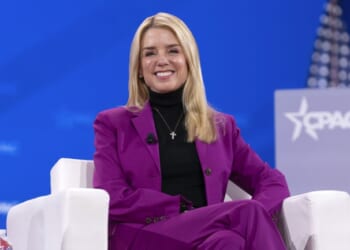
Mr. Trump’s AI Litigation Task Force will challenge state AI laws and preempt them with Mr. Trump’s federal policy. Under the order, Attorney General Pam Bondi will establish the task force, whose sole responsibility would be to challenge state AI laws in court.
“I spoke to all of the big companies. This will not be successful unless they have one source of approval — or disapproval, too. They can’t go to 50 different sources,” Mr. Trump said. “We have to be unified. China is unified because they have one vote, it’s President Xi.”
Mr. DeSantis, meanwhile, is proposing the opposite — an AI Bill of Rights, to protect his state from the harms of artificial intelligence and the cost of giant data centers.
He’s not the only government leader resisting AI.
State and local officials are moving to slow down or stop AI’s rapid advances, while communities are blocking the construction of massive AI data centers in their own backyards.
Counties in more than one dozen states are taking steps to block “hyper scale” data centers due to concerns over noise, energy costs and massive water requirements.
Warrenton, Virginia, residents voted out members of the town council after it approved a 220,000 square-foot Amazon data center on the edge of town. The newly elected town council voted unanimously in July to amend the town’s zoning ordinance to ban future data centers.
Several counties in Indiana have implemented moratoriums on hyperscale data centers, such as the one planned in Warrenton.
Existing data centers are already driving up energy bills and are projected to consume nearly 12% of all U.S. electricity by 2030.
Data centers also require enormous amounts of water, up to 300,000 gallons daily, to cool their processors.
Community anger over the data centers is pressuring some GOP lawmakers to question or even buck Mr. Trump’s efforts to rapidly advance AI in the United States.
Rep. Marjorie Taylor Greene, a Georgia Republican who is leaving Congress at the end of this month, warned that Mr. Trump’s executive order goes too far in clearing the path for artificial intelligence to advance in the United States.
“Competing with China does not mean becoming like China by threatening state rights, replacing human jobs on a mass scale creating mass poverty, and creating potentially devastating effects on our environment and critical water supply,” she said. “This needs a careful and wise approach. The AI executive order takes the opposite.”
A November report by McKinsey Global Institute said that existing AI technology could take over 57% of work hours. The report said it is not forecasting job losses, but rather a partnership between humans and AI.
“As it unfolds, some roles will shrink, others grow or shift, while new ones emerge — with work increasingly centered on collaboration between humans and intelligent machines,” the report predicted.
On Capitol Hill, lawmakers continue to debate AI and its impact on the nation. Some are demanding legislative action to slow it down.
At a recent House Homeland Security Committee hearing on AI, Rep. Alexandria Ocasio-Cortez criticized Mr. Trump’s executive order for attempting to circumvent state authority to regulate the technology.
“This is happening as AI Chatbots are causing children to take their own lives, as AI data centers are skyrocketing electricity costs and polluting local communities,” the New York Democrat said. “And as an overwhelming majority of Americans worry that AI will take their jobs and leave them permanently unemployed.”