Iranian leaders rejected a United States proposal for a long ceasefire delivered through Pakistani intermediaries on April 5.
Iran communicated its response through Pakistan, signaling that it is unwilling to accept a temporary pause in hostilities.
“We won’t merely accept a ceasefire,” Mojtaba Ferdousi Pour, head of Iran’s diplomatic mission in Cairo, said in remarks to the Associated Press.
“We only accept an end to the war with guarantees that we won’t be attacked again.”
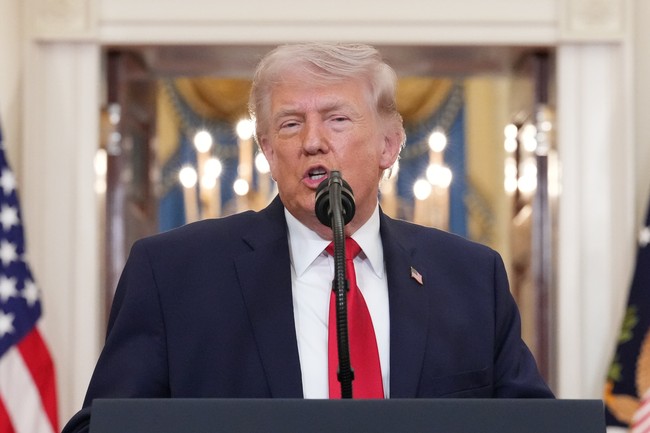
At the White House, Trump said Iran is making a mistake by rejecting the proposal.
“They just don’t want to say ‘uncle,’” Trump told reporters.
“They don’t want to cry, as the expression goes, ‘uncle,’ but they will. And if they don’t, they’ll have no bridges. They’ll have no power plants. They’ll have no anything.
“I won’t go further because there are other things that are worse than those two.”
The offer called for a 45-day pause in fighting and the reopening of the Strait of Hormuz, one of the world’s most critical energy corridors. Tehran responded with a 10-point counterproposal, demanding a permanent end to hostilities, full security guarantees, sanctions relief, and control over the Strait.
Mojaba Ferdousi Pour, head of Iran’s diplomatic mission in Cairo, stated that Iran would accept nothing short of a definitive halt to military action.
Iranian Foreign Minister Abbas Araghchi delivered the counter-demands and positioned Tehran as seeking “peace with dignity.”
According to IRNA, Tehran’s proposal includes 10 provisions, such as ending regional conflicts, ensuring safe navigation through the Strait of Hormuz, lifting economic sanctions, and initiating reconstruction efforts.
Iranian and Omani officials are working on a framework to manage shipping through the strategically vital Strait of Hormuz, a critical global energy corridor.
Tensions escalated further as Israel launched strikes on Iran’s South Pars natural gas field—the world’s largest, shared with Qatar—targeting a major source of the country’s revenue.
The attack also killed two senior commanders of Iran’s Revolutionary Guard.
Israel described the strike as an effort to weaken Iran’s economic capacity, although it appeared separate from the U.S. ultimatum.
The development raises doubts about the viability of a proposed 45-day cease-fire amid rapidly intensifying hostilities.
The framework, however, required the United States and Israel to surrender military leverage already demonstrated on the battlefield.
President Donald Trump made his position unmistakable, speaking the day after the rescue of a downed American airman, warning that Iran could be “taken out in one night” if escalation continues.
Secretary of War Pete Hegseth stood beside him and confirmed that recent operations inflicted heavy losses on Iranian naval vessels and missile infrastructure.
It’s an obvious strategic imbalance: American forces maintain air dominance, precision strike capability, and maritime superiority in the region. Iranian naval units have already suffered substantial losses. Missile facilities have been degraded; shipping lanes remain vulnerable to further disruption if Tehran continues hostilities.
Instead of accepting a pause that would’ve allowed regrouping and diplomatic maneuvering, Iran’s leadership demanded sweeping concessions.
Mojtaba Khamenei was selected by Iran’s Assembly of Experts on March 8 and is the “current” supreme leader of Iran, succeeding his father, Ayatollah Ali Khamenei, who was directly targeted on February 28, the beginning of Operation Epic Fury.
Mojtaba’s supposed approval or rejection of diplomatic overtures (he may be hooked up to medical machinery) signals that hardliners within Iran’s leadership continue to favor a posture of defiance in the face of U.S. pressure. The supreme leader has the final say on major foreign and security decisions under Iran’s constitutional system, and Mojtaba’s stance suggests Tehran believes firm resistance strengthens internal unity and extracts better terms at the negotiating table.
Unfortunately for Iran, that calculation ignores current realities: Iran faces economic contraction, energy shortages, power blackouts, and ongoing unrest. Military engagement compounds Iranian financial strain, and the offer of a 45-day ceasefire offered space to stabilize internal pressures and reassess possible options.
Instead, Tehran demanded permanent guarantees while holding zero leverage.
The 10-point list reads less like negotiation and more like a Christmas wish list drafted without considering battlefield conditions. It assumes parity where none exists and assumes patience where none has been promised.
President Trump has already demonstrated a willingness to escalate when provoked. The recent rescue operation and strikes underscored operational reach, while Hegseth confirmed continued readiness. Washington’s message remains consistent: reopen shipping lanes, halt attacks, or face the consequences.
Iranian leaders appear to believe international opinion will restrain American action, a belief that rests on an outdated model of deterrence. Military momentum has favored Washington since the war’s onset, and continued refusal by Iran to compromise increases the likelihood of expanded strikes.
Tehran’s rejection removes any sense of ambiguity; the regime had a chance to pause, regroup, and negotiate from a position of survival. Instead, it chose to demand victory terms after absorbing visible losses.
Strategic misjudgment often grows from internal echo chambers, where leaders insulated from dissent begin mistaking rhetoric for reality. The remaining Iranian leadership now owns a decision that raises risk for their infrastructure, military assets, and political stability.
The rejection exposes a government attempting to project resolve without sufficient leverage to enforce it. If escalation continues, consequences won’t gradually unfold because President Trump has already warned that action could swiftly and decisively happen.
The media has consistently asked Hegseth and President Trump if there’s an off-ramp to end hostilities. Well, Iranian leaders had an off-ramp, something they declined.
Washington holds the next move.
If you value direct analysis that cuts through diplomatic fog and media spin, join PJ Media VIP today. Support independent reporting that names names, confirms facts, and refuses to soften hard truths. Use promo code FIGHT for 60% off and unlock deeper coverage, exclusive content, and a stronger voice in the debate.