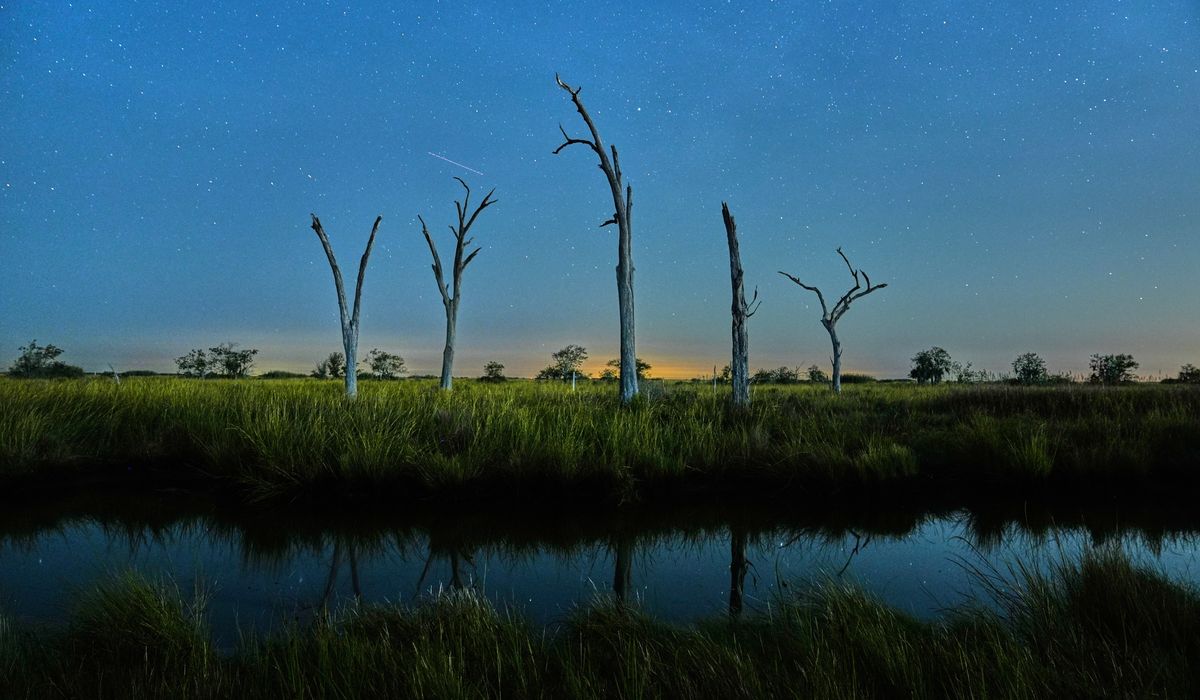
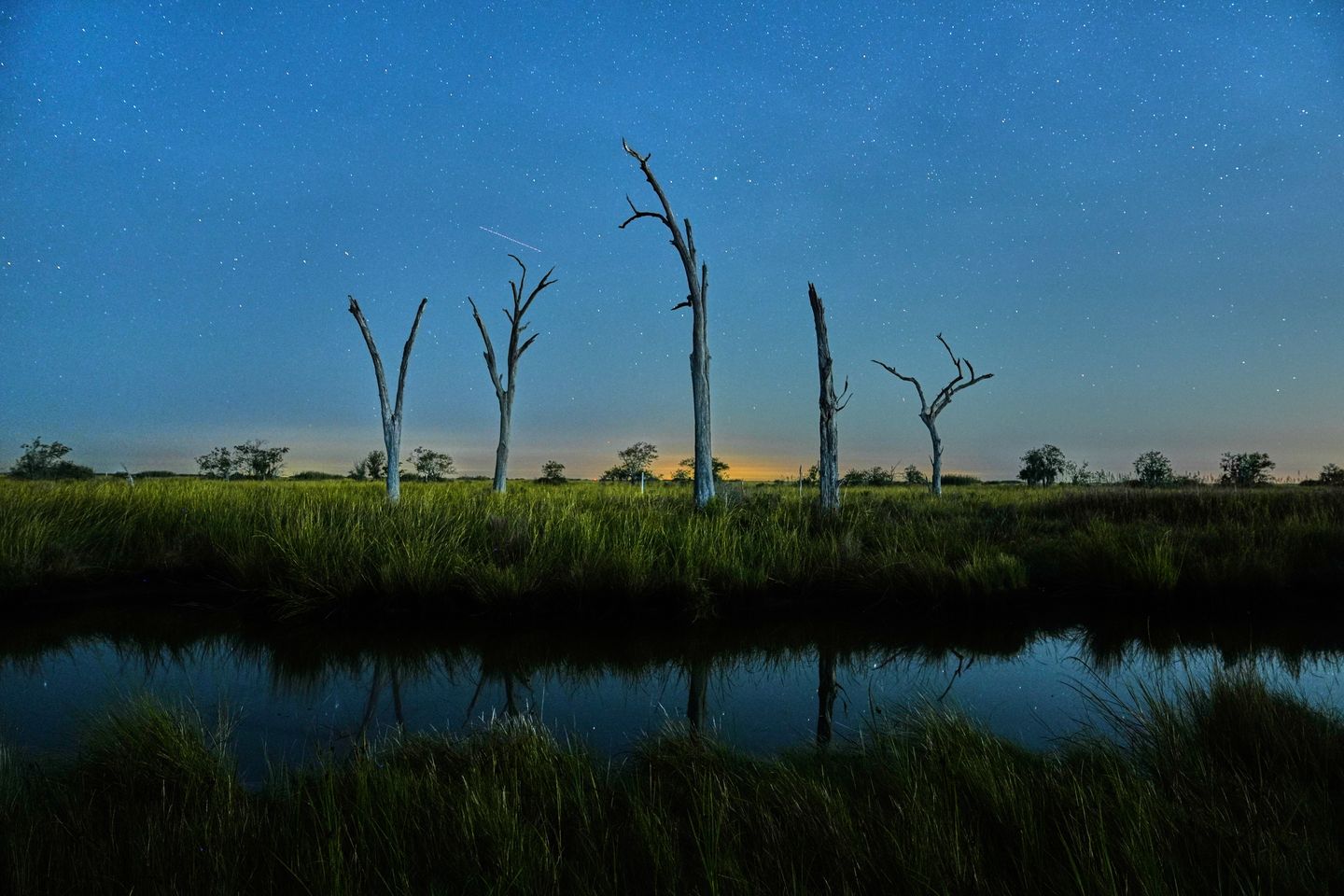
The Supreme Court next week will wade into a thorny climate change debate as it takes up a lawsuit filed by a Louisiana parish against oil companies the locality says have eroded its coastline through decades of fossil fuel activities.
The issue before the justices is limited. They are slated to decide whether the lawsuit can proceed in state court, which is likely to be more friendly to the claims, or whether the oil companies can force the case to be removed to federal court.
The underlying battle is over whether Chevron and Exxon can be held liable under a 1978 Louisiana law for what Plaquemines Parish says is unrepaired environmental damage.
Billions of dollars are potentially at stake. A state jury last year awarded Plaquemines Parish more than $740 million in its lawsuit against Chevron — a ruling that would be wiped out if the high court rules that the matter should have been heard in federal court.
The oil companies say that’s where the case, and another brought by Cameron Parish, belong because Exxon and Chevron began their operations in Louisiana as contractors of the federal government during World War II.
That makes them fall under a federal law that allows challenges to federal officers and those acting under orders of federal officers to be sent to U.S. government courts, the companies say.
A district judge disagreed, finding that the oil companies, while under contract with the federal government, weren’t acting “under” federal orders and that the oil extraction wasn’t part of the federal contracts the companies are citing.
The 5th U.S. Circuit Court of Appeals said the district court was wrong on that first question and the companies were acting under orders.
But the appeals court said the district judge was correct in ruling that Exxon’s and Chevron’s oil extraction wasn’t directly ordered by the companies’ federal contracts to supply aviation fuel to the government during World War II, so the federal removal law doesn’t apply.
Judge Andrew Oldham dissented from that ruling, warning that having to face a network of legal challenges in state courts could scare some firms away from doing business with Uncle Sam.
Louisiana says it has a right to enforce its own laws in state court.
“Federalism concerns weigh heavily in maintaining a state’s rights to enforce its own laws in its own courts,” the state argued in its filing.
With the case now at the high court, the Trump administration is backing the oil companies.
“The close link between oil production and refining — as reflected in petitioners’ federal contracts and in the federal government’s supervision of the wartime oil industry more generally — establishes the requisite connection for removal,” the Justice Department said in its brief to the court.
Washington Legal Foundation and the Atlantic Legal Foundation, two advocacy organizations, also filed a brief backing the energy giants.
They say the lower court’s ruling chills private sector work with the feds.
Two former senior military officers also filed a brief saying they worried about the implications for wartime decision-making if the oil companies lose.
“Our nation can ill afford the division, confusion and uncertainty that would necessarily result if disputes arising from war-time decision-making were adjudicated in piecemeal fashion in various state courts,” retired Gen. Richard B. Myers and retired Admiral Mike Mullen said.
But the Environmental Defense Fund said there’s no reason to think a case involving production of airplane fuel 80 years ago would affect future war efforts.
“Allowing removal here would spark a tidal wave of removal by federal contractors,” the group argued.
Litigation has been ongoing for more than a decade, when six parishes filed 42 lawsuits over the environmental damage in 2013.
The case is Chevron USA Inc. v. Plaquemines Parish.