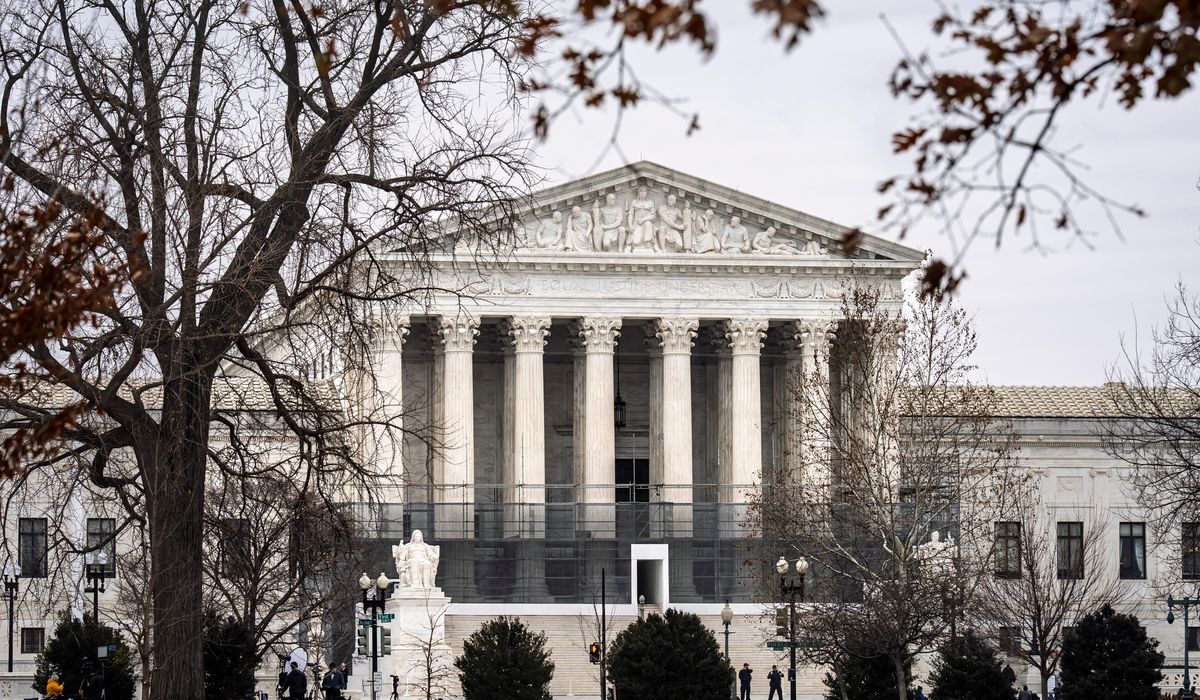
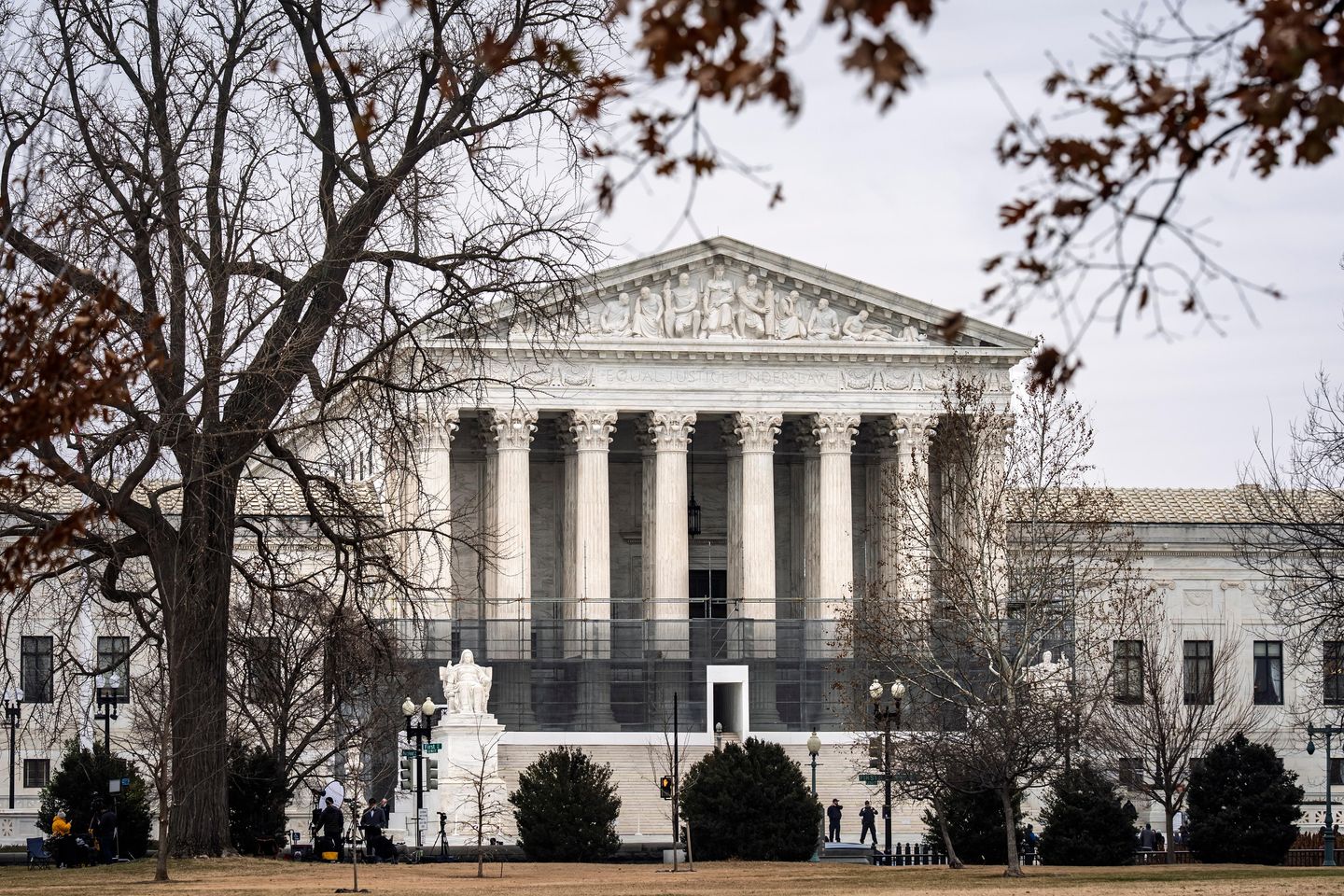
The Supreme Court grappled Monday with whether fossil fuel companies who provided oil to the federal government can force climate change-related lawsuits out of state courts and into more friendly U.S. courts.
Justices seemed sympathetic, but worried about drawing lines to prevent a large abandonment of state courts in tort cases involving companies that do business with the federal government.
“It’s hard to see where you stop,” said Chief Justice John G. Roberts Jr. “I mean, is it a butterfly effect? You know, the butterfly flaps its wings and it has the end result halfway around the world?”
The Trump administration warned of chaos in government contracting, particularly during wartime, if companies have to worry about defending themselves in state courts.
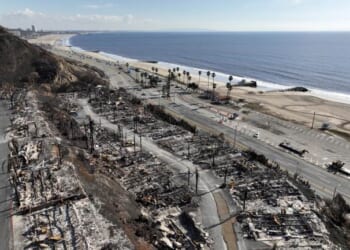
The case came out of Louisiana, where several parishes sued Chevron, Exxon and other oil companies over unmitigated coastal erosion they say came from the companies’ energy exploration.
The companies say they were acting under contract with the federal government to produce aviation gas during World War II and, under a federal law, that means the cases should be heard in federal courts.
Paul Clement, the lawyer representing the oil companies, said being a wartime contractor was a “classic” case of someone acting for the government, which meets the standard included in the law.
He said the only issue then is for the oil companies to prove that the contract to provide avgas, the special fuel for piston-engined aircraft, covers the companies’ oil extraction in Louisiana.
He said getting the oil was “indispensable” to the contract.
“If you’d enjoined the production activities during World War II, that would directly affect the government’s ability to get refined avgas, to fight the war effort,” Mr. Clement argued.
Justice Sonia Sotomayor, an Obama appointee, wasn’t convinced, worrying about all the companies that might force their cases into federal courts rather than state courts.
“If we define it as capaciously as you do, I’m not sure what the stopping point would be,” she said.
J. Benjamin Aguinaga, Louisiana solicitor general, also told the court there was no federal officer overseeing the fossil fuel companies’ work, so it shouldn’t qualify as acting at the direction of a federal officer — another requirement under the law for removing cases from state courts to federal courts.
He said Chevron doesn’t dispute that it dumped billions of gallons from produced water from oil wells into their marsh before and after 1980.
The underlying battle is over whether the oil giants are liable under a 1978 Louisiana law for unrepaired environmental damage.
A state jury last year awarded Plaquemines Parish more than $740 million in its lawsuit against Chevron.
On appeal, the oil companies say the litigation should play out in federal court because of the company’s contract to supply aviation gas.
A district judge ruled that the oil companies, while under contract with the federal government, weren’t acting “under” federal orders, and that the oil extraction wasn’t part of the federal contracts the companies are citing.
The 5th U.S. Circuit Court of Appeals said the district court was wrong on that first question and the companies were acting under orders.
But the appeals court said the district judge was correct in ruling that Exxon and Chevron’s oil extraction wasn’t directly ordered by the companies’ federal contracts to supply aviation fuel to the government during World War II, so the federal removal law doesn’t apply.
The Trump administration has sided with the energy companies, and warned of disruptions if state courts prevail.
“So we have deep concerns about cases that do have that risk of interfering with the federal government’s operations proceeding in state court. This case is, of course, a poster child for that,” said Aaron Roper, an assistant solicitor general.
The oil companies view federal juries as more friendly than local state court juries, which would directly benefit financially from a ruling against them.
The case is Chevron USA Incorporated, et al. v. Plaquemines Parish, Louisiana, et al. A decision is expected by the end of June.
Justice Samuel A. Alito Jr., a George W. Bush appointee, didn’t take part in the case.