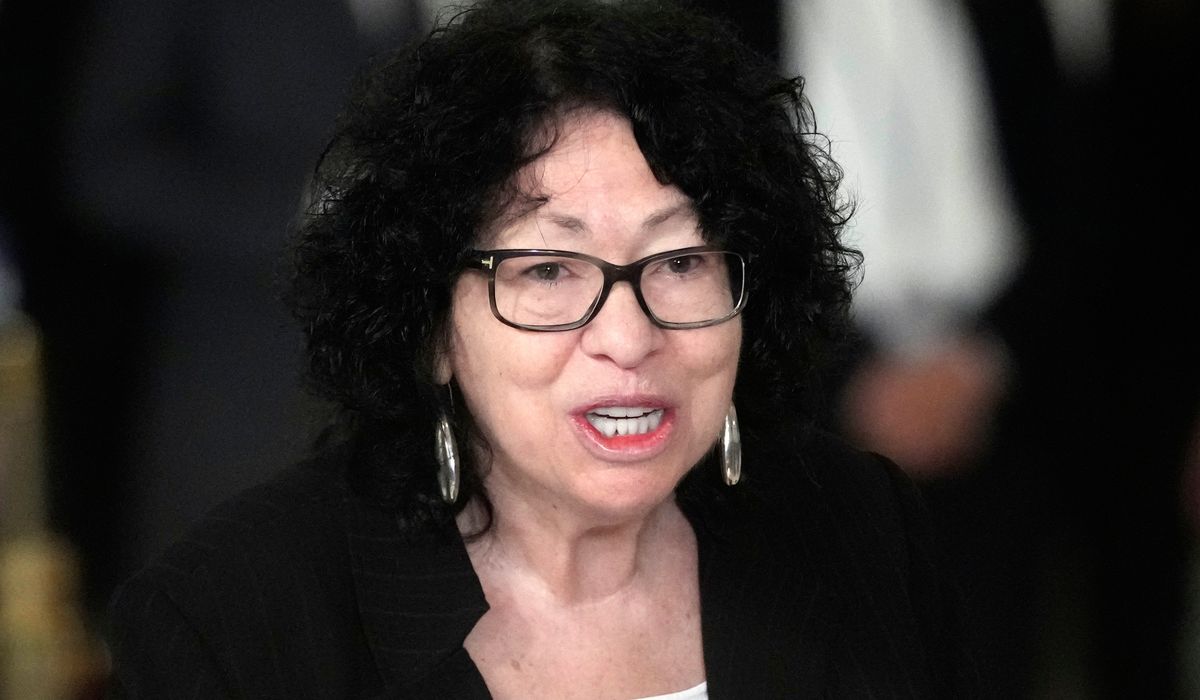
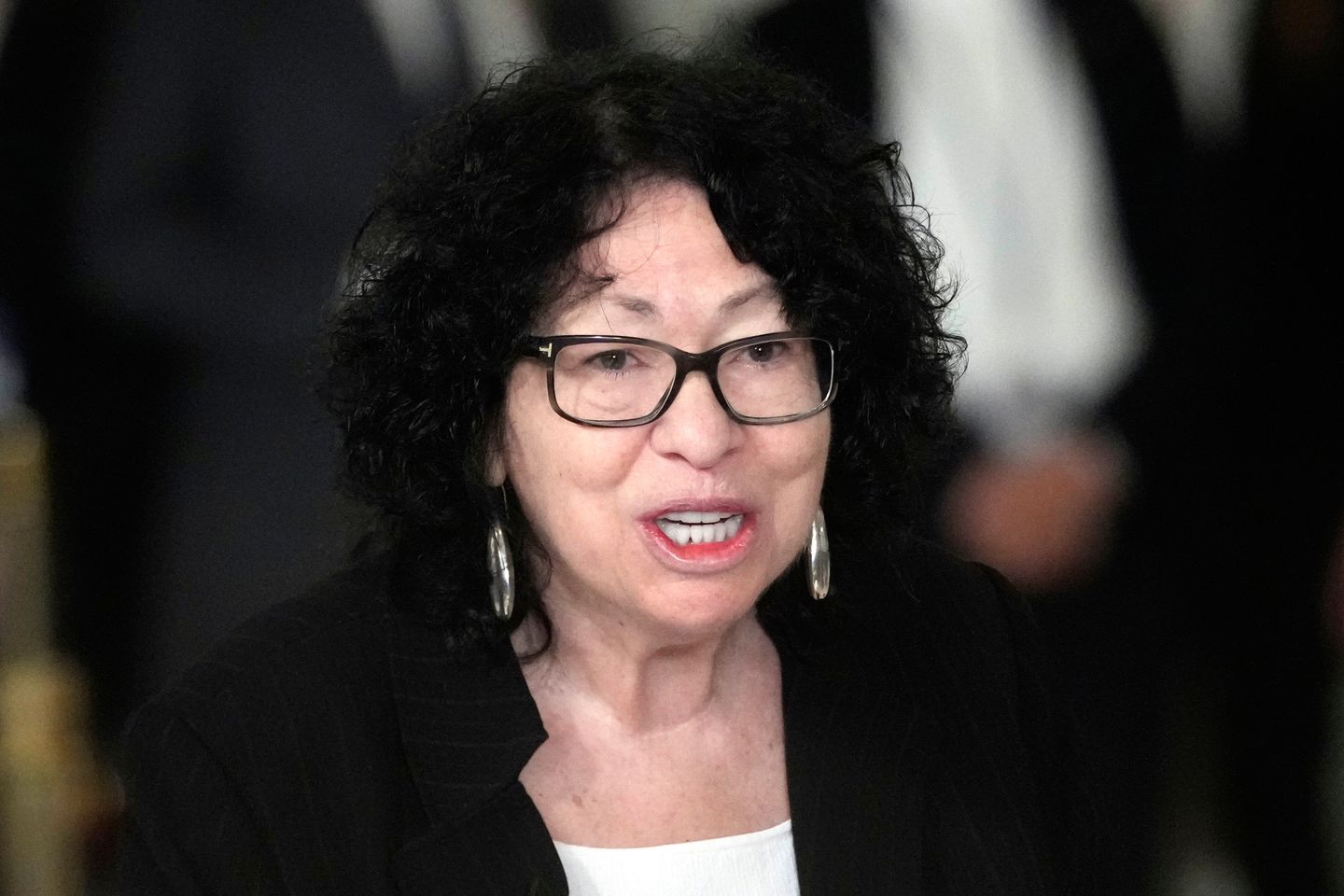
Supreme Court Justice Sonia Sotomayor publicly criticized fellow Justice Brett Kavanaugh this week over his concurring opinion in a major immigration enforcement case, saying his background left him unable to grasp the real-world consequences of even brief detentions for working-class Americans.
Speaking at an event hosted by the University of Kansas School of Law on Tuesday, Justice Sotomayor addressed the court’s divided decision in Noem v. Vasquez Perdomo, a September 2025 shadow docket ruling that allowed the Trump administration to resume immigration enforcement sweeps in the Los Angeles area.
“I had a colleague in that case who wrote, you know, these are only temporary stops,” she said, referencing a concurrence by Justice Brett Kavanaugh. “This is from a man whose parents were professionals. And probably doesn’t really know any person who works by the hour.”
Though she did not name Mr. Kavanaugh explicitly, the reference was unmistakable. In his concurrence, Mr. Kavanaugh asserted that legal residents’ encounters with immigration agents are “typically brief” and that impacted individuals “promptly go free.” Mr. Kavanaugh also wrote that race or ethnicity could be “a relevant factor” in determining reasonable suspicion when considered alongside other factors — not as a standalone basis for a stop.
Justice Sotomayor rejected that framing as disconnected from the financial reality facing hourly workers. “Those hours that they took you away, nobody’s paying that person,” she told the crowd. “And that makes a difference between a meal for him and his kids that night and maybe just cold supper.”
The ruling in Noem v. Vasquez Perdomo was issued on Sept. 8, 2025, through the court’s shadow docket — with no oral argument, no merits briefing, and no public warning. The order was a single sentence. Justice Kavanaugh filed a concurring opinion; Justice Sotomayor filed a dissent joined by Justices Kagan and Jackson.
The underlying district court order had barred immigration agents from detaining people based solely on four factors: apparent race or ethnicity, speaking Spanish or accented English, presence at certain locations such as car washes or bus stops, and the type of job they appeared to work. The high court’s shadow docket stay lifted that prohibition pending appeal.
Critics took to calling the resulting enforcement practice “Kavanaugh stops” — a term that spread after the ruling, linking Mr. Kavanaugh’s name to the detentions. In her dissent at the time, Justice Sotomayor was direct. “We should not have to live in a country where the Government can seize anyone who looks Latino, speaks Spanish, and appears to work a low wage job,” she wrote, according to USA Today. “Rather than stand idly by while our constitutional freedoms are lost, I dissent.”
Tuesday’s public remarks were notably pointed for Justice Sotomayor. Slate reported that she typically praises colleagues across ideological lines at public events and has previously spoken warmly of Justice Clarence Thomas. Her decision to single out Mr. Kavanaugh’s opinion — even without naming him — came as a new legal challenge to the stops was filed in New York.
Justice Sotomayor said her September dissent was not a personal or ethnic grievance but a defense of established precedent. “I was not talking as a Latino justice,” she said Tuesday. “I was talking about a justice who respects precedent. And I was explaining why that precedent is being violated.”
She also spoke about her perspective as the first Latina to serve on the court. “Life experiences teach you to think more broadly and to see things others may not,” she said. “And when I have a moment where I can express that on behalf of people who have no other voice, then I’m being given a very rare privilege.”
Justice Sotomayor, 71, was nominated by former President Barack Obama in 2009. A Spanish-speaking Bronx native, she was born to working-class Puerto Rican parents. Mr. Kavanaugh attended the all-boys Georgetown Preparatory School before earning his undergraduate and law degrees from Yale. He was confirmed to the Supreme Court in 2018.
This article was constructed with the assistance of artificial intelligence and published by a member of The Washington Times’ AI News Desk team. The contents of this report are based solely on The Washington Times’ original reporting, wire services, and/or other sources cited within the report. For more information, please read our AI policy or contact Steve Fink, Director of Artificial Intelligence, at sfink@washingtontimes.com
The Washington Times AI Ethics Newsroom Committee can be reached at aispotlight@washingtontimes.com.