Members of a Senate committee demanded that the Food and Drug Administration restore its previous safeguards, removed by Democratic administrations, for chemical abortion drugs.
Sen. Bill Cassidy, chair of the Senate Committee on Health, Education, Labor and Pensions, urged Health Secretary Robert F. Kennedy Jr. and FDA Commissioner Marty Makary to complete the safety review of mifepristone.
The senator said that action was promised during their confirmation hearings.
“Now who could be opposed to making sure that adverse events are reported to the FDA?” Mr. Cassidy, the Louisiana Republican and former gastroenterologist, said during Wednesday’s hearing. “We make so much out of somebody getting a vaccine and having a sore arm that lasts for a day where they got the shot, but we’re not reporting someone with sepsis?”
Sen. Bernard Sanders, the Vermont independent who votes with Democrats, said the hearing wasn’t about the safety and effectiveness of mifepristone.
“Let’s be clear about what this hearing is about,” the committee’s ranking member said. “It is about the ongoing effort of my friends in the Republican Party to deny the women of this country the basic right to control their own bodies.”
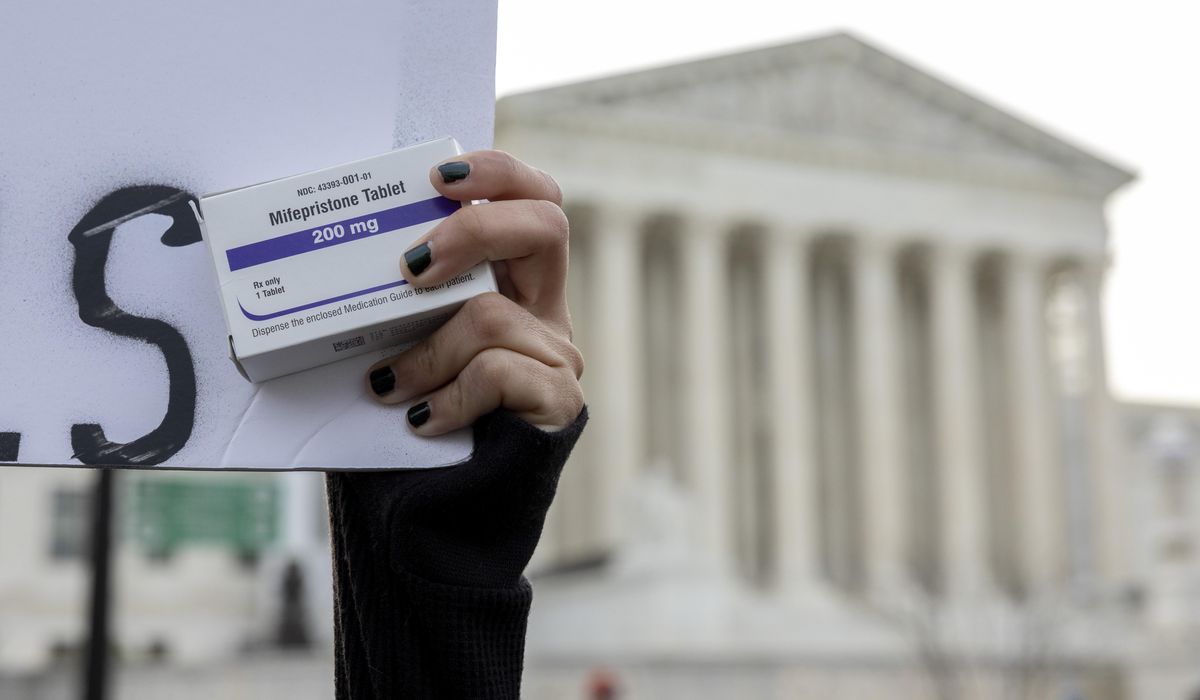
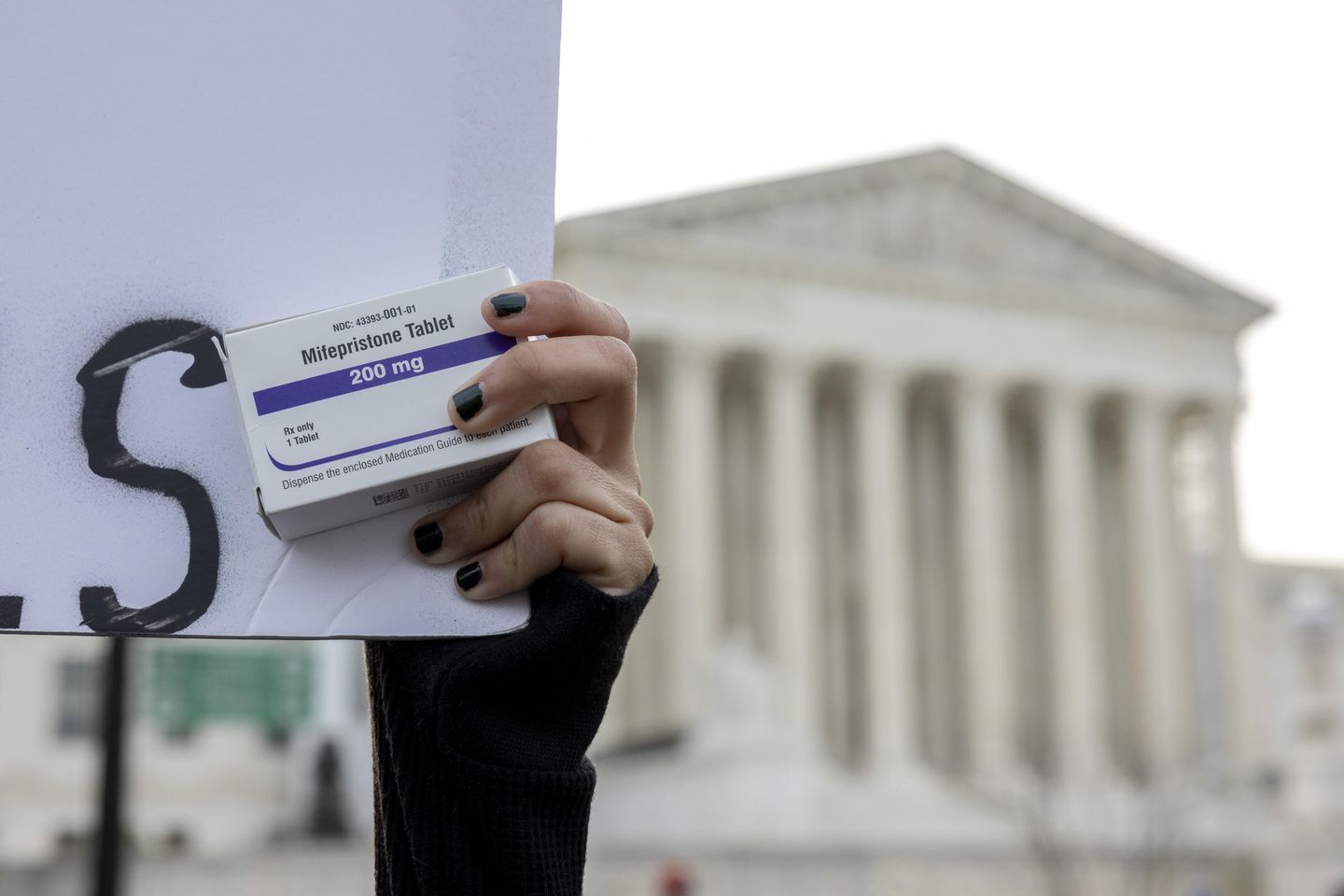
Mifepristone and misoprostol are the most widely used abortion regimen in the U.S.
When the FDA approved both in 2000, the agency imposed restrictions in light of side effect risks.
As of 2016, mifepristone was approved for use for medical termination of pregnancy up to 70 days of gestation.
The FDA last reviewed mifepristone in 2021, and modifications to the risk evaluation and mitigation strategy were made in 2023 to revise prescriber certification requirements, including telehealth.
Sen. Jim Banks, Indiana Republican, said he’s disappointed that the FDA has not moved faster to restore the in-person dispensing requirement and strengthen the review program for mifepristone.
He pointed to “rumors” that the agency is intentionally slow-walking its study on mifepristone’s health risks.
Mifepristone has a black box warning for patients and prescribers of serious and sometimes fatal complications associated with the drug. The risks associated with mifepristone include bleeding, infection, hemorrhage, need for transfusion and perforation, Dr. Monique Chireau Wubbenhorst, an obstetrician-gynecologist, said at the hearing.
It can be prescribed only by certified prescribers and is dispensed in person or by mail, even to states such as Louisiana that prohibit abortion “by means of an abortion-inducing drug.”
In some cases, there is no human contact to receive such drugs, which Dr. Wubbenhorst described as irresponsible and malpractice.
“Our concern is for the woman, and access to any medical intervention should never come at the expense of safety,” she said. “Authorities should continue to help decrease chemical abortion’s harms to women,” including strengthening the enforcement of regulations.
When asked how to stop the illegal use of mifepristone, including coercing someone to end a pregnancy, Louisiana Attorney General Liz Murrill called for prosecution.
One example was repeatedly brought up: men finding access to obtaining mifepristone and using the drug to terminate a pregnancy, sometimes by coercion or force.
In a debate between Ms. Murrill and Mr. Sanders, the senator said that because of Louisiana’s restrictive laws, those who want to terminate a pregnancy opt to receive mifepristone without medical supervision.
Ms. Murrill countered this, saying that “this happens because people from outside our state are sending them into our state to nullify our state laws.”
Dr. Nisha Verma, an obstetrician-gynecologist, said that what is limiting the ability to get additional care, such as an ultrasound, are abortion bans and restrictions.
“That is why we are seeing these cases, because patients can’t get that follow-up care in their communities,” she said. “There’s fear to go to the hospital if they need to, because of fear of being criminalized. But that’s what’s making the care unsafe.”
Maternal health and reproductive health deserts impede a pregnant woman’s ability to consult with a physician, Sen. Maggie Hassan, New Hampshire Democrat, said, agreeing with Dr. Verma’s position that telehealth access greatly helps such patients.
“People are desperate because they cannot get the care that they need in their communities with their trusted clinicians,” the senator said.
The hearing witnesses and committee members pointed to studies that back their positions on mifepristone.
A study released last April found that more than 10% of women who terminate their pregnancies with mifepristone experience serious health problems, 22 times higher than the drug’s warning label of less than 0.5%.
The study, conducted by the conservative think tank Ethics and Public Policy Center, has been cited in arguments against mifepristone. But Dr. Verma said that it “significantly overexaggerates complication rates by again counting things that are not actually complications of mifepristone.”
She also said the science on mifepristone has been settled the past 25 years, with medication abortion proved safe and effective.
The reason for the hearing is that “people in this room feel uncomfortable with abortion,” Dr. Verma said, but “we should not pretend that this is an issue of the science.”
In response to the hearing, the president of Susan B. Anthony Pro-Life America, Marjorie Dannenfelser, said action to enforce abortion laws is “overdue for action.”
“The Biden COVID-era policy allowing abortion drugs in the mail with little to no medical oversight should’ve been rescinded on day one of the administration. Instead, nearly a year later, more unborn children die, more mothers end up in the ER, and more women and girls are poisoned or coerced into taking abortion drugs,” Ms. Dannenfelser said in a statement. “Pro-life states are being completely undermined in their ability to enforce the laws that they passed. We are overdue for action. Women’s health and the lives of millions of Americans are truly on the line.”
Immediately following the hearing, Family Research Council President Tony Perkins and Sen. Lindsey Graham, South Carolina Republican, urged the Departments of Justice and Health to reel in Biden-era abortion policies.
The Supreme Court’s 2022 decision in Dobbs overturned the long-upheld Roe v. Wade abortion case. But in the months surrounding that decision, dozens of states moved to strengthen pro-life laws, Mr. Perkins said.
“Those walls recognized as constitutionally permissible under Dobbs have since been effectively undermined by the FDA’s continuation of the Biden-era policy,” he added.
Joined by self-described pro-life public officials, they asked the Justice Department to safeguard the constitutional authority of states to enact and enforce pro-life laws, specifically when it comes to abortion drugs being shipped across state lines.
“It’s time to end death by mail,” Mr. Perkins said.
Mr. Graham said that because the drug can be sent through the mail, it effectively “wipes out every state’s unborn protection law in the land.”
“You can’t have it both ways,” he said. “You can’t say it should be a state issue, and sit on the sidelines while the federal government, through an agency, is sending the pill that undercuts everything people at the state have worked for.”
Despite the efforts of Democrats to “change the subject and make this about some kind of national abortion ban,” Ms. Murrill said their collaborative call to action is about validating Dobbs and preventing other states from nullifying states’ legislative policy choices.