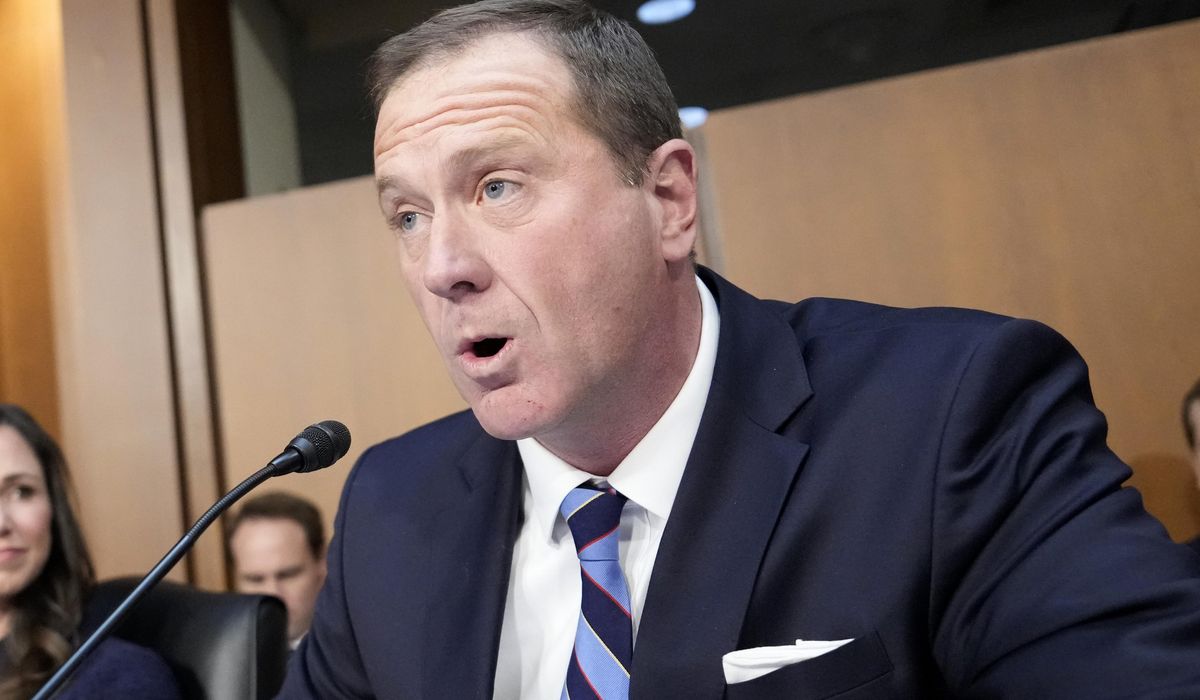
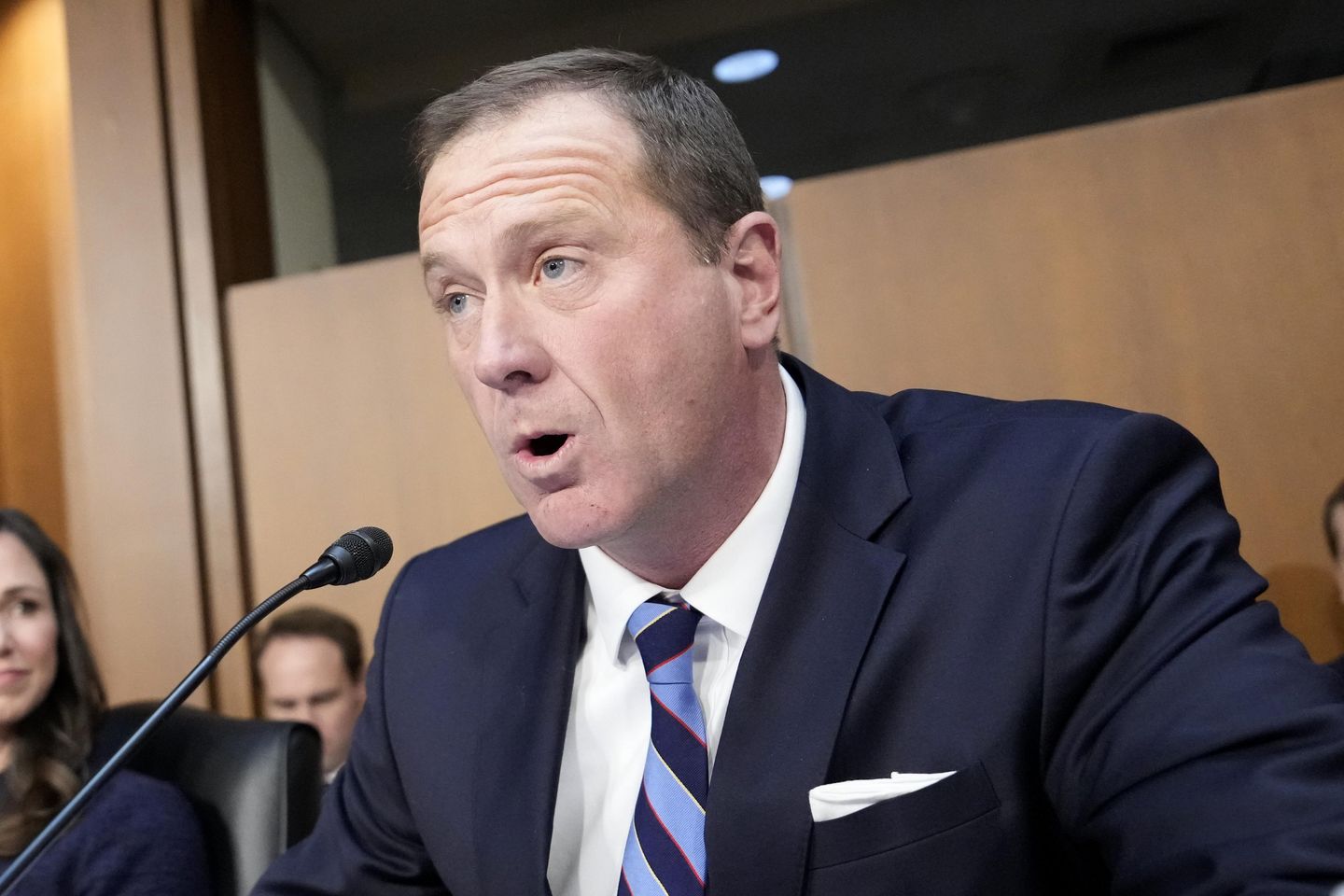
Republican Sen. Eric Schmitt is proposing what appears to be first-of-its-kind legislation to prevent China from enforcing politically motivated court verdicts against Americans, amid an intensifying fight over the Wuhan lab at the center of speculation about the origin of the coronavirus pandemic.
Mr. Schmitt, when he was attorney general in Missouri, initiated a case in the U.S. that ended with a $24 billion judgment against the Wuhan Institute of Virology and other associated entities. The lab then retaliated with its own $50 billion lawsuit in a Chinese court against Mr. Schmitt and the state of Missouri.
He called that “authoritarian lawfare.”
His new bill, revealed first by The Washington Times, could block the Wuhan lab from collecting on any politicized court victory payout — including what Mr. Schmitt fears would be a sham ruling against him.
“Communist China’s lawsuit against me is politically motivated, legally meritless, and makes clear that China is willing to weaponize their kangaroo courts to go after American citizens,” the senator said. “My bill makes clear that no politically motivated judgment issued by a Chinese court will ever be recognized or enforced in the United States.”
He’s calling the bill the Ending Chinese Lawfare Act.
The lawsuit against Mr. Schmitt was filed in the Intermediate People’s Court in Wuhan by the Wuhan Institute of Virology, the Chinese Academy of Sciences and the municipal government in Wuhan.
In addition to Mr. Schmitt, it names Missouri and Andrew Bailey, who succeeded Mr. Schmitt as state attorney general and carried the case to completion. Mr. Bailey is deputy director at the FBI.
The lawsuit asks the two men and the state to issue apologies and pay “compensating losses” to the tune of 356 billion yuan, or roughly $50 billion.
It appears the lawsuit was filed in the spring. The notification was only made this month.
It makes no bones about being a retaliation against Mr. Schmitt’s original lawsuit, which the Chinese entities didn’t fight at the time, leading to the default judgment against them. New state Attorney General Catherine Hanaway has vowed to collect on the $24 billion.
That includes seizing Chinese-owned assets.
The lawsuit says Mr. Schmitt, in winning his case, “belittled” their scientists, hurt their “brand value and academic reputation” and made it more difficult to get international cooperation on projects.
The senator stood by his claims: “I sued China and won because the facts were on my side: China lied about COVID, tried to cover it up, failed and plunged the world into a painful global pandemic.”
U.S. laws have blocked some foreign court judgments from being enforced before. In 2010, for example, a Democrat-controlled Congress passed and President Obama signed a law to stop enforcement of defamation judgments from courts in countries with different standards for libel.
While that law applied globally, it was in large part aimed at “libel tourism” in the U.K., which had lower standards for defamation and courts eager to exert jurisdiction over American websites. Americans stymied by the First Amendment turned to Britain to sue.
Mr. Schmitt’s bill breaks new ground by targeting a single nation as a particular practitioner of politically motivated judgments.
The legislation says China’s judicial system is “subordinate” to the Chinese Communist Party. That lack of independence undercuts the legitimacy of its rulings.
Under the legislation, a Chinese court civil judgment couldn’t be enforced here if it is determined to have been initiated or supported by the Chinese government or its ruling communist party, and was intended to thwart either the U.S. government or constitutional rights.
Those lawsuits could be moved from state court to federal court, where the protections would kick in.
The bill also would allow the American defendant to be awarded compensation for attorney fees in fighting the lawsuit.