Senate Minority Leader Chuck Schumer (D-N.Y.) stepped forward with a plan that sounded simple on the surface: Pay TSA workers during the DHS funding standoff and ease the pressure building at airports across the country.
It came wrapped in concern for federal employees and frustration over long lines. It also came at a time when over 260,000 DHS workers continued showing up for work without receiving full paychecks, including over 61,000 TSA officers.
The proposal ran into immediate resistance from Senate Republicans, led by Majority Leader John Thune (R-S.D.), who pushed back hard, arguing that carving out one group of workers doesn’t solve the larger funding problem.
Thune’s position held firm: if Congress wants to fix the situation, then Congress needs to fund the entire department, not create a narrow exception that leaves hundreds of thousands of other employees in the same position.
That response exposed the problem at the center of Schumer’s move. On paper, it offers relief. In practice, it creates a talking point where it lets one side say they tried to help TSA officers while shifting blame when the plan stalls.
Meanwhile, the underlying issue remains untouched. DHS still lacks full funding, and people across the department continue to carry the burden.
TSA officers continue reporting for duty, scanning bags, checking IDs, and keeping the lines of travelers moving, even as their missed paychecks stack up. Families adjust budgets and delay expenses while waiting for a resolution that hasn’t arrived. Some people have already left their jobs, which only adds to the strain inside airports as travel demand rises.
Eviction notices. Vehicle repossessions. Empty refrigerators and overdrawn bank accounts.
Union leaders and federal officials say these are just some of the financial pressures Transportation Security Administration agents are facing during an ongoing government funding lapse — the third shutdown in less than six months that has forced the officers who screen airport passengers and luggage to keep working without pay.
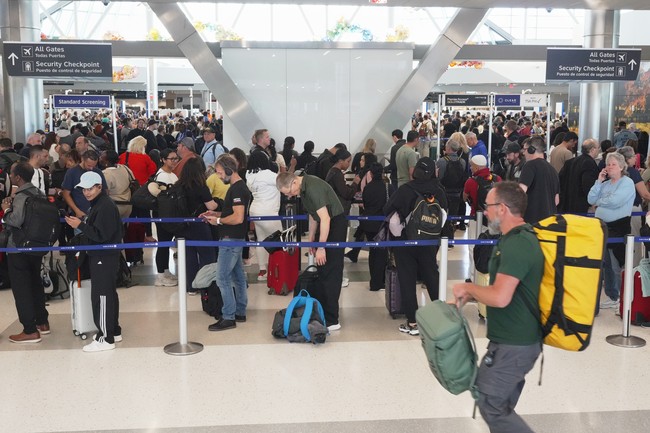
The public is experiencing the consequences in long wait times at some airports as more TSA officers take time off to earn money on the side or cut back on expenses. At least 376 have quit their jobs altogether since the shutdown began on Valentine’s Day, according to the Department of Homeland Security, exacerbating staff turnover at an agency that historically has had some of the U.S. government’s highest attrition and lowest employee morale.
Airports feel the impact every day, as lines grow longer, wait times increase, and frustration builds among travelers trying to reach their destinations. TSA staffing gaps turn routine into a test of patience. The ripple effect spreads to airlines, airport staff, and families who planned trips months in advance.
With the dismissal of Kristi Noem as Homeland Security Secretary, additional gaps in leadership create questions at a time when stability would help. That gap only adds to the uncertainty surrounding DHS operations during a time that demands clear direction and quick decisions.
Unsurprisingly, Schumer’s plan doesn’t address any of those structural problems; it isolates one group for relief while leaving the broader workforce in place.
That approach invites a predictable result: a proposal that at first glance is helpful stalls under closer review, and the larger issue continues without a solution.
Thune’s response cut straight through the presentation. A partial fix doesn’t replace a full funding agreement, it doesn’t stabilize operations across DHS, and it doesn’t restore normal conditions at airports.
Instead, what it does is to create a narrow path that doesn’t lead to a lasting outcome.
The result leaves TSA officers in the same position they started in, continuing to work without certainty about when full pay returns. Travelers continue dealing with delays that reflect staffing shortages, and Congress continues debating while the situation stretches on.
At some point, the focus has to shift from appearances to results. A proposal that reads well in a statement but fails in execution doesn’t move anything forward. It simply adds another layer to a problem that already affects hundreds of thousands of workers and millions of travelers.
If you want more direct analysis like this without the usual noise, PJ Media VIP gives you full access at a major discount right now. Use promo code FIGHT and take 60% off your subscription.