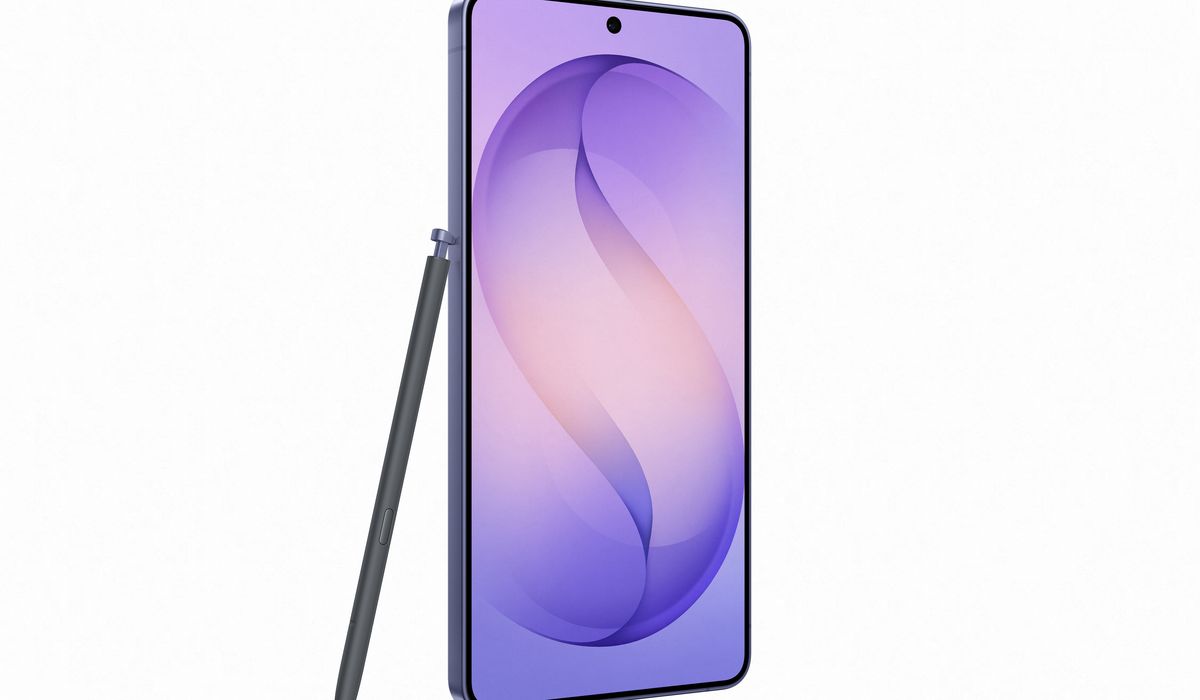
Samsung Electronics unveiled its Galaxy S26 smartphone series Wednesday in San Francisco at Galaxy Unpacked 2026, drawing immediate industry reaction that spanned admiration, skepticism and a wave of pre-orders.
The South Korean company introduced three flagship models: the Galaxy S26, the Galaxy S26 Plus and the Galaxy S26 Ultra. They also showed off the new Galaxy Buds 4 wireless earbuds at the event.
Pre-orders are now available, with all devices set to ship March 11. The launch came roughly a month later than Samsung’s recent January Unpacked calendar and brought with it a $100 price increase on the base and mid-tier models, a marquee built-in Privacy Display that Samsung says is a world first, and a suite of artificial intelligence upgrades the company calls its most intuitive Galaxy AI experience to date.
Here’s a roundup of what we know about the phone and what industry experts are saying:
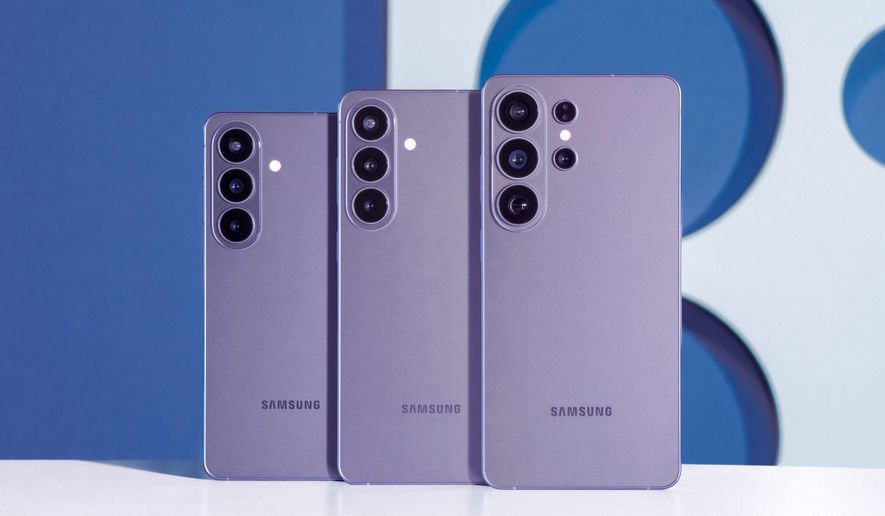
Galaxy S26 Series (Credit: Samsung)
more >
Pulling back the curtain on the S26 series
Samsung says all three phones ship with Android 16 and Samsung’s new One UI 8.5 software. North American models are powered by Qualcomm’s Snapdragon 8 Elite Gen 5 for Galaxy, while international models of the standard S26 and S26 Plus use Samsung’s in-house Exynos 2600 processor; the Ultra receives the Snapdragon chip in all global markets.
Samsung describes the S26 series as the “third generation” of its Galaxy AI phone lineup, promising the devices handle complex tasks in the background so users can focus on results rather than navigation. Full specifications and pricing are available on Samsung.com.
Samsung’s first price hike since Galaxy S22
For the first time since the Galaxy S22, Samsung raised the entry-level price on its mainline flagship series. The Galaxy S26 now starts at $899, a $100 increase over its predecessor, and the Galaxy S26 Plus opens at $1,099, also $100 higher than last year. The Galaxy S26 Ultra holds at $1,299, unchanged for the second consecutive year.
Samsung also eliminated the 128-gigabyte storage option for U.S. models, with all three phones now starting at 256 GB. While that storage bump provides some justification for the price increase on the base model, Android Central’s hands-on review notes that the math is harder to make on the Plus model, which received no equivalent base-storage change.
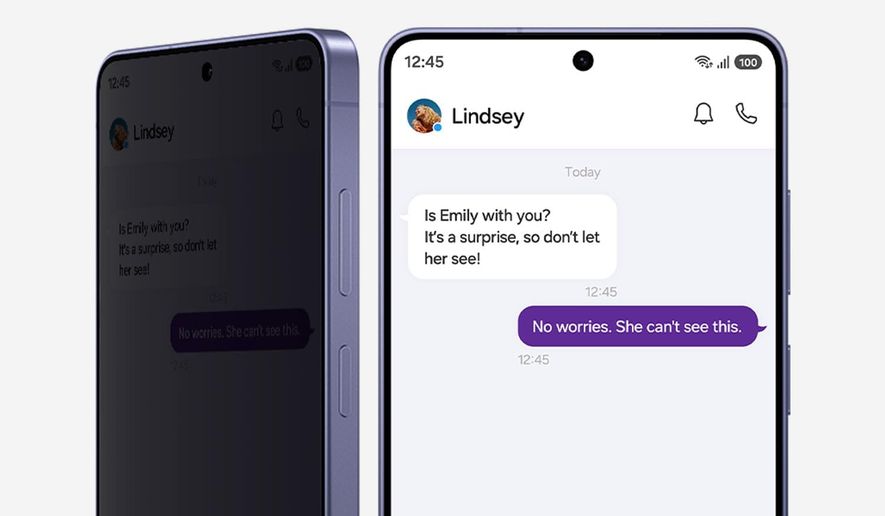
Galaxy S26 Ultra Privacy Display (Credit: …
more >
Amazon is running pre-order promotions across all three models that include free storage upgrades and gift cards of up to $200 on the Ultra, while Samsung’s official store is offering trade-in credits of up to $900 for eligible devices.
Privacy Display: Samsung’s marquee feature draws solid first reviews
The centerpiece of Galaxy Unpacked 2026 is what Samsung says is the world’s first built-in privacy display on any mobile phone: a hardware-level technology on the Galaxy S26 Ultra that restricts side-angle viewing to prevent nearby onlookers from reading a user’s screen in public settings such as transit cars, cafes or elevators. Samsung Display calls the underlying panel technology Flex Magic Pixel, a trademarked system built on what the company calls a Black Matrix architecture, which uses two distinct pixel types, narrow and wide, to control the direction light travels from the screen. When privacy mode is active, the narrow pixels remain operational while the wide pixels are minimized, making the display unreadable from off-axis angles while remaining clear to the user.
Samsung Display says it has filed approximately 150 patents related to the technology since 2020. Independent testing firm UL Solutions verified the panel’s performance, with a UL Solutions official stating in Samsung Display’s press release that the panel recorded a side-to-front brightness ratio of 3.5 percent at a 45-degree viewing angle and 0.9 percent or lower at 60 degrees, compared with roughly 40 percent brightness retention on a conventional smartphone display at the same angles.
Users can toggle the Privacy Display globally or apply it selectively to individual apps, password-entry screens and notification banners. TechCrunch reports the feature performed as advertised during the on-stage demonstration, including for small notification pop-ups. Ben Schoon of 9to5Google, writing after a hands-on session at the Samsung event, calls the Privacy Display one of the first genuinely new smartphone hardware features in years and said the per-app privacy masking capability elevates it beyond a simple novelty.
Skeptics weigh in: Angle limitations and display trade-offs
No sooner had Samsung’s Unpacked stream concluded than critics began probing the Galaxy S26 Ultra’s marquee feature. A pre-announcement hands-on video by YouTuber Wylsacom shows that the Privacy Display’s effectiveness depends heavily on the angle from which another person views the device; someone positioned directly above it could still read the screen with the feature active. Wylsacom also reports that the side-angle blocking works well in specific positions but diminishes in others. Samsung has described the feature as designed to address lateral, or side-angle, privacy in shared environments rather than overhead viewing.
Separately, NotebookCheck says that some prospective buyers, citing preliminary supply-chain analysis and early display comparisons, were concerned that hardware modifications needed to embed the Privacy Display may have reduced the panel’s peak brightness and degraded its anti-reflective coating compared with the Galaxy S25 Ultra. NotebookCheck assessed those concerns as likely overstated, pending independent device-level testing.
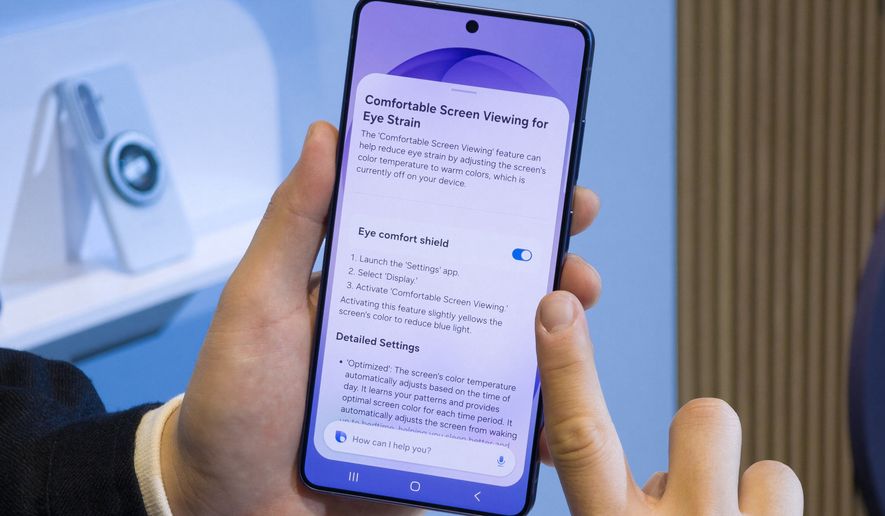
Galaxy S26 Ultra smartphone Comfort Shield …
more >
A broader skepticism has emerged in tech commentary about how often most users will actually turn the feature on. Phandroid argues that the Privacy Display is “built for a very specific, very niche situation,” such as using your phone on the subway or entering a PIN at a coffee shop. Reviewers also note that hardware privacy screens have long existed in laptops. For example, HP introduced integrated privacy displays under its Sure View branding in 2016, making Samsung’s “world’s first” claim best understood as specific to smartphones. And because Samsung is offering Privacy Display only on the $1,299 Ultra, buyers of the S26 Plus won’t have access to the built-in feature.
Galaxy AI deepens its bench: Now nudge, circle to search and more
Samsung leaned heavily on artificial intelligence across the entire S26 lineup, billing the series as its most contextually aware Galaxy AI generation yet. Among the new features: Now Nudge, which surfaces calendar information and scheduling context inside messaging apps without requiring the user to switch applications. There’s also a revamped Circle to Search with multi-object recognition that can identify and locate several items in a single image simultaneously. And owners will enjoy an upgraded Photo Assist that can not only remove unwanted objects from photos but add entirely new elements, including converting a daytime scene to a nighttime one.
Samsung’s Bixby assistant received a significant upgrade, now accepting natural language commands to adjust phone settings. The Galaxy S26 lineup gives users integrated access to three AI agents, Bixby, Google Gemini and Perplexity AI, with each available as a distinct option rather than a single mandatory assistant.
Perplexity, which can be invoked with the dedicated voice phrase “Hey Plex,” is embedded at the system level across core Samsung apps including Notes, Calendar and Gallery, while Bixby and Gemini remain fully available alongside it.
Samsung notes that certain Galaxy AI features require a Samsung Account and a stable network connection, and that feature availability varies by region, carrier and device configuration. Samsung also confirmed all AI-generated or AI-enhanced photo content will be tagged for transparency. Tom’s Guide, which had early hands-on access to all three devices, describes the upgrades as delivering more substance than the spec sheet alone suggests. As Samsung notes with all Galaxy AI features, the accuracy, completeness and reliability of AI-generated results are not guaranteed.
Camera Story: Brighter apertures, 8K video, and a world-first codec
Camera upgrades on the Galaxy S26 Ultra represent the most concrete hardware advancement in the series. The flagship retains its 200-megapixel main sensor but gains a wider f/1.4 aperture. Samsung claims the change captures 47 percent more light than the previous generation.
The telephoto system includes a 50-megapixel 5x optical zoom lens with 10x optical-quality zoom and a 10-megapixel 3x optical zoom lens. On the video side, Samsung says the Galaxy S26 Ultra is the first smartphone to support the Advanced Professional Video codec, known as “APV,” an open-source, royalty-free format developed for professional filmmaking workflows that delivers near-lossless video capture. Per Samsung’s developer documentation, the Galaxy S26 Ultra supports two APV capture profiles, APV 422 HQ and APV 422 LQ, both using 12-bit color depth with 4:2:2 chroma subsampling, at resolutions up to 8K at 30 frames per second. Samsung says the format maintains quality through repeated editing sessions, a meaningful advantage over standard compressed codecs in professional post-production workflows.
Android Authority says it confirmed on a hands-on unit that APV can be used for HDR and Log video capture. Underlining the video capabilities, Samsung revealed near the end of the Unpacked event that the entire Galaxy Unpacked 2026 livestream had been filmed on a Galaxy S26 Ultra, a deliberate echo of Apple’s longstanding practice of announcing that its keynote events were shot on an iPhone Pro model.
Galaxy Buds 4 unveiled alongside pre-order bundling offers
In the attention given to the Privacy Display, Samsung’s Galaxy Buds 4 and Galaxy Buds 4 Pro earbuds received comparatively modest coverage, though the devices carry substantive updates. The Buds 4 Pro, priced at $249, feature a redesigned dual-amplifier speaker system with a wider woofer, upgraded Active Noise Cancellation, Adaptive EQ, head-gesture call controls and hands-free AI agent activation. The standard Galaxy Buds 4 start at $179. Both models ship March 11. Technology writers at Android Central highlighted a bundling opportunity for Galaxy S26 Ultra buyers: Amazon is including a $200 gift card with Ultra pre-orders, which buyers could apply toward Buds 4 Pro accessories or future Samsung purchases.
What’s missing: No built-in Qi2 Magnets, no end-of-show surprises
Technology reviewers were quick to note what Samsung did not deliver at Unpacked 2026. Most notably, despite sustained pre-launch speculation, the Galaxy S26 series does not include built-in magnets for Qi2 magnetic wireless charging. This is the alignment standard now embedded in Apple’s iPhone lineup and Google’s Pixel 10 series that enables a growing ecosystem of snap-on magnetic accessories. The Galaxy S26 Ultra does support Qi2 25W wireless charging speeds, but users will need a compatible magnetic case to attach Qi2 chargers, power banks and accessories to the phone, since no internal magnets are included.
Tech Advisor calls the omission noteworthy given that rival platforms have already standardized the feature. Samsung also offered no end-of-show product teaser, a departure from Unpacked 2025, when the company previewed what would become the Galaxy S25 Edge. Android Central, citing its own reporting, noted the S25 Edge performed below commercial expectations. Some industry reports suggest a Galaxy S26 Edge variant could still arrive later in 2026, but Samsung offered no confirmation at the event.
This article is written with the assistance of generative artificial intelligence based solely on Washington Times original reporting and wire services. For more information, please read our AI policy or contact Steve Fink, Director of Artificial Intelligence, at sfink@washingtontimes.com
The Washington Times AI Ethics Newsroom Committee can be reached at aispotlight@washingtontimes.com.