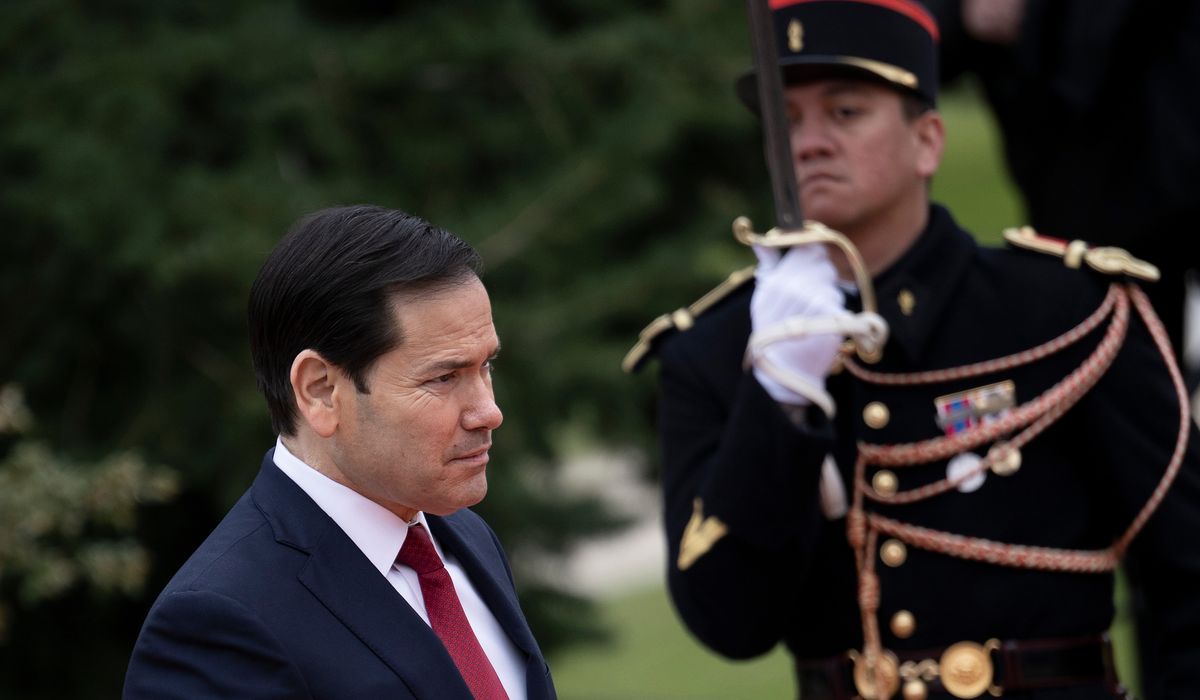
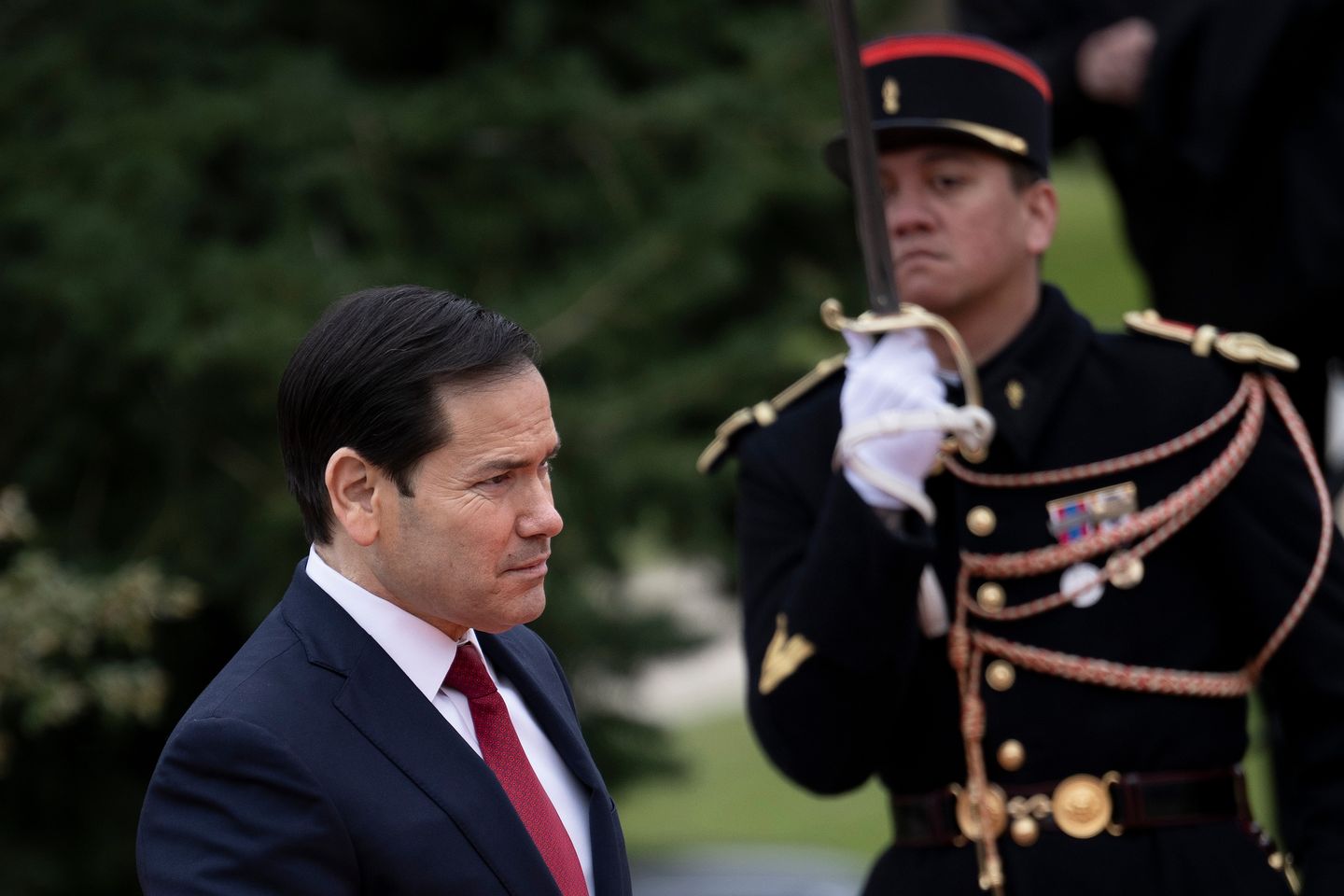
Secretary of State Marco Rubio said Friday that U.S. allies affected by Iran’s closure of the strategic Strait of Hormuz should assist Washington in reopening the waterway.
Meeting with his European and Asian counterparts at the G7 meeting in Cernay-la-Ville, France, Mr. Rubio said neither he nor his colleagues are pushing other nations to take part in the war against Iran, but that reopening Hormuz would likely benefit many countries.
“If those countries are impacted by it, all we’ve said is you guys need to do something about it,” Mr. Rubio told reporters. “Very little of our energy comes through the Strait of Hormuz. It’s the world that has a great interest in that, so they should step up and deal with it.”
At least 20% of the world’s oil travels through the Strait of Hormuz each year. European nations have increasingly relied on Gulf oil traveling through the strait the past few years to wean themselves off Russian oil after it invaded Ukraine in 2022.
Mr. Rubio also said Iran is working quickly to formally establish a toll system for the Strait of Hormuz, which could act as a reliable source of income for the Islamic republic. He told reporters at the G7 meeting that such a system would be illegal and said he was happy most European countries oppose the idea.
He added that the toll system is yet more evidence that America’s decision to go to war was valid.
“Iran has been at war with the United States for 47 years,” Mr. Rubio said. “Iran has been killing Americans and attacking Americans across this planet.”
Legislation before Iran’s Parliament would require vessels traveling through the strait to pay an unspecified amount as a toll, according to the state-affiliated Tasnim News Agency. Over the past two weeks, Iran has let select ships traverse the strait after paying a nearly $2 million fee.
The strait’s closure has caused oil prices to skyrocket and international markets to tank. This week, Brent crude oil prices rose well above $110, and the S&P 500 added to this week’s massive drop on Friday by falling 0.8%.
The economic and political pressure from the strait’s closure led to President Trump’s demand that Iran open the waterway within two days or face strikes on its domestic power plants. He has since extended the deadline to April 6 after citing productive conversations with unnamed Iranian officials.
The U.S. reportedly sent Iranian officials a 15-point ceasefire plan this week. Mr. Rubio said Friday that Washington had not received any response from the Iranians concerning the proposal.
The plan included provisions that would dismantle Iran’s nuclear infrastructure and missile program, halt its support for regional proxy groups and reopen the Strait of Hormuz.
Reports indicate that Iranian intermediaries were expected to deliver a response to the 15-point plan on Friday.
Earlier this week, Iranian state media published five conditions that Iran requires for a ceasefire agreement: a complete halt to attacks by the U.S. and Israel, assurances that the war won’t resume, war reparations, a halt to all U.S. and Israeli attacks against its proxy groups, and international recognition of Iran’s sovereignty over the Strait of Hormuz.