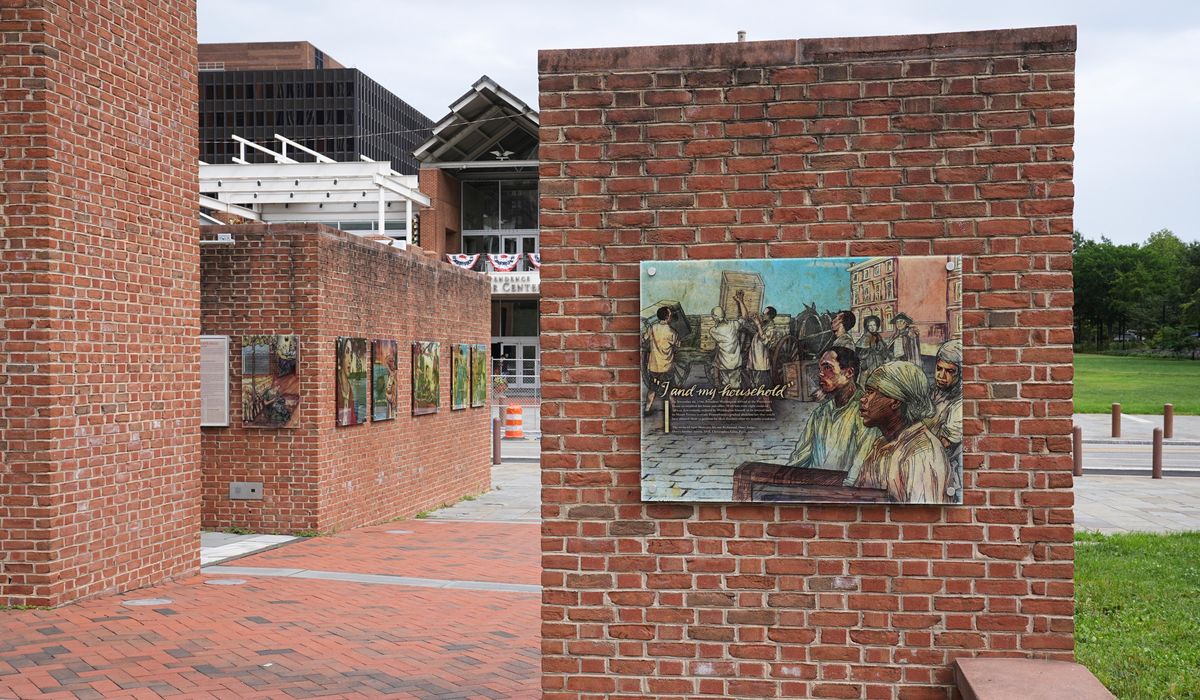
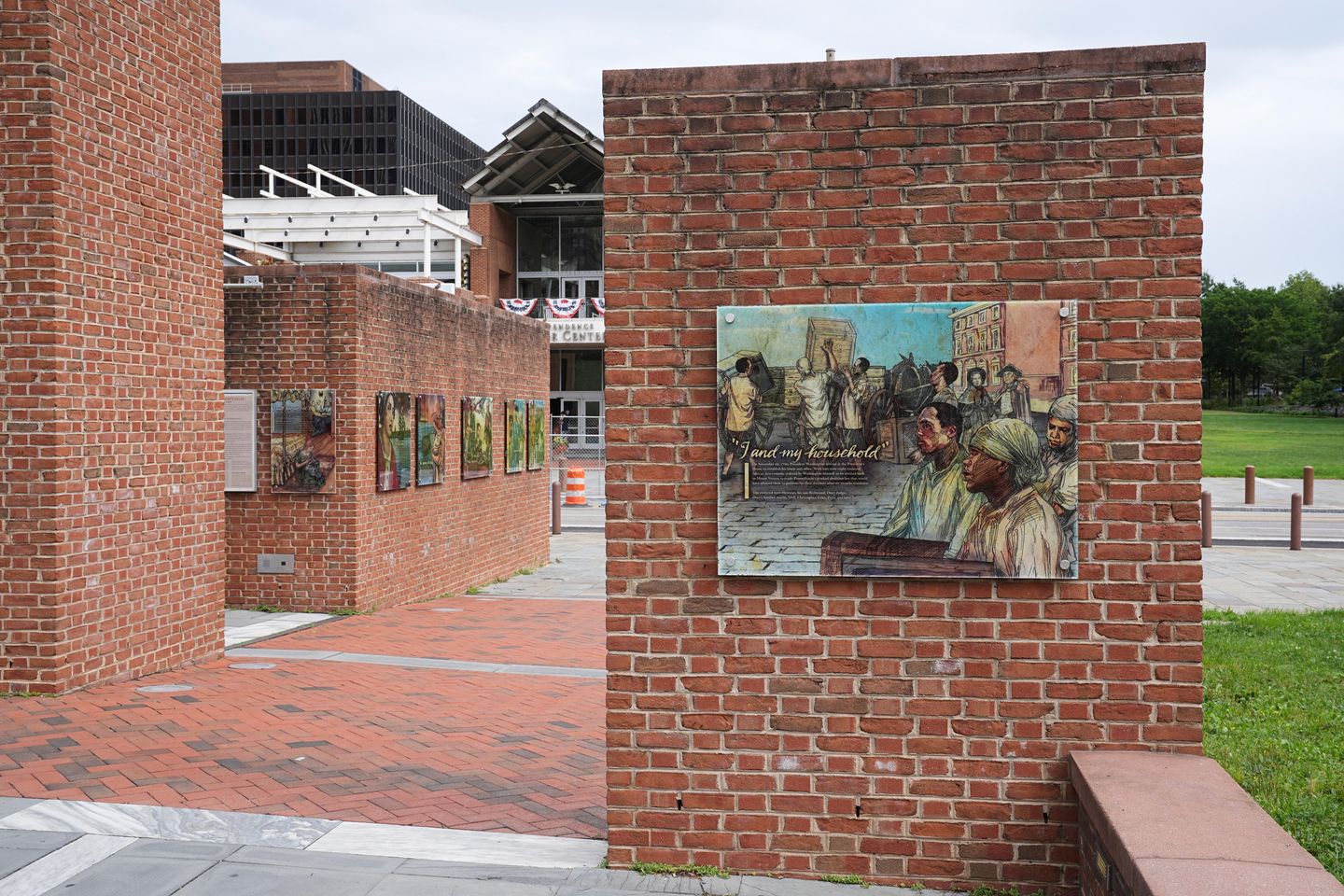
Philadelphia is suing the Interior Department after a slavery exhibit was removed at the President’s House in Independence National Historical Park.
The President’s House, lived in by George Washington and John Adams during their presidential terms, included details commemorating the first president’s nine slaves who also lived there. The slavery parts of the exhibit were removed Thursday.
Philadelphia contends in its suit that the slavery exhibit, which opened in 2010, was established by a joint agreement between the city and the National Park Service in 2006 and that the Interior Department, National Park Service and Secretary of the Interior Doug Burgum violated the Administrative Procedure Act by removing it without the city agreeing.
Philadelphia, site of the park, is asking a federal judge to declare the removal of the exhibit as “arbitrary and capricious”; to declare that the removal was “in excess of Defendants’ statutory jurisdiction, authority, or limitations”; to restore the President’s House to its state as of Wednesday; and to order the defendants not to unlawfully remove slavery material in the future.
An Interior Department spokesperson told ABC News that the agency is complying with an executive order issued by President Trump last March mandating that anything in the department’s jurisdiction does not contain “descriptions, depictions, or other content that inappropriately disparage Americans past or living (including persons living in colonial times).”
Meanwhile, local politicians weighed in.
Pennsylvania Gov. Josh Shapiro, a Democrat, wrote on social media that “Donald Trump will take any opportunity to rewrite and whitewash our history. But he picked the wrong city — and he sure as hell picked the wrong Commonwealth. We learn from our history in Pennsylvania, even when it’s painful.”
Philadelphia City Council President Kenyatta Johnson, also a Democrat, said that “it is totally unacceptable. … The altering or censoring of the memorial threatens the historical integrity of the site, undermines public understanding of our complete past, and erases the experiences of the enslaved individuals whom the memorial honors.”