Terror groups enabled by Pakistan’s military and security establishment continue to pose a serious security threat across South Asia.
On January 21, security forces in India’s capital city of Delhi were placed on high alert after Indian intelligence warned of a possible coordinated terrorist attack, code-named 26-26, on or before Republic Day (January 26).
The terrorists, security forces were told, could target the Ram Temple in Ayodhya and the Raghunath Temple in Jammu, as well as other temples and cities, sources told NDTV.
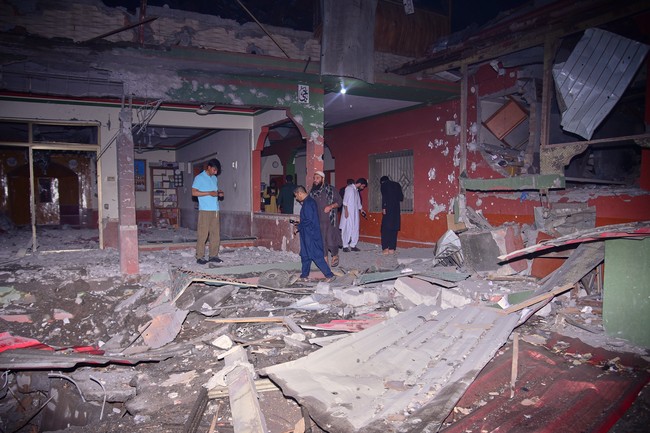
Sources said the attack was planned by the Inter-Services Intelligence (ISI), Pakistan’s military intel agency, via the Jaish-e-Mohammed (JeM). JeM was responsible for the car bomb outside the Red Fort that killed 15 people this past November.
Meanwhile, Western governments continue to embolden Pakistan’s military regime.
Pakistan and Poland, for instance, agreed in October 2025 that they would expand their $1 billion bilateral trade. They signed two memoranda of understanding (MoU) to enhance cooperation between their foreign ministries and research institutions.
On January 20, India’s Foreign Minister Dr. S. Jaishankar held delegation-level talks with the visiting Deputy Prime Minister and Minister of Foreign Affairs of Poland, Radosław Sikorski, in New Delhi.
Referring to Sikorski, a former journalist who covered Afghanistan in the 1980s, Jaishankar asked Warsaw to not help fuel terror infrastructure in Pakistan:
You are no stranger to our region and are more than familiar with the long-standing challenges of cross-border terrorism,” Jaishankar said. “I hope to discuss at this meeting some of your recent travels to the region. Poland should display zero tolerance for terrorism and not help fuel the terrorist infrastructure in our neighborhood.
Yet, partially with the tacit approval of Western governments, Pakistan continues to breed new terror outfits while empowering those already in existence.
The Pakistan Markazi Muslim League (PMML), for instance, is a registered political party in Pakistan. It was established in 2023 as the latest political front associated with Lashkar-e-Taiba (LeT), a UN-designated terrorist organization, under the UN’s ISIS and Al-Qaida Sanctions (Resolution 1267).
Headquartered in Lahore, PMML promotes an Islamist agenda. They contested the 2024 general elections by fielding over 200 candidates nationwide, including prominent figures in constituencies like Lahore and Karachi, but secured no seats.
Key leaders include Talha Saeed (president and son of Hafiz Muhammad Saeed, Lashkar-e-Taiba (LeT) founder and an individual UN-designated terrorist) and other associates from the LeT/JuD (Jamaat-ud-Dawa) network. The party maintains affiliated wings for outreach, such as student, youth, and women’s leagues.
The Muslim Students League (MSL) is a Pakistan-based Islamist student organization that has been actively expanding since 2023. It is focused on promoting Islamic values, ideology, and Muslim identity among youth in educational institutions. MSL has an active social media presence and administers regional chapters (e.g., in Hyderabad, Islamabad, and Tando Allahyar). It is widely regarded as a front and recruitment arm for LeT, a UN-designated terrorist organization. MSL is part of LeT’s broader strategy to expand influence domestically by grooming a new generation in universities and colleges, alongside other proxies like Jamaat-ud-Dawa (JuD), Milli Muslim League (MML), and Pakistan Markazi Muslim League (PMML).
The Muslim Women League (MWL) is a Pakistan-based Islamist women’s organization focused on promoting Islamic values, women’s empowerment through religious principles, ideological indoctrination, and community engagement activities among female audiences. Established as part of LeT’s underground network expansion in 2023, it operates alongside other affiliated wings like the Muslim Student League, Muslim Youth League, Muslim Girls League, and Muslim Kids League, using social media and grassroots events to build support. MWL is widely regarded as a front and recruitment arm for LeT.
Another terror group with increased popularity in Pakistan is the Resistance Front (TRF).
TRF is a jihadist militant outfit that surfaced in 2019–2020 in Jammu and Kashmir. It is rebranded as a proxy front for LeT. It was deliberately projected as a “local, secular resistance” group to mask its Islamist roots and to evade global terror scrutiny after Pakistan came under increased Financial Action Task Force (FATF) pressure.
The Resistance Front is designated as a terrorist organization by India. Furthermore, the United States in 2025 designated TRF as a “Foreign Terrorist Organization” and “Specially Designated Global Terrorist” entity, explicitly stating that the TRF is a front and proxy of LeT. This designation reinforced long-standing intelligence assessments that TRF is not an independent group but part of LeT’s adaptive terror infrastructure.
TRF has claimed responsibility for multiple targeted killings, grenade attacks, and ambushes in Jammu and Kashmir. It has a particular focus on minority civilians, migrant workers, political activists, and security personnel. It was notably linked to attacks on Kashmiri Pandits (Hindus) and non-local laborers (2021–2022), reflecting a strategy of demographic intimidation and psychological terror rather than large mass-casualty strikes.
TRF claimed responsibility for the April 22, 2025, Pahalgam attack, which killed 26 civilians. This was the deadliest attack on civilians in India since the 2008 Mumbai attacks conducted by LeT. TRF has also claimed responsibility for several attacks against Indian security forces, including most recently in 2024.
People’s Anti-Fascist Front (PAFF) is a Pakistan-backed militant front that surfaced publicly around 2020–2021. It projects itself as an “indigenous resistance” group in Jammu and Kashmir. It is a rebrand and proxy extension of Pakistan-based terror networks.
It did not appear through grassroots mobilization, public leadership, or political activity. Instead, its first footprint came via claims of responsibility and statements circulated online, a pattern typical of proxy or rebranded terror outfits rather than organic movements.
Open-source intelligence assessments have consistently linked PAFF to the Pakistan-based terrorist organization, Jaish-e-Mohammed (JeM). Indicators supporting this linkage include overlapping operational tactics, similar attack signatures, the use of hybrid militants guided by remote handlers, and personnel recycling from previously banned outfits.
What distinguishes PAFF from older militant groups is its narrative strategy. Instead of using explicit religious or jihadist language, PAFF deliberately frames its violence through terms such as “anti-fascist,” “people’s resistance,” “occupation,” and “struggle.” This linguistic shift mirrors global activist and left-wing human rights discourse, allowing PAFF to present terrorism as a political or civil resistance movement.
PAFF disseminates its messaging primarily through encrypted platforms and social media, releasing short, stylized statements that are easily amplified by sympathetic or poorly vetted online accounts. The target audience is not local populations alone, but also international journalists, NGOs, digital activists, and diaspora echo chambers, where the “anti-fascist” framing can obscure the group’s true organizational lineage. This approach reflects a broader shift from purely kinetic operations to hybrid information warfare, where shaping perception is just as important as executing attacks.
The Kashmir Fighters is a relatively new militant front that surfaced in 2023–2024 in Jammu and Kashmir. It primarily appears through online claims of responsibility rather than visible ground-level organization. Its appearance aligns with a broader pattern of proxy group recycling, where new names are introduced to sustain militancy while avoiding direct attribution to already sanctioned organizations.
Kashmir Fighters’ emergence follows international pressure on Pakistan to curb terrorist financing and dismantle visible infrastructure linked to banned outfits. In response, handlers appear to have adopted a strategy of launching short-lived, interchangeable group names that claim attacks, thereby diffusing attribution and complicating counter-terrorist designations. This mirrors the operational logic seen with fronts such as the Resistance Front (TRF) and People’s Anti-Fascist Front (PAFF)
The extent to which Pakistan’s intelligence agency (ISI) enables the terror groups operating on its soil is alarming. As the European Foundation for South Asian Studies (EFSAS) explains:
Pakistan also plays a key role in funding these terrorist organizations. As per reports, the yearly expenditure of ISI towards the terrorist organizations runs between 125-250 million USD, covering salaries, cash incentives for high-risk operations and retainers for guides, porters and informers.
Apart from training and funding the terrorist organizations, the ISI has fundamentally altered the dimensions of the conflict in Kashmir by transforming it to a movement being carried out by foreign militants on Pan-Islamic religious terms.
Pakistan is enabling certain terror groups because they see them differently and seeks to benefit from their objectives, which include territorial expansionism, ethnic cleansing, and further regional Islamization. EFSAS notes:
The Army, along with the ISI, still distinguishes between ‘bad’ terrorists (those who target Pakistani Security Forces) and ‘good’ terrorists (those who advance its strategic objectives vis-á-vis Afghanistan, India, and Indian Administered Jammu and Kashmir).
The West – its societies, media, and governments – largely suffers from myopia in the context of jihad terrorism. They are unable, or unwilling, to fully grasp or adequately address the depth, motivations, and evolving tactics of jihad terrorism – in Pakistan and elsewhere. Many Westerners view jihad terrorism through narrow lenses like foreign policy grievances or isolated incidents, rather than as an ideologically and religiously driven phenomenon. This leads to inadequate counter-terrorism strategies and even possibly aiding and abetting terrorism-breeders, such as Pakistan.
This myopia will continue to harm international security until Western foreign policy towards jihad terrorism and its supporters drastically changes.
Like what you’re reading? There’s a lot more where that came from.
PJ Media VIP members get deeper dives, exclusive columns, and commentary you won’t see on the public side. Best of all, you can get 60% off right now with the promo code FIGHT.
Sign up for PJ Media VIP and help us keep telling the stories that matter.