A version of this story appeared in the daily Threat Status newsletter from The Washington Times.
Click here to receive Threat Status delivered directly to your inbox each weekday.
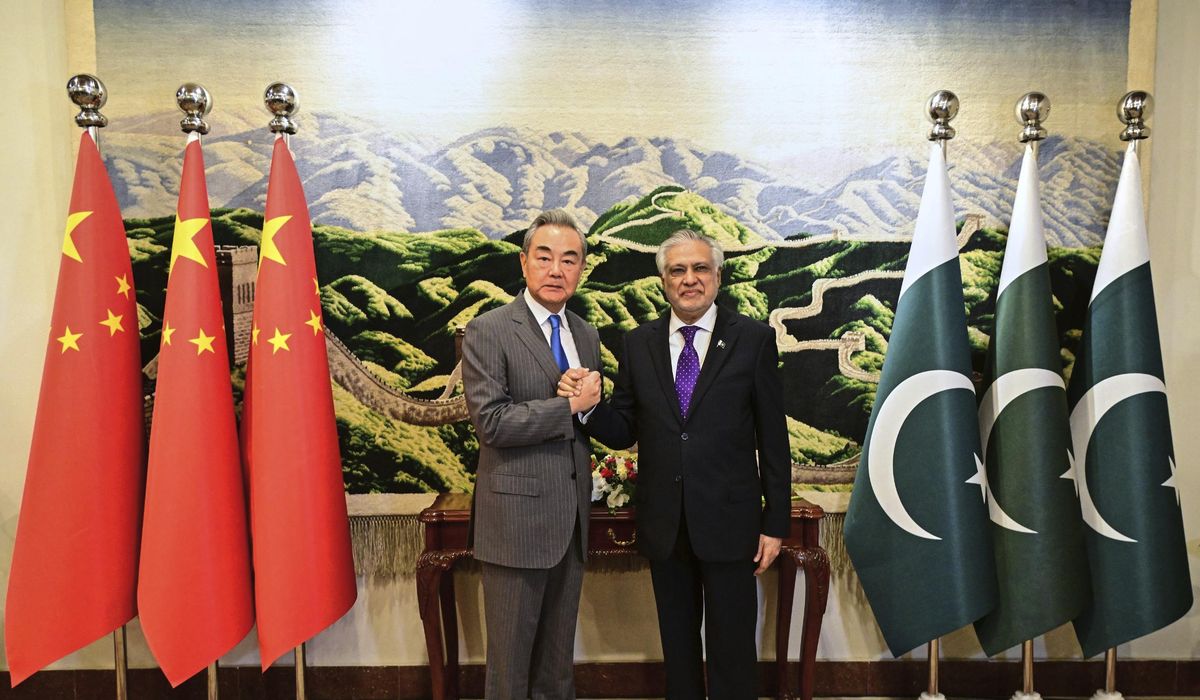
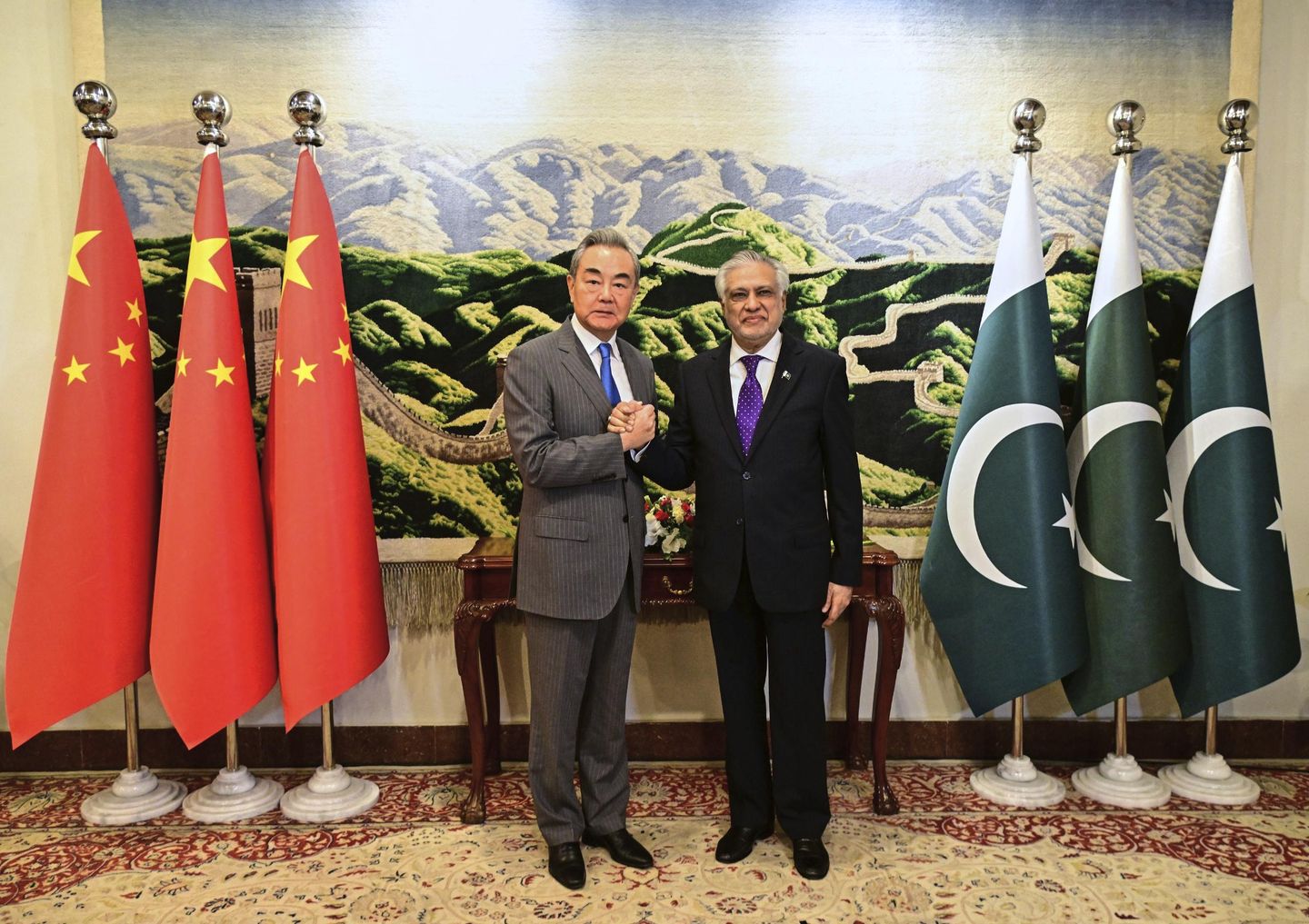
China and Pakistan released a five-point peace initiative for the war in Iran on Tuesday following a meeting between their foreign ministers.
Pakistani Foreign Minister Ishaq Dar met with his Chinese counterpart, Wang Yi, in Beijing to reaffirm bilateral ties and discuss possible diplomatic solutions to the Iran war, now in its fifth week after the U.S. and Israel launched attacks.
It’s unclear what exactly was discussed at the meeting, but the five-point initiative gives clues as to China and Pakistan’s diplomatic goals. Included in the plan are proposals for an immediate ceasefire, a framework for peace negotiations, the end of strikes on civilian infrastructure, the reopening of the Strait of Hormuz to shipping and a return “to the primacy of the United Nations charter.”
China’s Foreign Ministry spokesperson Mao Ning said earlier Tuesday that the two ministers are working to maintain expanded communication channels amid the war and to jointly push for a peaceful solution to the conflict.
“It’s believed that the two foreign ministers will step up strategic communication and coordination on the situation in Iran and other international and regional issues of mutual interest, jointly call for peace and a just position, and make new effort to help end the conflict and bring about peace and stability in the region,” Ms. Ning told reporters at a daily briefing.
The U.S.-Israeli war with Iran, which began on Feb. 28, has allowed Pakistan to emerge as an unlikely peace partner after years of relative obscurity in regional politics.
Pakistan has been the key mediator in the purported talks between Washington and Tehran. However, Iran has denied participating in active negotiations with the U.S., and President Trump has refused to name its negotiating partner in Tehran.
Mr. Dar hosted a series of bilateral talks among the foreign ministers of Saudi Arabia, Egypt and Turkey in Islamabad on Sunday, hoping to shore up support for peace in the region. The meeting reportedly focused on strategies for reopening the Strait of Hormuz, but it remains unclear what concrete progress was made.
The warring nations, the U.S., Israel and Iran, did not participate in the Islamabad talks.
Pakistan has long walked a fine line, balancing its relationships with Washington and Beijing by creating positive investment opportunities for China while offering support for the U.S. and its initiatives in the Middle East.
China has invested nearly $70 billion in Pakistan over the past two decades, with large-scale energy projects making up the majority of the portfolio. The centerpiece of China’s investment in the country is the China–Pakistan Economic Corridor, part of Beijing’s Belt and Road Initiative, aimed at opening an energy corridor between the two nations.
China, and Mr. Wang in particular, has been supportive of Pakistan’s peace efforts. Mr. Wang praised Mr. Dar’s diplomatic overtures in a phone call Sunday, adding that it may be the “only viable path to avoid further casualties and losses.”
For China, halting hostilities and reopening the Strait of Hormuz is necessary to keep Iranian crude oil flowing. Beijing is by far the largest purchaser of Iranian oil, buying upwards of 90% of Iran’s total oil exports. Approximately 12% of China’s total crude imports come from Iran, according to a report from the U.S.-China Economic and Security Review Commission.
Beyond Iranian oil, at least 40% of China’s crude oil imports traverse through the strait each year, along with one-third of the country’s liquid natural gas purchases. China has also started diversifying its Middle East energy purchases, buying $108 billion worth of oil from the United Arab Emirates and Saudi Arabia in 2025.