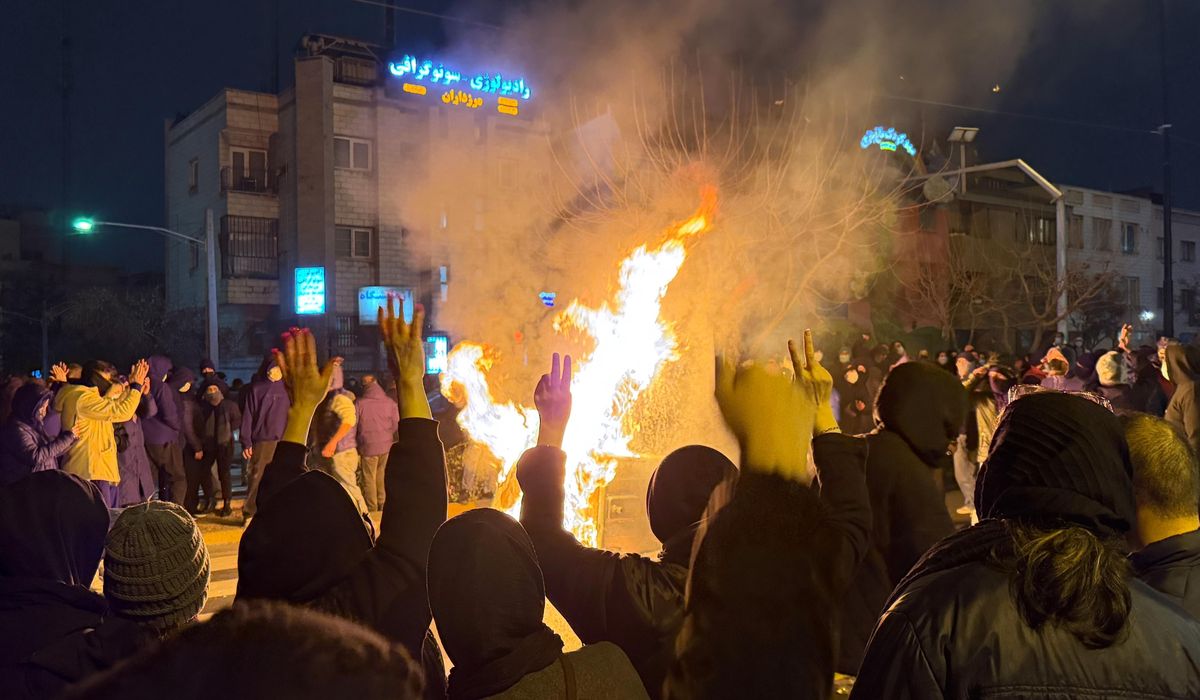
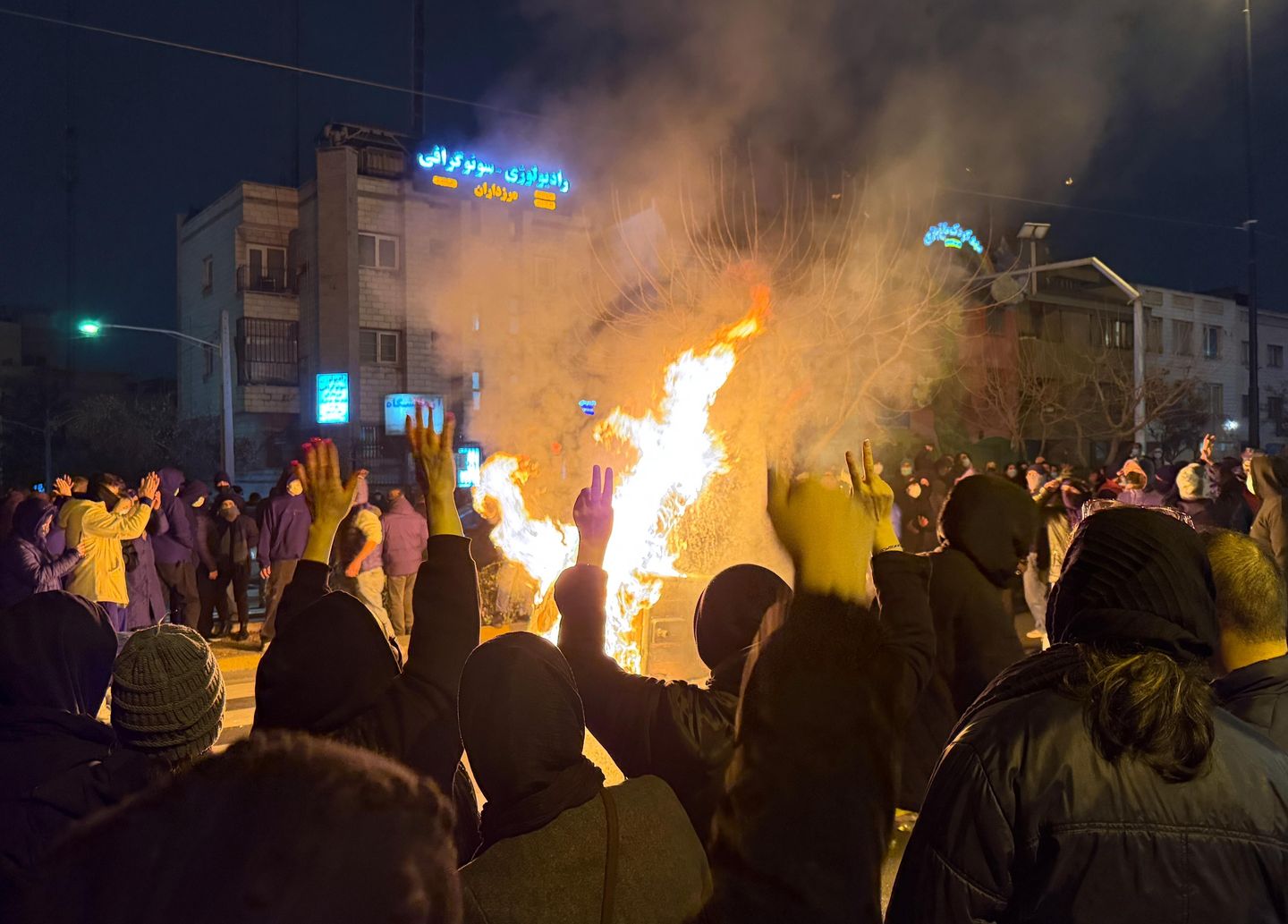
Omani Foreign Minister Sayyid Badr bin Hamad Al Busaidi insisted on Tuesday that the Iranian regime is fully intact this week despite enduring weeks of intense, nationwide protests aimed at overthrowing the Islamic republic.
In an exclusive interview with the Times’ Tim Constantine, the minister, who met with Iranian officials earlier this week in Tehran, said Western media is exaggerating the extent of the protests.
“I did not spot or feel that the country is in any kind of turmoil whatsoever. Business is as usual,” Mr. Busaidi said. “It is not what we see on the media that the country is in turmoil and the regime is on the verge of collapse, or there is a revolt against the regime. These protests are predominantly aimed at demanding reform rather than a change of a system or the regime.”
Those comments are widely out of step with reports from international humanitarian organizations, experts and journalists who insist that the protests, which have been recorded in all of Iran’s 31 provinces, are some of the largest the Islamic republic has faced in recent memory.
The rhetoric included in videos of protests leaked out of Iran has also grown in aggression over the past two weeks, with crowds chanting for the end of the Islamic republic and the removal of Supreme Leader Ayatollah Ali Khamenei.
Tehran has reacted violently to the ongoing demonstrations, with reports indicating that over 2,000 people have been killed over the past 16 days and more than 10,000 have been arrested. Additional videos and photos from over the past week have shown Iranian citizens crowded around piles of black body bags allegedly containing the remains of protestors killed by security forces.
But an ongoing internet and cellular blackout, instituted by Iranian authorities last week, has made it difficult to verify the death toll independently.
Mr. Busaidi pushed back against reported death figures, insisting that Iranian security forces have practiced restraint in dealing with protestors.
“The government did a lot in trying to restrain themselves from using violence. I think that is a fact. No one wants to kill their own people,” he told the Times. “I think there’s a lot of exaggeration on the figures.”
The reported brutality of the Iranian response to the protests has led to President Trump’s recent hints of U.S. intervention. On Tuesday, Mr. Trump told Iranian protesters to “take over” their governmental institutions and promised them that help was “on its way.” It remains unclear what form U.S. assistance in Iran would take.
Mr. Trump also announced Tuesday that he had cancelled all planned meetings with Iranian diplomats, without confirming who had reached out or when they were scheduled to talk. Iranian Foreign Minister Abbas Araghchi said Monday that his country was “prepared for war,” but was ready for negotiations with the White House.
The president’s threats and cancellation of diplomatic talks deeply disturbed Mr. Busaidi, who acted as one of the primary mediators during U.S.-Iranian nuclear talks last year.
“I am contemplating in the moment, actually reaching out to our American friends to say, ‘Look, I was in Tehran. This is what happened. This is what I heard. The ball is in your court please, if you care to respond to that, we’re happy to carry that response,’” he said.