SEOUL, South Korea – Tokyo announced Friday that it is not changing its long-held position on not possessing nuclear weapons, nixing pro-nuclear remarks made by an official late Thursday.
Tokyo’s main spokesperson, Chief Cabinet Secretary Minoru Kihara, told reporters that Japan’s nuclear policy, held since after World War II, had not changed.
However, he declined to comment on Thursday’s remarks, nor did he say whether the person would remain in government.
There was no denial of the reported remarks.
“I think we should possess nuclear weapons,” said a “source in the prime minister’s office,” multiple Japanese media, including Kyodo News, reported Thursday.
The source has not been identified but is reportedly involved in devising security policy.
The comments may represent a trial balloon to gauge public reaction in a democracy that is staunchly anti-nuclear but is also increasingly nervous about the arc of authoritarian nuclear powers to its north and east.
Chinese regional assertiveness, North Korean defiance of non-proliferation norms and Russian aggression have all rung alarm bells in Tokyo.
“In the end, we can only rely on ourselves,” the source reportedly said.
That reflects similar views among some in neighboring Seoul, where discussions at conferences and coffee shops over the acquisition of a nuclear deterrent are frequent.
In both capitals, there is quiet concern that a U.S. creep toward isolationism means Washington’s “nuclear umbrella” cannot be fully trusted.
Still, the move toward nuclear would not be easy.
Japan would have to gauge sentiment among its global partners, announce its withdrawal from the Nuclear Non-Proliferation Treaty and enrich fissile materials to weapons grade.
It then would need to develop delivery systems and storage and use protocols.
“It isn’t something that can be done quickly, like just going to a convenience store to buy something,” the official admitted to reporters.
Experts widely agree that Japan, home to an advanced nuclear energy industry, could advance from nuclear latency to nuclear breakout if required. It would take six months to five years, according to various opinions.
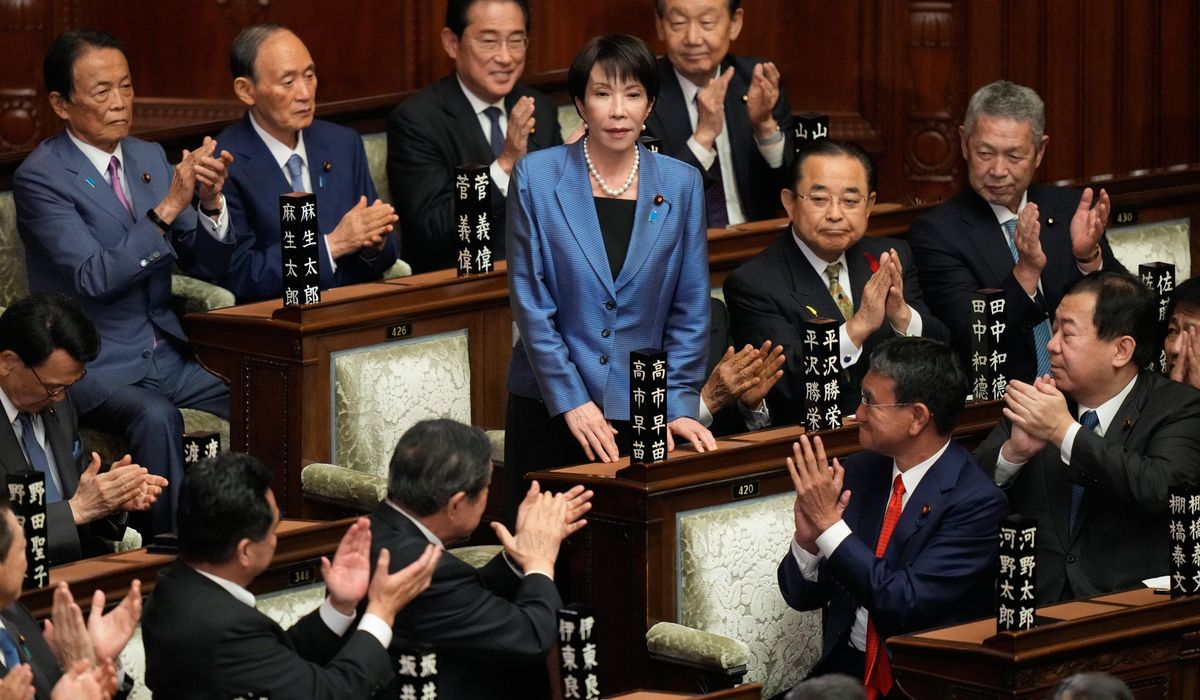
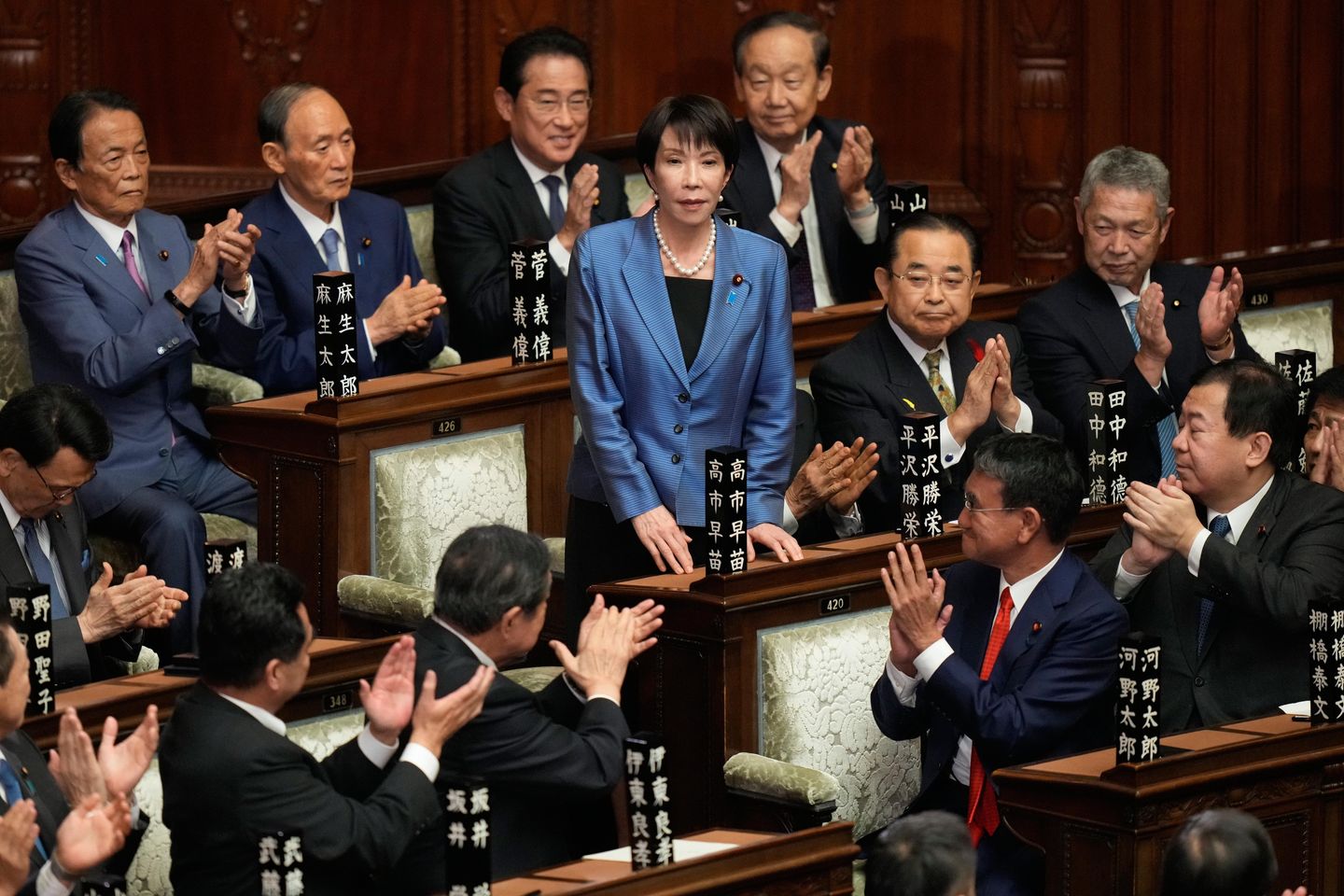
The non-denial of Thursday’s comments is the second nuclear hiccup since conservative Sanae Takaichi, a defense hawk and a political nationalist, took office as prime minister in October.
In November, sources close to Ms. Takaichi told reporters she was considering a review of the country’s 1967 “Three Principles” related to nuclear arms: no production, no possession and no introduction. (The latter refers to the importation of nuclear arms by an ally.)
Japan is the only nation to have suffered nuclear strikes — the cities of Hiroshima and Nagasaki were razed in U.S. atomic bombings during WWII in 1945. Since then, it has been constitutionally and socially opposed to nuclear arms.
That stance did not shift in 1964, when China detonated its first nuclear device. Nor did it change in 2006, when North Korea did the same. A Japanese official briefing foreign reporters in Seoul at the time made clear that Japan would remain wedded to its non-nuclear status.
Given the seismic nature of the 1964 and 2006 developments, it is not clear what might trigger Tokyo to go critical in the future.
What is clear is that Japan, in 2014, “re-interpreted” its pacifist constitution to enable “collective defense,” or defense of allies.
That tricky process was engineered by Ms. Takaichi’s political mentor, the late Shinzo Abe, Japan’s longest-serving post-war prime minister.
Since then, Tokyo, under the Liberal Democratic Party, has significantly increased its weapons stash, without major public or political pushback.
Among standout assets, it has acquired a marine brigade and a brace of F35B light aircraft carriers, and it is in the process of obtaining important U.S.-made long-range Tomahawk cruise missiles.