A decorated former Defense Intelligence Agency counterintelligence official used a psychic to identify spies working in the U.S., including a suspected foreign agent still working for the FBI, former DIA counterspy, Scott W. Carmichael reveals in a forthcoming book.
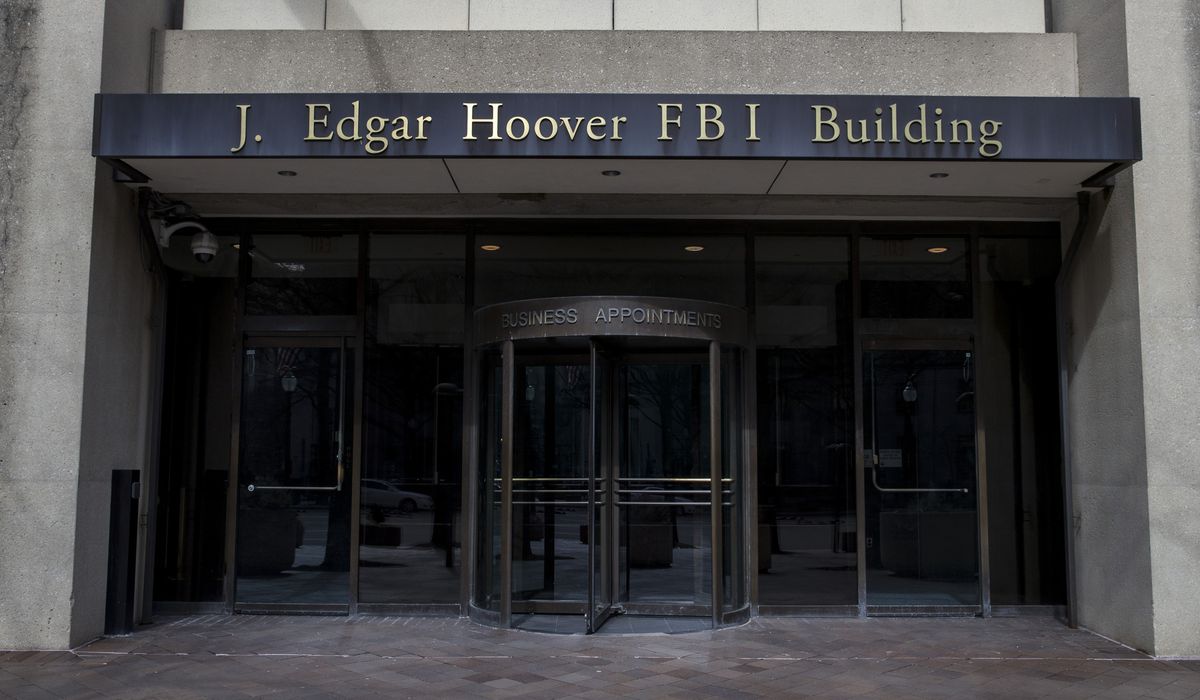
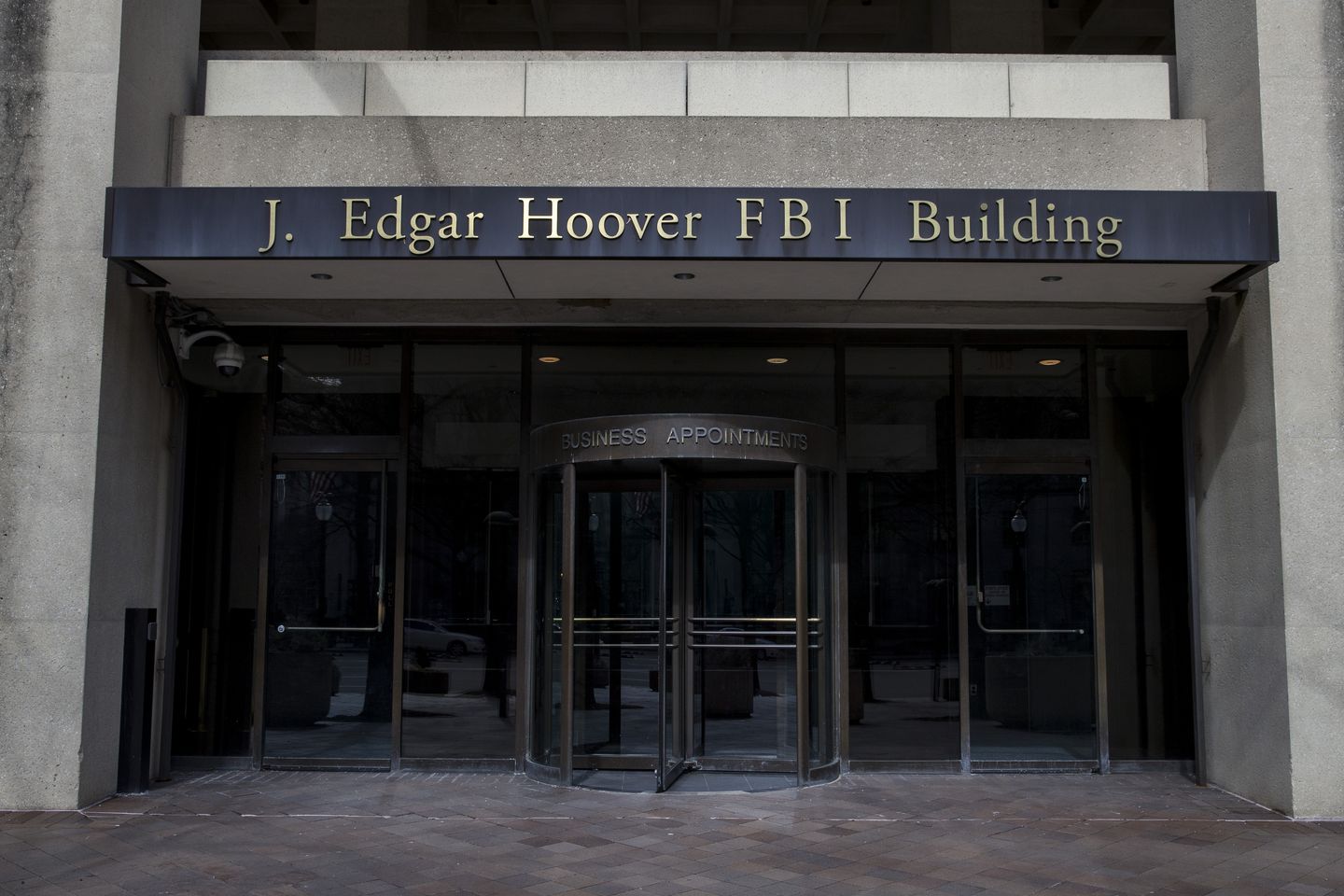
Mr. Carmichael told The Washington Times he is concerned the FBI failed to properly investigate the suspected spy within its work force despite information indicating the official secretly met a foreign senior intelligence official overseas in 1998.
Details of the successful use of a DIA psychic, Angela Dellafiora Ford, also a now-retired DIA official, are contained in Mr. Carmichael’s unpublished book “Unconventional Method.”
The book was recently cleared for publication by DIA censors and a copy was obtained by The Times.
The use of psychics for intelligence and security operations, including hunting for spies, locating hostages and finding foreign surveillance gear officially ended in 1995, when so-called remote viewing programs known as Star Gate and Grill Flame were shut down.
The effort to locate spies with the help of psychics continued unofficially for several years after through what Mr. Carmichael said was a private, personal effort carried out with a handful of officials who had the blessing of senior DIA leaders.
Mr. Carmichael, who received multiple intelligence awards before retiring in 2014, said initially he was highly skeptical of using psychics to track down spies in government.
But after Ms. Ford provided accurate details that led to the arrest of an Australian intelligence official who tried to sell U.S. satellite imagery secrets, he became a believer in the unorthodox technique.
Mr. Carmichael in his 25-year career at DIA in counterspy work won praise for unmasking several foreign spies in the federal government, notably DIA analyst Ana Montes, a notorious Cuban agent who spied undetected for Havana for 17 years as a supporter of the communist regime in Havana until her arrest in 2001.
Before joining the DIA, Mr. Carmichael was a police officer and agent for the Naval Criminal Investigative Service. Among his awards are the National Intelligence Medal of Achievement, Defense Intelligence Director’s Award and citations from the FBI director.
The former counterspy said he wrote the book, an insider account with previously undisclosed information, in an effort to highlight what he regards as a major FBI counterintelligence failure.
The FBI, he said, was notified about the suspected current spy in its work force around June 2005.
Despite that tipoff, the FBI counterintelligence agent who received the notice told him in 2006 that the bureau reviewed the suspect’s polygraph test results, ruled them to be satisfactory, and closed the case.
“They didn’t even bother to interview the employee,” he said. “To the best of my knowledge, he remains unaware of the fact that anyone suspected he was identifiable with an FBI UNSUB.”
“UNSUB” is counterintelligence jargon for an unknown subject — a person suspected of being a foreign spy.
Mr. Carmichael did not disclose many details on the case in the book or in interviews. But he described the suspect as a military service member who later retired and then joined the FBI and held a high-level security clearance.
“Today, he serves in a supervisory capacity at FBI headquarters and has been employed by the FBI for a bit more than 20 years. He is rapidly nearing retirement age,” Mr. Carmichael said. “This is a serious case.”
FBI and DIA spokesmen did not respond to email requests for comment.
Other sources identified the suspect as a former warrant officer who met secretly with a general in Russia’s GRU military intelligence service — a major indicator of potential espionage.
Mr. Carmichael said Ms. Ford during psychic sessions disclosed nearly the exact name of the foreign intelligence official who met the American service member. “And that was the point where Angela made a true believer out of me,” he wrote.
Other details included a sketch drawn by a forensic artist that appeared nearly identical to the suspect’s driver’s license photo.
Mr. Carmichael said he submitted very detailed letters to the FBI and military investigative agencies on the case but that the case was never pursued.
The first major counterspy success for Ms. Ford involved the Australian imagery analyst Jean-Philippe Wispelaere. Canadian-born Wispelaere worked at the Australian Imagery Organization within the Defense Intelligence Organization, an intelligence unit that received secret U.S. satellite photos.
He quit abruptly in January 1999 and days later walked into a Singapore embassy in Southeast Asia with an offer of a secret U.S. satellite photo for sale and identifying himself under a false name, Jeff Baker.
The Singaporeans instead tipped off U.S. intelligence, which launched an investigation to identify the suspected turncoat.
The FBI initially thought Wispelaere was Canadian.
At DIA, in what officials said was an officially approved personal activity, Ms. Ford conducted several psychic sessions that correctly identified the spy as Australian or someone close to Australia, something Mr. Carmichael later confirmed through DIA records.
Karl C. Glasbrenner, also a retired DIA security official and Mr. Carmichael’s former boss, said Ms. Ford was a remnant of the “remote viewing” program code-named Star Gate that was canceled in 1995.
The use of psychics for intelligence began in the late 1970s at the Army’s intelligence and Security Command and moved to DIA in the early 1980s. The program was then transferred to the CIA, which killed the effort after deeming it unproductive.
In addition to Star Gate, the 16-year program used other code names, including Grill Flame. Supporters say it achieved some successes.
“In fact, the psychics scored a number of remarkable successes,” the book states, including helping to locate terrorist-held hostages and other missing people.
Ms. Ford, Mr. Glasbrenner said, correctly identified Wispelaere with a near-correct spelling of his name and disclosed that the suspect was Australian during the psychic sessions – information that she had no physical way of knowing. “Angela Ford had some phenomenal skills in the remote viewing arena,” Mr. Glasbrenner said.
Both Mr. Carmichael and Mr. Glasbrenner said the unconventional activities were approved by senior DIA officials although as sideline efforts they lacked the imprimatur of the military intelligence agency.
Mr. Glasbrenner said Ms. Ford initially took part in finding overseas listening devices for DIA. In one case her information led U.S. security officials in Bosnia to a listening device planted in a flowerpot in a building and television surveillance monitoring systems directed from the basement of the same building.
Mr. Glasbrenner said he is familiar with the case involving the former military member said to be still working for the FBI.
“I think the FBI has a little bit of difficulty in tracking down one of their own and part of the reason could be because it could unravel cases that they worked on, things of that nature,” he said. “So they don’t necessarily want to find the problem in their own ranks.”
The book explains how Ms. Ford conducted her work as an intelligence-gathering psychic.
Without any prompting or discussion between her and DIA officials, a clue or question would be placed in a double-sealed envelope. Ms. Ford would then sit in a room and begin writing doodles on a note pad while entering a trance-like state. She would concentrate on the sealed envelope and begin taking notes.
During the sessions, a separate note-taker also would record her comments that were said to be linked to the contents of the envelope.
In some cases, the psychic would visualize words or seem to hear words in their mind, including locations and people’s names, and then record the words and the sounds on paper.
“To observers, she appears to be doodling,” the book states. “But the writing is actually a process of recording information that she receives in her mind.”
The accuracy rate in counterespionage probes was about 30% although Ms. Ford in some cases provided extremely detailed information.
Ms. Ford said Mr. Carmichael engaged in real-world counterintelligence work using the psychic methodology known as remote viewing.
“While controversial, remote viewing was explored alongside traditional tradecraft to generate leads and perspectives that proved operationally relevant,” she stated in an email.
According to the book, Ms. Ford is not a scientist and does not know exactly how the process works.
“Angela believes that every event generates or leaves in its wake a quantum of psychic energy – a fingerprint of energy which uniquely marks that event forever,” the book stated.
“If one could access such uniquely marked tags of energy, one could reconstruct an experience or otherwise access the original event … Automatic writing enables the practitioner to access those uniquely marked tags of energy.”
Several DIA psychics remained working for the agency as officials in other capacities after the program was canceled, including Ms. Ford.
Mr. Carmichael said he is aware that other security intelligence officials and agencies dismiss the use of psychics as unproductive. He noted there is often a “giggle factor” when the experimental method is raised.
There also are legal concerns that if a spy is captured through psychic means that the method could be used to thwart a prosecution, he said.
The process can be both odd and scary, he said. “But frankly, how it works, though of interest, is not terribly important to me. I do care principally about the acquisition of accurate and actionable information,” Mr. Carmichael said.
Within the short-lived intelligence psychic community, Ms. Ford was an anomaly. The others involved in remote viewing were banned from the use of automatic writing and instead followed a method called “coordinate remote viewing” that used photos and geo-coordinates.
China and Russia are said to be using psychic methods to gather intelligence and counterintelligence information, according to the book.
The suspected foreign agent still working for the FBI, if confirmed, would highlight a number of spy failures attributed to the FBI counterintelligence unit over the past two decades.
One of the FBI’s prime recruited Chinese agents in Southern California, Katrina Leung, turned out to be a longtime Beijing double agent who supplied China with secrets until her arrest in 2003.
In 1999, FBI counterintelligence agents also falsely hounded then-CIA counterintelligence official Brian Kelley for nearly three years beginning in 1999, alleging he was a Russian mole.
The probe included threats to his family and continued until a defector identified the actual mole — FBI counterintelligence agent Robert Hanssen — as the traitor who was arrested in 2001.
Peter Strozk, FBI deputy assistant director of the counterintelligence division, was fired in 2017 after a text message revealed he had promised his mistress “we’ll stop” Donald Trump from becoming president.
Mr. Strozk led the controversial investigation into alleged Trump campaign collusion with Russia during the 2015 presidential election.
Mr. Carmichael said he favors greater use of psychics for intelligence agencies, including counterintelligence.
“There are unknown numbers of Americans currently active within our system whose crimes have gone completely undetected to date,” he stated. “Angela and others like her could help.”
“When American warfighters are in harm’s way somewhere in the world, then an unresolved UNSUB case means that someone’s son or daughter may die,” he said. “It’s really that simple. And harsh.”
However, Mr. Carmichael said it is unlikely U.S. counterintelligence officials will leverage psychics in their work.
“The counterintelligence community would rather hide its head in the sand and deny that espionage is occurring than answer to the Giggle Factor from its public,” he said.