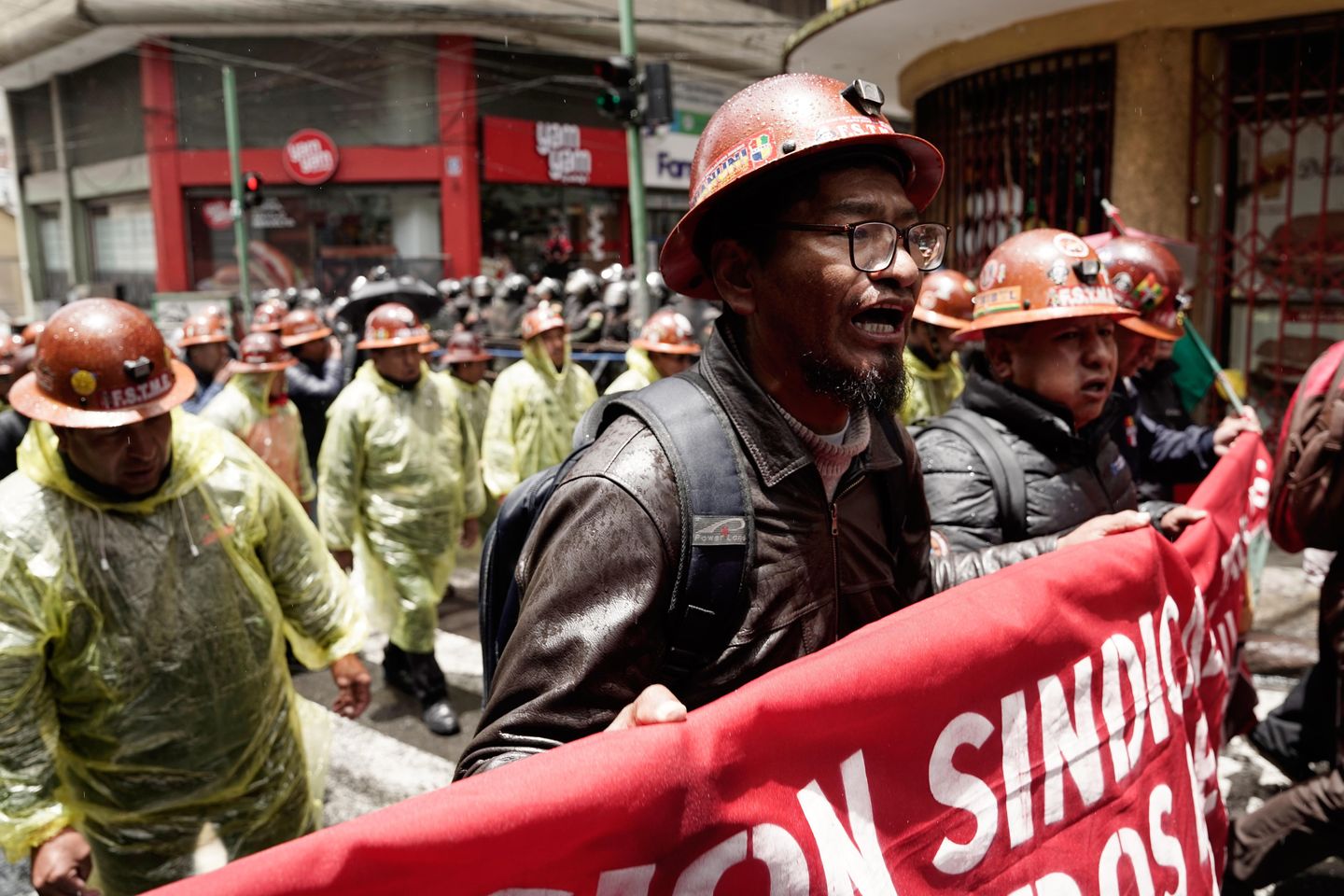
LA PAZ, Bolivia — Bolivian miners set off dynamite sticks and launched fireworks at police on Tuesday, the eighth consecutive day of protests against economic reforms decreed by incoming President Rodrigo Paz.
Police in La Paz, a city located 12,000 feet (3,660 meters) above sea level, used tear gas and rubber bullets to push back hundreds of protesters, who tried to break through barricades set up around a square where the nation’s Congress is located. Police did not report any arrests.
Last week, hundreds of miners from state owned companies arrived in Bolivia’s capital city to demonstrate against the economic reforms of Paz, the centrist president who was elected in October. The reforms include the removal of fuel subsidies that had been around for two decades.
The protesters have not been joined by many trade groups, including transport workers. But they have been joined by teachers unions and some Indigenous groups. That suggests staunch opposition to the new president’s measures among constituencies aligned with the Movement for Socialism, the party that ruled Bolivia for two decades and was voted out of power this year.
“Our protest is not only against the elimination of the (fuel) subsidy, but against this damned decree that will put the country and new generations in debt,” said Mario Argollo, a leader for Bolivia’s Central Workers Union.
Paz, a former city mayor and legislator, improved relations with the United States after taking office in November, by announcing he would accept an ambassador from Washington. The two countries had not exchanged ambassadors in the past 17 years.
In December, the new president signed a decree that slashes fuel subsidies that economist say worsened a severe shortage of U.S. dollar s that had recently hobbled Bolivia’s economy.
Without the subsidies however, the price of gasoline in Bolivia has almost doubled, rising from 53 cents per liter to $1.
Paz also increased the nation’s minimum wage and issued an economic reform that will enable the nation’s central bank to borrow money without the approval of Bolivia’s legislature.
The president campaigned on a platform known as “capitalism for all” and has promised to reduce interest rates and attract foreign investment to the landlocked South American nation.