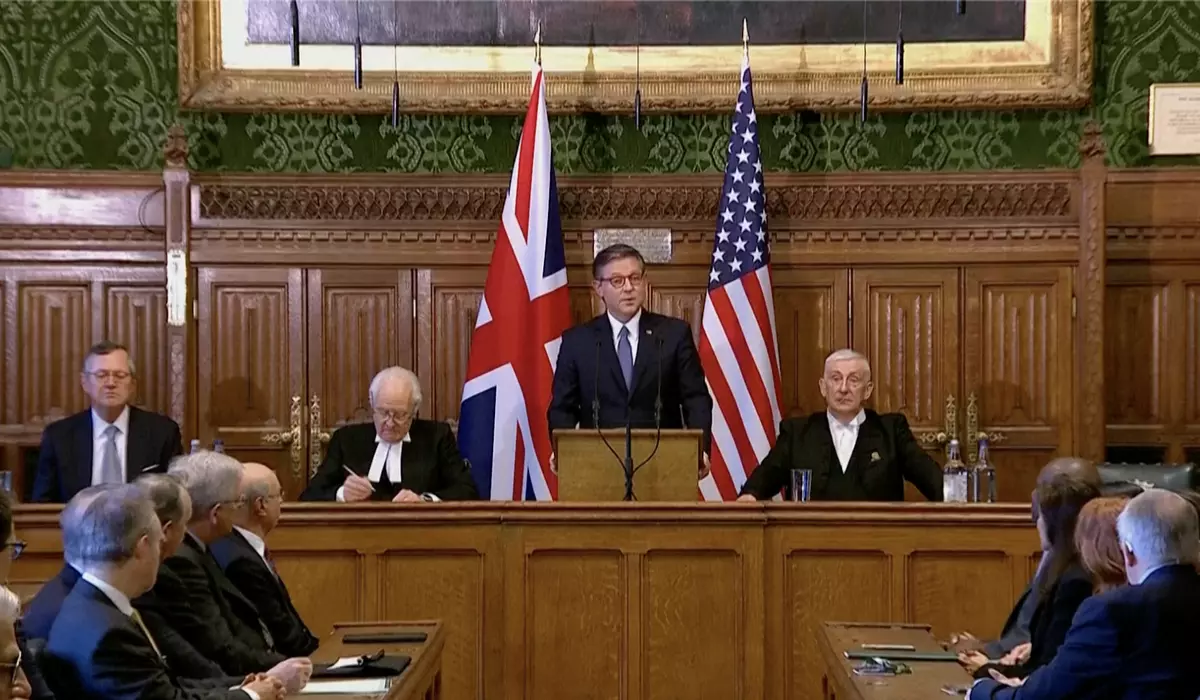
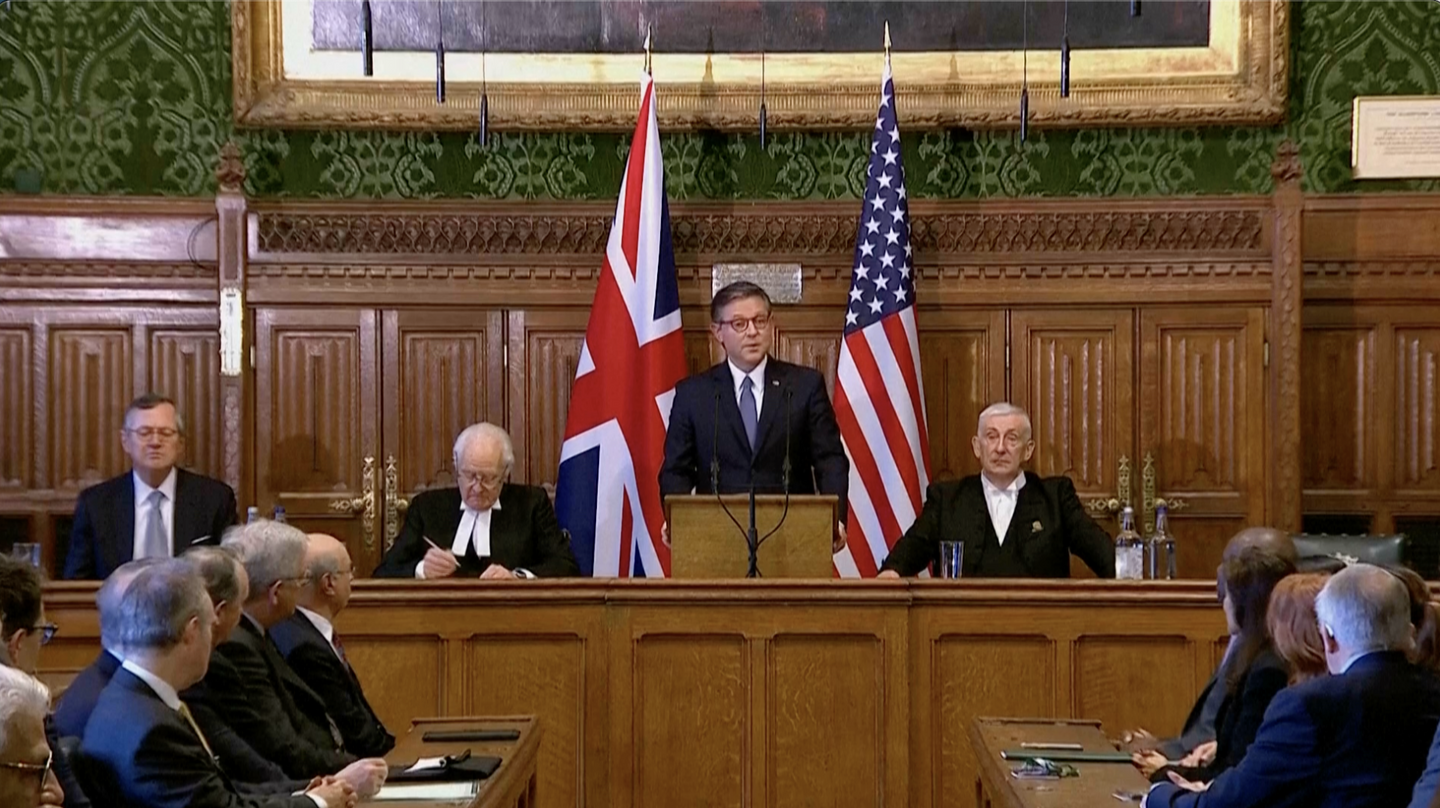
House Speaker Mike Johnson sought to reassure Britain about trans-Atlantic relations on Tuesday, expressing confidence in maintaining the countries’ historic partnership even as President Trump’s designs on Greenland spark concern among European allies.
“I am confident that we can and will maintain and strengthen our special relationship between these two nations,” Johnson told the U.K. Parliament in a historic address, becoming the first U.S. House Speaker ever given this honor.
Johnson’s visit to London comes amid rising tensions over the Trump administration’s stance on Greenland, with the White House indicating it is considering options that could include military action to gain control of the strategically located, mineral-rich island. Greenland is part of NATO ally Denmark, and Trump’s threats have prompted a flurry of diplomatic activity across Europe.
Speaking on Tuesday to mark 250 years of American independence from Great Britain, Johnson said he had met with U.K. Prime Minister Keir Starmer the day before, after Starmer delivered a national address addressing concerns about the U.S.-UK relationship.
Johnson praised Starmer’s message, emphasizing the “strong, constructive partnership” between the allies built on “mutual respect and focused on results.”
“Because of that, we’ve always been able to work through our differences calmly as friends, and we will continue to do that. I want to assure you this morning that that is still the case,” Johnson told Parliament.
The speaker revealed he had spoken “at length” with Trump on Monday and said he felt his mission in the U.K. was “to encourage our friends and help to calm the waters.” He urged: “As the Prime Minister said yesterday, let us look to agreement, continue our dialogue, and find a resolution just as we always have in the past.”
Johnson said strengthening the U.S.-U.K. relationship would “send a message of unity and resolve to our allies around the world, and remind our adversaries and the terrorists and tyrants everywhere that our nations that are dedicated to freedom and justice and order and human dignity are stronger and more resolved now than ever before.”
European leaders are considering possible countermeasures to U.S. actions, including retaliatory tariffs and potential use of the European Union’s anti-coercion instrument.
This article is written with the assistance of generative artificial intelligence based solely on Washington Times original reporting and wire services. For more information, please read our AI policy or contact Steve Fink, Director of Artificial Intelligence, at sfink@washingtontimes.com
The Washington Times AI Ethics Newsroom Committee can be reached at aispotlight@washingtontimes.com.