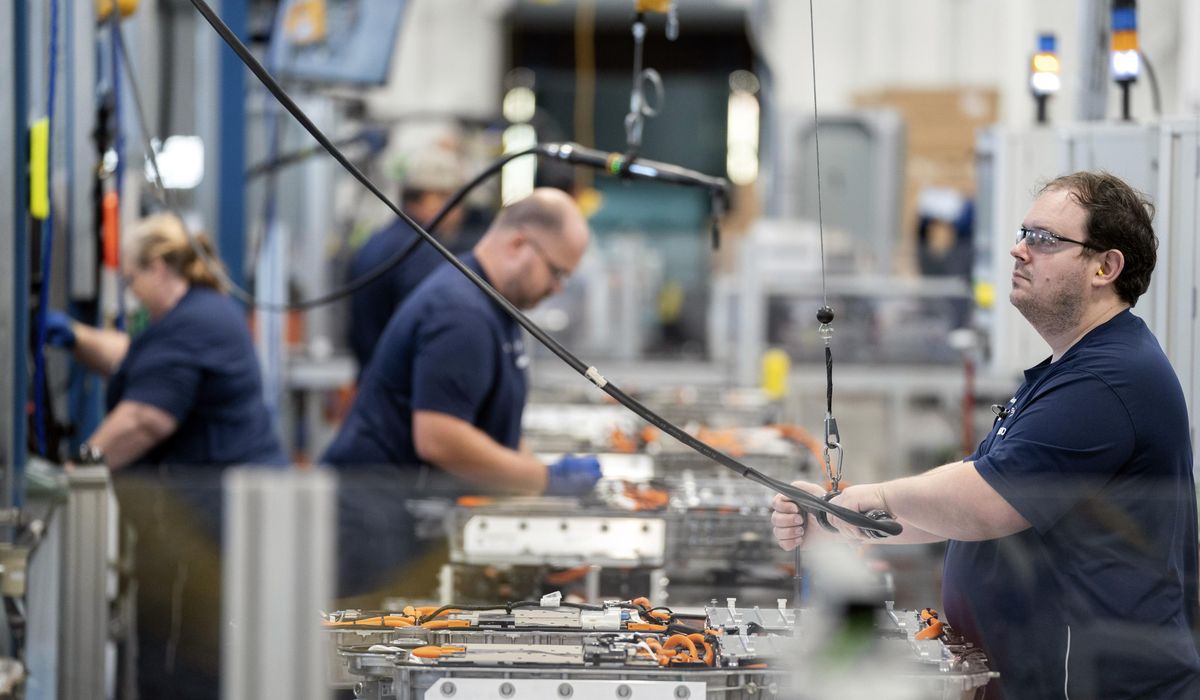
U.S. manufacturing contracted for a ninth consecutive month, according to a closely watched index released on Monday that showed mixed signals about the economy and heaped pressure on President Trump to deliver on his “made-in-America” promises.
The Institute for Supply Management said its Purchasing Managers’ Index slid to 48.2% in November, a 0.5-point drop from October.
A reading below 50% signals a decline in manufacturing. An index measure above 42.3%, however, generally indicates an expansion of the overall economy.
Mr. Trump is attempting to revive the U.S. manufacturing sector by imposing sweeping tariffs on foreign goods and urging overseas companies to set up shop in America.
He has secured multibillion-dollar investments from major companies in Japan, South Korea and elsewhere. However, the uncertainty around tariffs is seen as an economic headwind, and costs for inputs – the supplies that U.S. factories need – can rise due to tariffs.
The Trump administration says its trade program, paired with tax cuts and deregulation, will pay off as the policies take root heading into 2026, a mid-term election year. The Supreme Court will rule in the coming months on whether tariffs imposed under a law allowing emergency actions are legal.
Democrats say Americans are losing patience.
“Trump promised the American people that he would lower costs and bring a ‘manufacturing renaissance.’ What did we get instead? Soaring inflation, widespread layoffs, and desperate consumers,” Democratic National Committee Rapid Response Director Kendall Witmer said. “Prices continue to climb, the manufacturing industry is bleeding, and Americans are stretching their pockets just to make ends meet — all while Trump’s administration asks struggling Americans to ‘have a little bit of patience.’”
The White House says Democrats are overstating troubles in the economy and did not help matters by spearheading a lengthy government shutdown with their health care demands.
National Economic Council Director Kevin Hassett pointed to robust Black Friday spending as a sign that shoppers remain optimistic, and the Federal Reserve may juice the economy with a third straight interest-rate cut later this month.
For now, the administration is facing sluggish growth and job losses in the manufacturing sector.
The manufacturing sector shed 6,000 jobs in September.
Labor Secretary Lori Chavez-DeRemer, speaking on Fox Business on Nov. 20, said the manufacturing numbers have “not been exactly where we want them to be.”
She said manufacturing would turn around as Mr. Trump’s trade deals and associated investments in U.S. production take root.
The institute’s new orders index decreased to 47.4% last month from 49.4% in October, a potential sign of lighter demand due to tariff costs.
However, the exports index rose by 1.7 percentage points compared to October, as Mr. Trump tries to close trade deficits by getting other countries to buy more American goods.