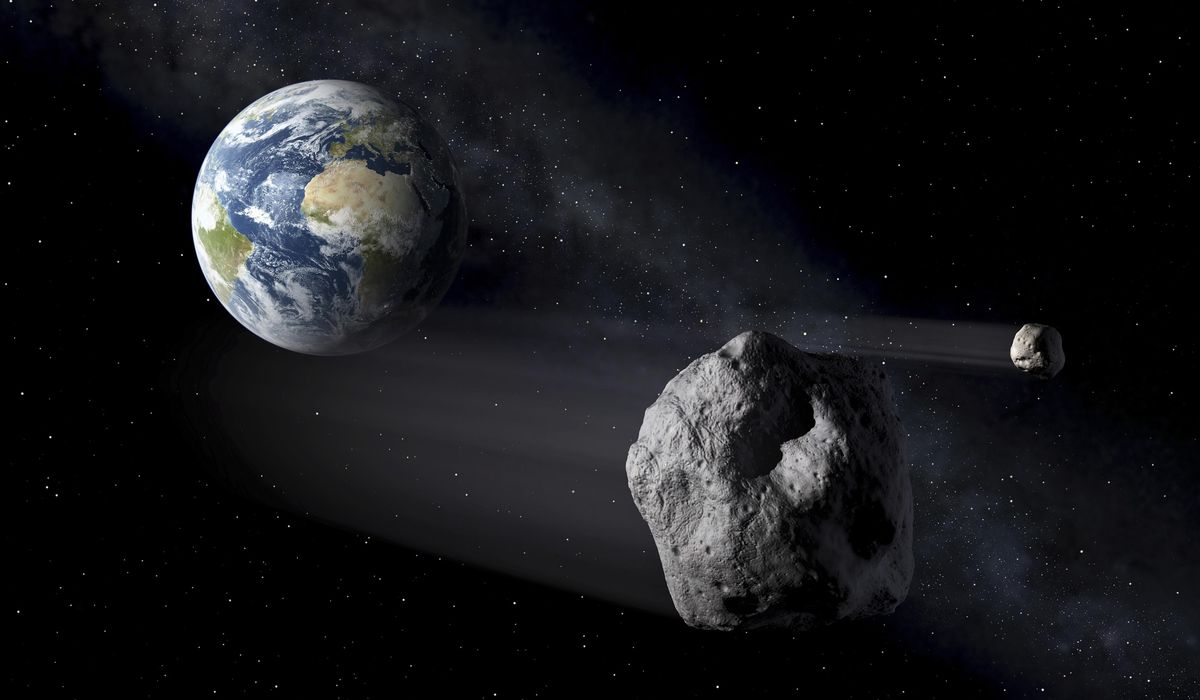
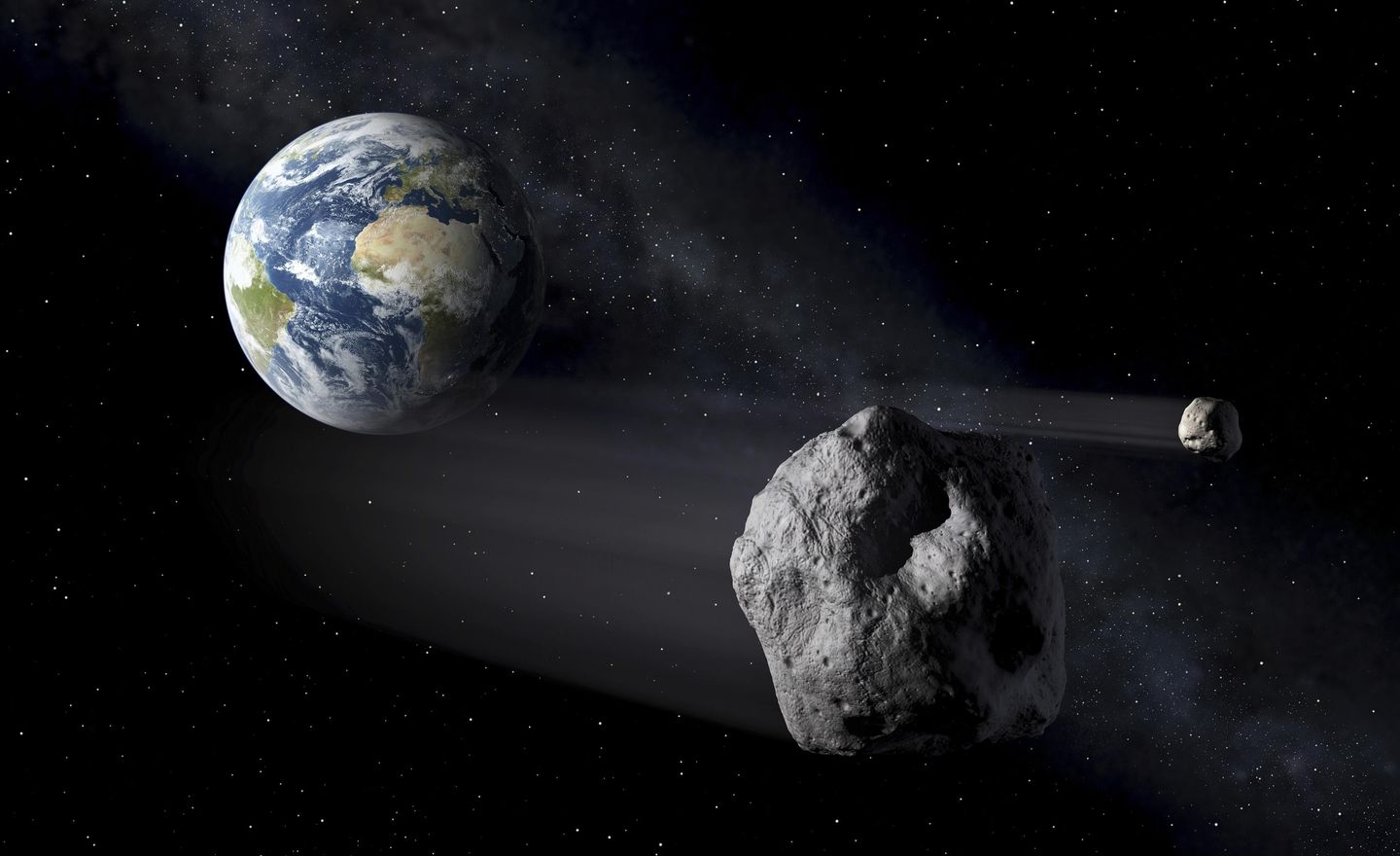
Tiny microorganisms tucked inside space rocks could survive being hurled between planets — including to Earth — according to a new study from Johns Hopkins University, raising fresh questions about how life may have first begun on our world.
The research, published Monday in the journal PNAS Nexus, tested whether a hardy desert bacterium could withstand the kind of extreme pressure it would experience during an asteroid strike powerful enough to launch debris off the surface of Mars and send it hurtling through space.
The short answer: yes — and then some.
A nearly indestructible microbe
Researchers chose to test Deinococcus radiodurans, a bacterium found in the high deserts of Chile that is known for its ability to survive the harshest, most space-like conditions — from extreme cold and dryness to intense radiation. It also has a thick outer shell and a remarkable ability to repair its own DNA.
To simulate what the bacterium would experience during a planetary ejection, the team sandwiched the microbe between metal plates and fired a projectile at it from a gas gun, generating 1 to 3 gigapascals of pressure — for context, the pressure at the bottom of the deepest part of Earth’s oceans is only one-tenth of a gigapascal.
The bacteria proved remarkably difficult to kill. They survived nearly every test at the lower pressure setting, and 60% survived at the higher setting. At the lower pressures, cells showed no signs of damage at all.
“We expected it to be dead at that first pressure,” said lead author Lily Zhao. “We started shooting it faster and faster. We kept trying to kill it, but it was really hard to kill.”
Ultimately, the steel equipment holding the metal plates together gave out before the bacteria did.
Could life have come from Mars?
The findings lend new scientific credibility to a theory called lithopanspermia — the idea that life could travel between planets by hitching a ride on rocks ejected during a major asteroid impact.
“Life might actually survive being ejected from one planet and moving to another,” said senior author K.T. Ramesh. “This is a really big deal that changes the way you think about the question of how life begins and how life began on Earth.”
Mars, notably, is one of the most heavily cratered bodies in the solar system, and scientists already know that Martian meteorites have been found on Earth — meaning rock from Mars has made that journey before. The new question is whether living organisms could be along for the ride.
Big implications for space exploration
The findings carry real-world consequences for how scientists plan future space missions. When spacecraft travel to planets that might support life, like Mars, strict safety measures are already in place to prevent Earth life from contaminating those environments. The same is true when missions bring back materials from other planets.
But this study suggests those protections may need to be expanded. Because the research demonstrates that debris from Mars could reach nearby moons — particularly Phobos, which orbits very close to Mars — the team said current policies covering those moons may need to be reassessed.
“We might need to be very careful about which planets we visit,” Mr. Ramesh said.
Next, researchers plan to explore whether repeated asteroid impacts produce tougher bacterial populations and whether other organisms, including fungi, could survive similar conditions.
This article is written with the assistance of generative artificial intelligence based solely on Washington Times original reporting and wire services. For more information, please read our AI policy or contact Steve Fink, Director of Artificial Intelligence, at sfink@washingtontimes.com
The Washington Times AI Ethics Newsroom Committee can be reached at aispotlight@washingtontimes.com.