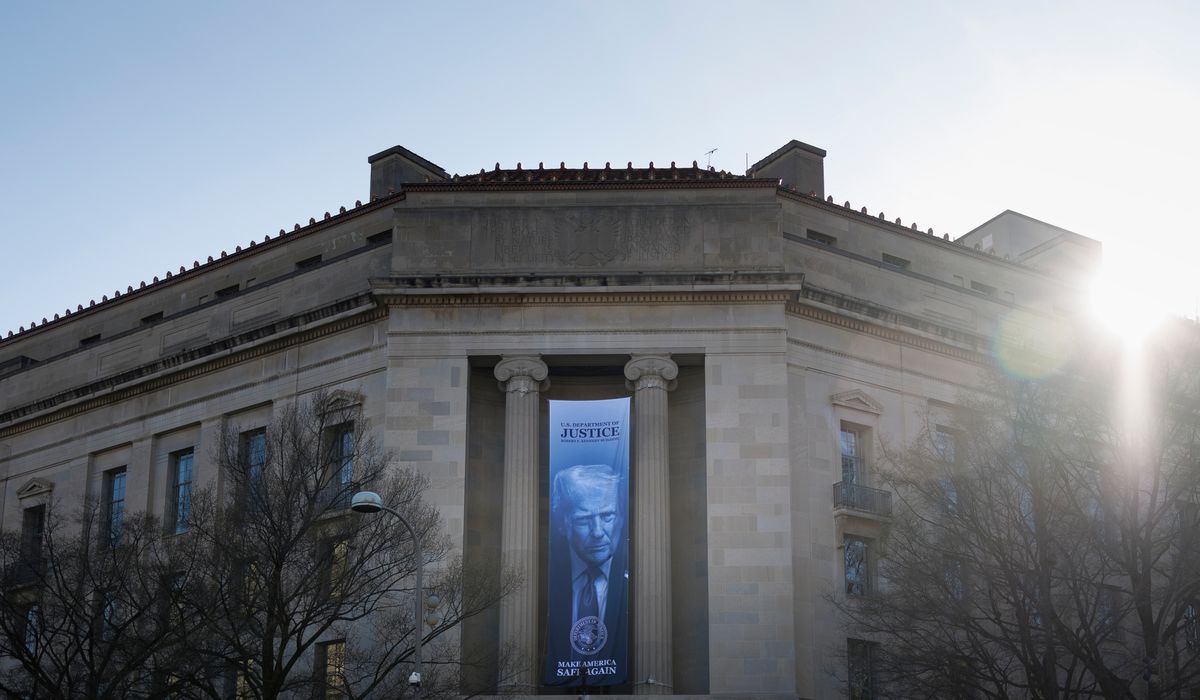

One of the Trump Justice Department’s most fervent missions has been to try to pry voting lists from states, including by suing, in an attempt to force them to clean up their rolls.
So it was surprising to see the department’s lawyers fumble such a critical crusade. In one case, a lawsuit against Washington state, the feds filed the lawsuit, issued a press release — then forgot to actually serve notice of the lawsuit on the secretary of state. The case was about to be dismissed, but a lenient judge gave the department a do-over.
Shockingly enough, it happened again in Georgia, where the secretary of state said he was never properly served in the department’s initial lawsuit. It turns out it didn’t matter because the lawsuit was filed in the wrong federal court anyway, and a judge tossed it.
The Justice Department had to take another do-over, going back and refiling in the correct court 80 miles away.
Flubs happen.
But for this Justice Department they’ve been happening at an exceptionally high rate, compounding problems for federal government lawyers already struggling to defend President Trump’s agenda in front of a largely skeptical judiciary.
“Word is getting around to the bench. They’re seeing what’s happening,” said one former department lawyer, who requested anonymity for fear of retaliation.
The botches happened under former Attorney General Pam Bondi, whom Mr. Trump fired earlier this month.
Speculation centered on her handling of the release of the investigative files related to sex offender Jeffrey Epstein and on her inability to land convictions of Trump political foes.
Mr. Trump has yet to name a replacement, but the overworked lawyers and unforced errors will be a major issue facing whoever takes over.
The former DOJ lawyer blamed the Trump team’s housecleaning “rampage” at the department, which wiped out a number of experienced lawyers and brought in new people, many of whom had specialized in state courts.
“When you jump from state court to federal court it’s a different language. It’s like moving from English to Spanish,” the lawyer said.
He said the failure to properly serve notice of lawsuits was a major tell.
A senior department official cited three big problems that spawned the snafus: the immense number of lawsuits, in particular on immigration cases; a tidal wave of adverse rulings from “lawless judges”; and struggles among the line prosecutors at the U.S. attorneys’ offices throughout the country, whose ranks are decimated by departures.
The official said without the adverse rulings, particularly on immigration detention cases, judges wouldn’t be counting orders they believe to have been defied, and the contempt situations would never have happened.
“To be sure, the USAOs weren’t equipped to deal with the volume and that’s where most of the slippage has occurred. But if the federal judges were actually following the law instead of trying to impose their own policy preferences then a lot of this would not have occurred,” the official said.
The overworked U.S. attorney’s offices have been pleading with judges for leniency.
In one now-famous case in Minnesota, a lawyer on loan to DOJ from U.S. Immigration and Customs Enforcement asked a judge to hold her in contempt and toss her in jail for 24 hours, because it would be the first time she’d gotten a full night’s sleep.
In Maryland, an experienced assistant U.S. attorney had to ask a judge for a do-over after she failed to respond to a demand that the government cover lawyers’ fees for the American Federation of Teachers, which sued and defeated a Trump attempt to wind down diversity grant spending at the Education Department.
The DOJ lawyer said she had confused the case with another one and let the matter slip through the cracks.
She blamed a death in the family, but also said she’d faced a “deluge” of cases. At one point she counted 440 cases she was working on in one 32-day period.
In Massachusetts, government lawyers didn’t file a response to a complaint challenging a new Homeland Security policy calling for the rearrest of refugees at their one-year mark here in the U.S. Left without a DOJ answer, the judge ordered the policy halted by default.
And in Manhattan, the U.S. attorney had to go back to a judge and admit that his office was misled by ICE over the agency’s justification for arrests at immigration courthouses — the central issue in the case.
Elliot Mincberg, senior counsel at People for the American Way, who has decades of experience watching DOJ, said the department has “deteriorated drastically” in Mr. Trump’s second term.
“The widespread loss of experienced career attorneys, many pushed out by Trump officials, as well as the lack of good and experienced counsel in important leadership positions and the refocused DOJ priorities on deportation and related issues have significantly harmed the Justice Department’s ability to do its basic job of litigating effectively on behalf of the U.S.,” he said.
Mr. Trump’s opponents say the missteps are compounded by intentional dishonesty.
A group of former state judges and academics filed a complaint with the D.C. bar this month seeking sanctions against Drew Ensign, a deputy assistant attorney general who heads the department’s immigration section.
Their 38-page complaint, led by Lawyers Defending American Democracy, accused Mr. Ensign of incompetence, lying to judges and making frivolous claims on high-profile cases involving the March 2025 deportation of Venezuelans to El Salvador, the deportation of Kilmar Abrego Garcia, a Salvadoran who was also on those flights, and a now-scuttled attempt to send migrant children back to Guatemala.
The Justice Department didn’t respond to an inquiry on the complaint or on the broader fumbles at the department.
But the department last month published a proposal to let the attorney general shift investigations into DOJ lawyers’ misdeeds from state bars to the department’s own internal review.
That proposal has drawn opposition from the right and the left.