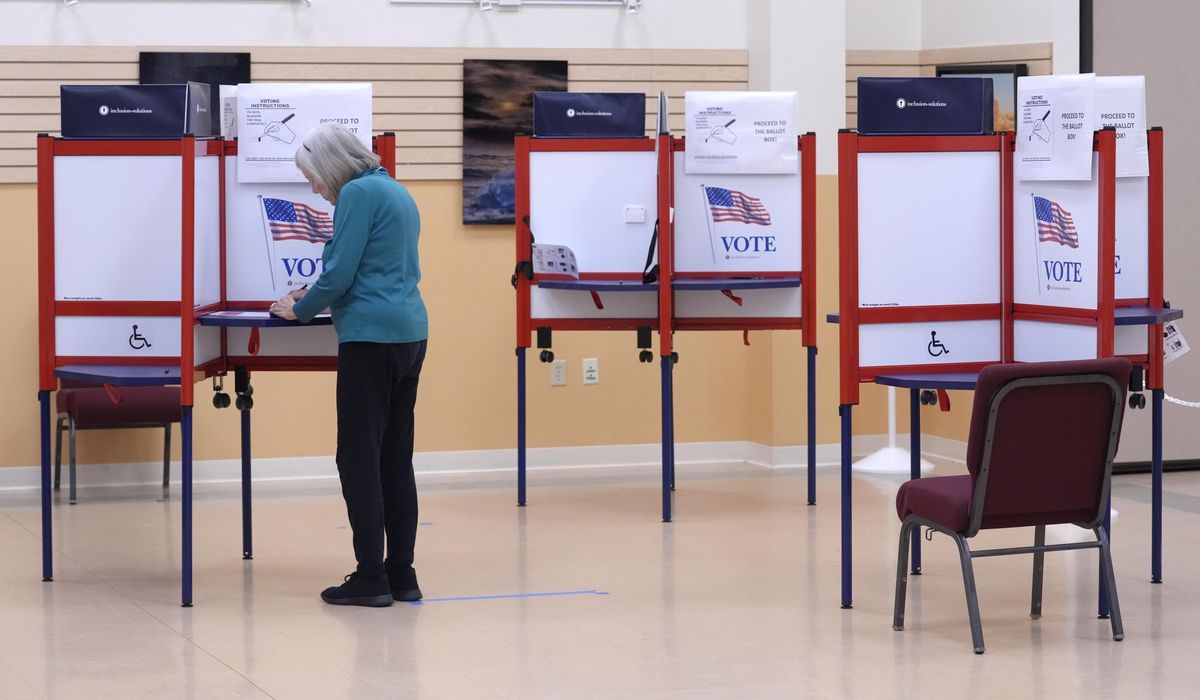
A federal judge on Thursday rejected the Justice Department’s attempt to get a look at Massachusetts’ voter lists, complete with identifying information, saying the government didn’t give a valid reason to see the data.
Judge Leo Sorokin, an Obama appointee, said the attorney general needed to state a “basis and purpose” for why the feds needed to look at the voter records.
Judge Sorokin said former Attorney General Pam Bondi, who was in office when the request was made, “advanced no basis whatsoever.”
“The attorney general’s demand for the Massachusetts statewide voter registration list was facially deficient. It failed to satisfy a simple requirement imposed by Congress as one precondition to obtaining documents under the authority of the Civil Rights Act of 1960,” the judge ruled.
The decision means the Trump administration has now lost at least four cases where a judge has reached a substantive ruling on the demand for a state’s voter lists.
Judges appointed by Presidents Clinton, Biden and Trump have also ruled against the Justice Department in cases in California, Oregon and Michigan.
One state, Oklahoma, reached a settlement to grant access to the records.
More than two dozen other lawsuits are pending.
The administration is seeking voter names, addresses and unique identifiers such as partial Social Security numbers and birthdates. The goal is to provide states with reports of names that may be duplicates, noncitizens or otherwise ineligible to cast ballots.
The effort has met with massive resistance from Democrats and some GOP-led states that say their own laws block them from turning over the information.
Voting rights groups say they fear the names will be used to try a major purge of voters’ names.
The American Civil Liberties Union, which helped battle the DOJ’s request for Massachusetts voting records, hailed Thursday’s ruling.
“The DOJ is attempting to commandeer voters’ sensitive personal information for no legitimate reason, and the court saw right through it,” said Ari Savitzky, an ACLU lawyer. “The federal government can’t bully states into handing over private voter data — and we will stand up to stop them when they try.”
Ms. Bondi had cited the Civil Rights Act of 1960, which gives the attorney general broad powers to obtain states’ voter registration files.
It was passed as a way to give the federal government oversight of states that had hindered Black citizens’ voting opportunities.
The judges in the cases in California and Oregon ruled that Ms. Bondi was violating the spirit of the law by seeking the names to try to cleanse voter lists.
The judge in the Minnesota case ruled on other grounds, saying the law would have allowed Ms. Bondi access to individual voter registration cards but not to an aggregate voter list.