SEOUL, South Korea — Japan’s Cabinet on Friday signed off on the largest defense budget in the country’s history, with a drone-based coastal defense system and an arsenal of long-range strike munitions front and center.
The annual budget is $58 billion for fiscal 2026, which starts April 1. That is well north of last year’s $55.5 billion budget, also a record.
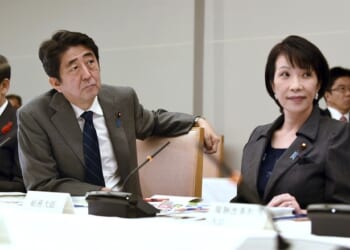
Experts say Tokyo must spend big on defense to please the U.S., but its ally may be pushing on an open door: Prime Minister Sanae Takaichi’s administration is hawkish by nature.
Though Ms. Takaichi leads a minority government, they say her budget likely will pass the Diet, given rising regional threats and an undeclared arms race.
The most striking item in the budget is $640 million earmarked for a brand new system: Synchronized, Hybrid, Integrated and Enhanced Littoral Defense, or SHIELD. SHIELD comprises a layered network of unmanned systems, tasked with tackling surface, amphibious and aerial threats.
It reflects ongoing shifts in global weaponry, as well as rising threats to Japan’s southernmost islands. SHIELD comprises swarms of aerial — both ship- and shore-based — and seaborne — both surface and subsurface — drones. Their missions include reconnaissance, attacks on enemy warships by air and sea, and air defense of radar sites.
SHIELD is planned to go operational by 2028 and was the first of the core “pillars” of Japan’s defense strategy mentioned in the Ministry of Defense’s “Overview of FY2026 Budget Request” document.
Japan’s investment in unmanned systems makes sense.
If World War I was the war of the trench and World War II the war of the tank, the Russian campaign against Ukraine is the war of the drone. Economical, up-scalable, unmanned systems are changing military tactics, strikes and communications.
“Every sentient being in every military on the planet is devouring everything they can find about drones in the [Ukraine] war,” said Lance Gatling, a former officer in U.S. Forces Japan. “Everybody’s got to have them.”
On land, Russian and Ukrainian drones vie for mastery, but at sea, Ukraine has rewritten naval textbooks in a way that likely caught Japan’s eye.
Defensively, Ukraine has pushed Russia’s formerly vaunted Black Sea fleet from its coast by using shore-based drones, artillery and missiles. Offensively, it has struck Russian vessels in dock with aerial, surface and, most recently, subsurface unmanned systems.
Geopolitically, China’s ever-expanding naval capabilities are upgrading its threat to Taiwan, and by default, Japan: Japan’s southern island chains cover the democratic island’s northeast approaches.
Since 2018, when Japan stood up its first marine brigade since World War II, the country has been actively exercising amphibious and airborne forces in “recapture a captured island” scenarios.
It also is building a range of sensor, electronic warfare and missile bases across the Ryuku Islands south of Okinawa.
“Deterring threats like China has to be more asymmetric,” said a Japan-based defense source who requested anonymity. “We can’t deal with China one on one.”
Contractors are taking note.
U.S. autonomous defense innovator Anduril opened a Japan office this month, with the aim of not simply selling equipment, but also joint manufacturing with Japan.
Earlier, in October, Anduril opened a factory to produce “Ghost Shark,” an underwater drone it is developing for the Australian navy.
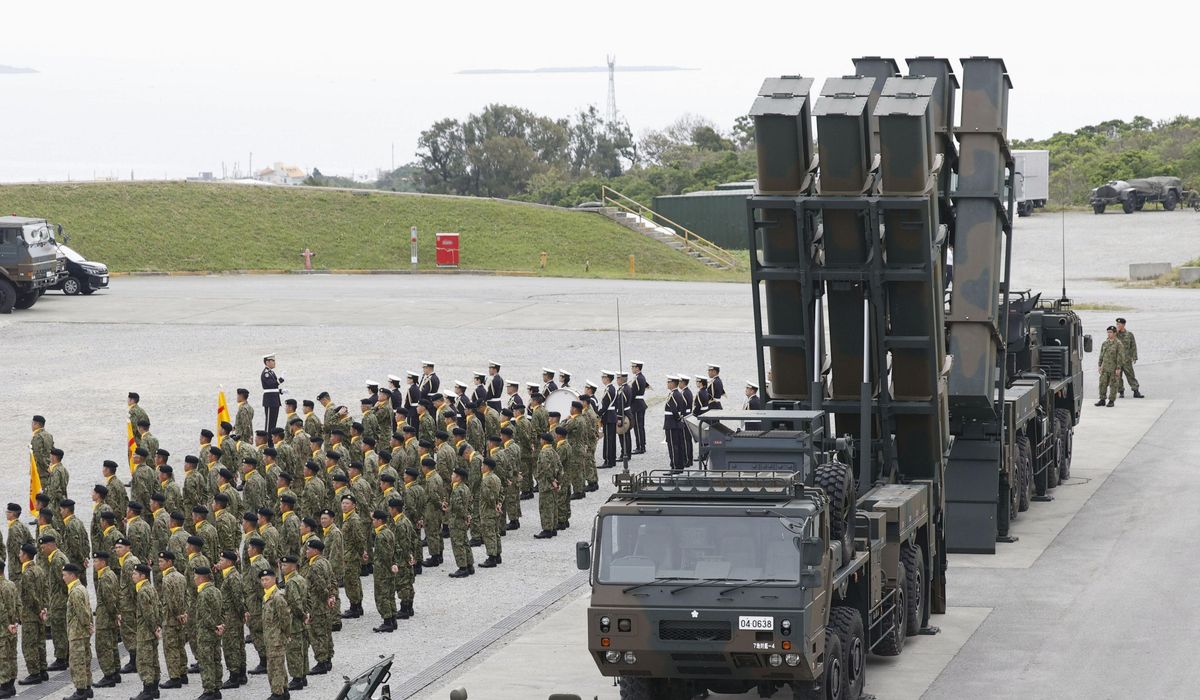
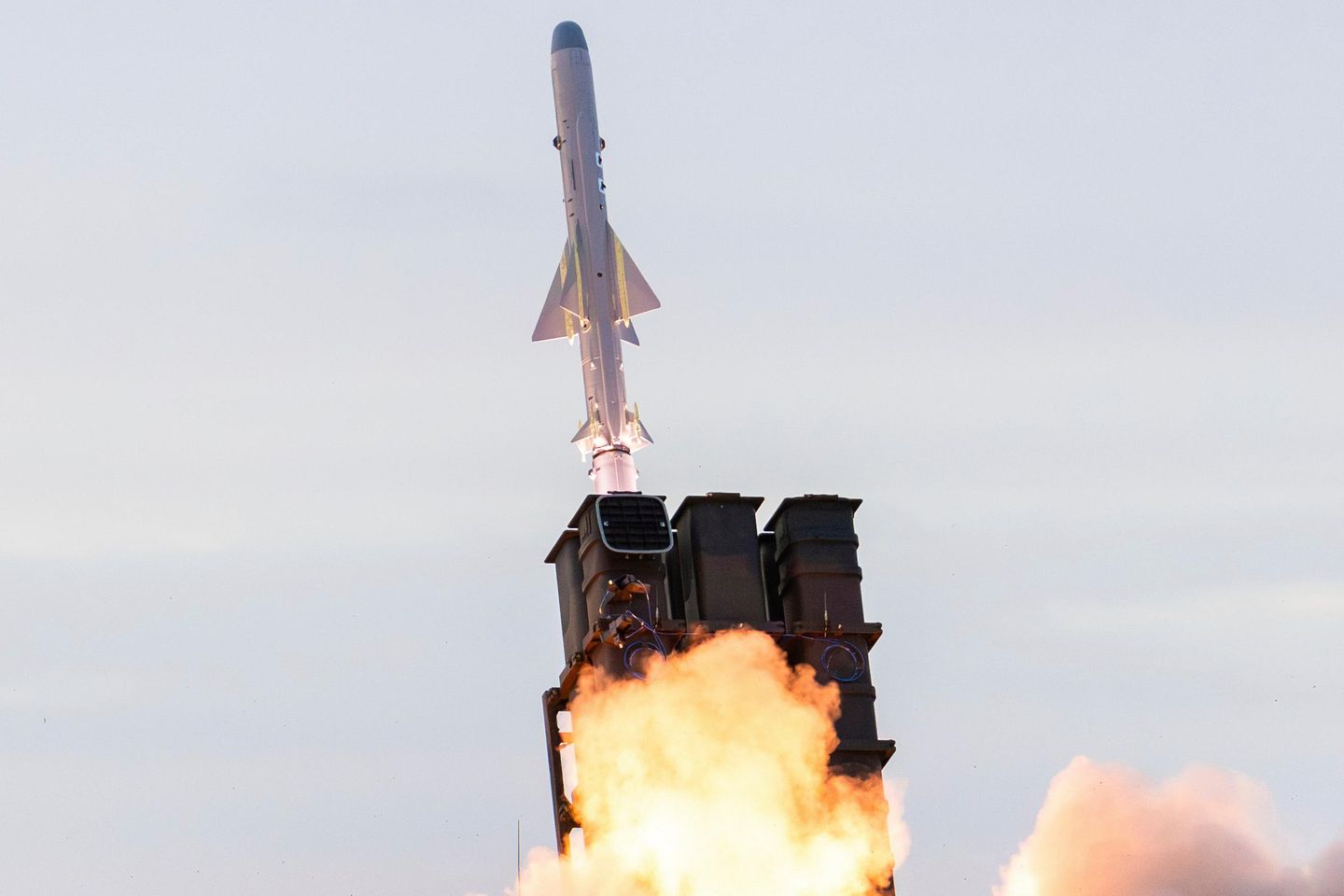
While SHIELD’s drones are on trend, the biggest chunk of Friday’s budget, $6.2 billion, goes to stand-off strike weapons, sourced from Japan and the U.S.
Japanese assets to be acquired include submarine-based cruise missiles with the range to strike China, hyper-velocity glide projectiles and hypersonic guided missiles.
U.S. buys include the stealthy Joint Strike Missile for Japan’s F-35s fighters, the Joint Air-to-Surface Stand-Off Missile for F-15 fighters and Tomahawk cruise missiles for two destroyers.
All can strike enemy shipping.
Experts are divided on the reason behind Japan’s rising defense spending.
“It has more to do with keeping the U.S. extended nuclear umbrella,” said Haruko Satoh, a regional relations expert at the Osaka International School of Public Policy, an allusion to demands from the Trump administration that allies increase their defense spending.
“Japan realizes the way to Trump’s heart is through defense spending,” agreed Mr. Gatling, principal at Tokyo-based Nexial Research. But he added, “China has rather ham-fistedly got Japan’s attention.”
Beijing is still lashing out against Ms. Takaichi’s November comments that suggested Japan could mobilize its military if China attacked Taiwan. China has sanctioned Japanese seafood imports, is cutting tour numbers and is assailing Tokyo in public and diplomatic forums.
That strategy may be backfiring. A Dec. 21 opinion poll by the Asahi Daily found Ms. Takaichi’s approval ratings to be 68%, while 55% approved of her stance on China, compared to 30% against.
Hence, the budget likely will pass the Diet.
“I would say it will get through without being bashed around too much,” the defense source said. “I’m not hearing that it will flop on its back.”
If he is correct, it would fit a pattern.
Since a constitutional reinterpretation in 2014-2015, Japan has been shedding its pacifist skin and packing on military muscle to confront threats arcing from its northeast to its southwest.
To its north, Russia’s full-scale invasion of Ukraine is approaching its fourth year. To its east, North Korea has gained combat experience fighting alongside Russia.
North Korea and South Korea are both engaged in a nuclear-submarine race — a capability Japan lacks, though it fields innovative, very quiet, conventional boats.
Further east, China continues its massive naval buildout: It outnumbers the U.S. Navy in ship count and is constructing a fourth aircraft carrier.
To Japan’s southwest, Taiwan is taking delivery of a record $11 billion arms package from the U.S., announced this month.
The ongoing focus of regional capitals on sharpening their pointy ends concerns some.
Mr. Gatling considers the situation in the maritime choke points between Japan and Taiwan, frequently transited by Chinese warships, to be “hair trigger” and cautions against miscalculations.
“I worry that amidst all this noise about an arms race, very little serious diplomacy is being pursued,” Ms. Satoh said. “No one is talking to each other to put on the brakes.”