Iran’s scattershot attacks on Gulf neighbors are taking a toll on the carefully crafted reputation of stability that countries such as Saudi Arabia and the United Arab Emirates have built in recent years — potentially disrupting billions in Western investment.
Iran’s broad attacks on U.S. military bases and diplomatic outposts have expanded over the past week to include Gulf energy infrastructure, civilian architecture and Western-linked financial centers.
Beyond sending troubling shockwaves through global energy markets, Iran’s missile and drone barrages have called into question the contention that Western-friendly cities like Dubai and Riyadh are insulated from the typical instability of the region.
“We’ve already seen attacks on data centers in the Emirates and Qatar, Amazon facilities that have been built in these places, because they seemed for the region to be relatively secure and safe, and they provide all sorts of cheap energy and a very attractive tax atmospheres for international companies,” F. Gregory Gause, professor of international affairs at the Bush School of Government and Public Service, said. “And now, with the safety issue front and center for at least a while, Iran doesn’t have to strike anybody else. You just have to say you might, and it vastly increases the risk premium.”
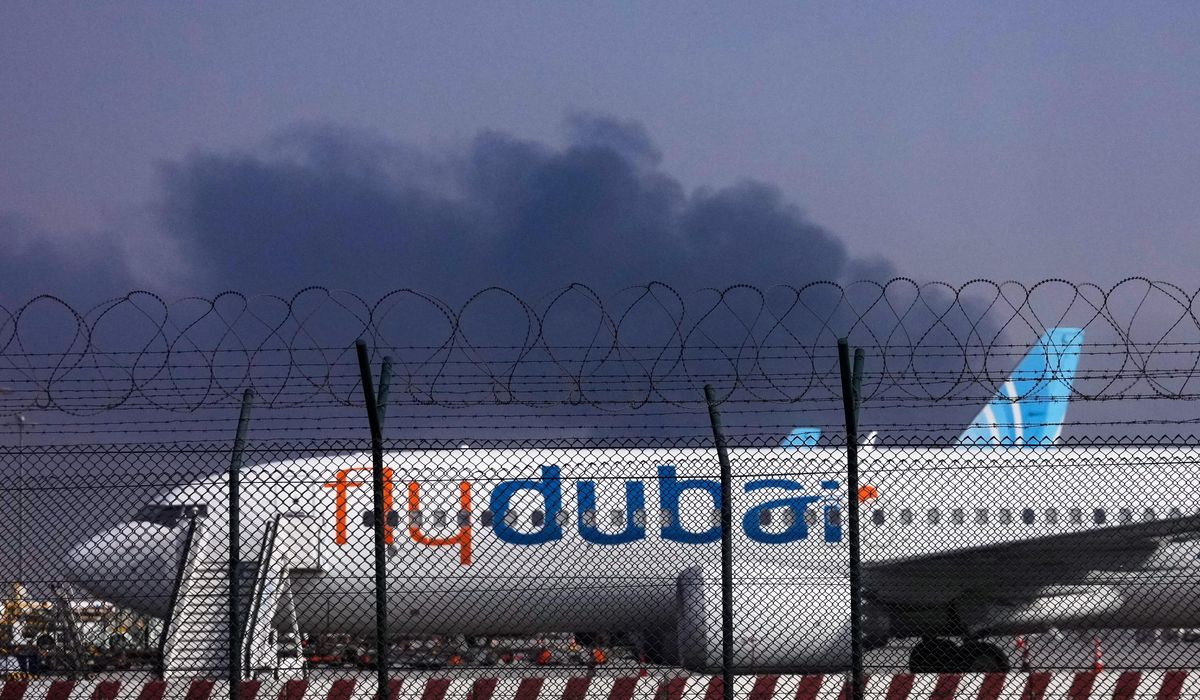
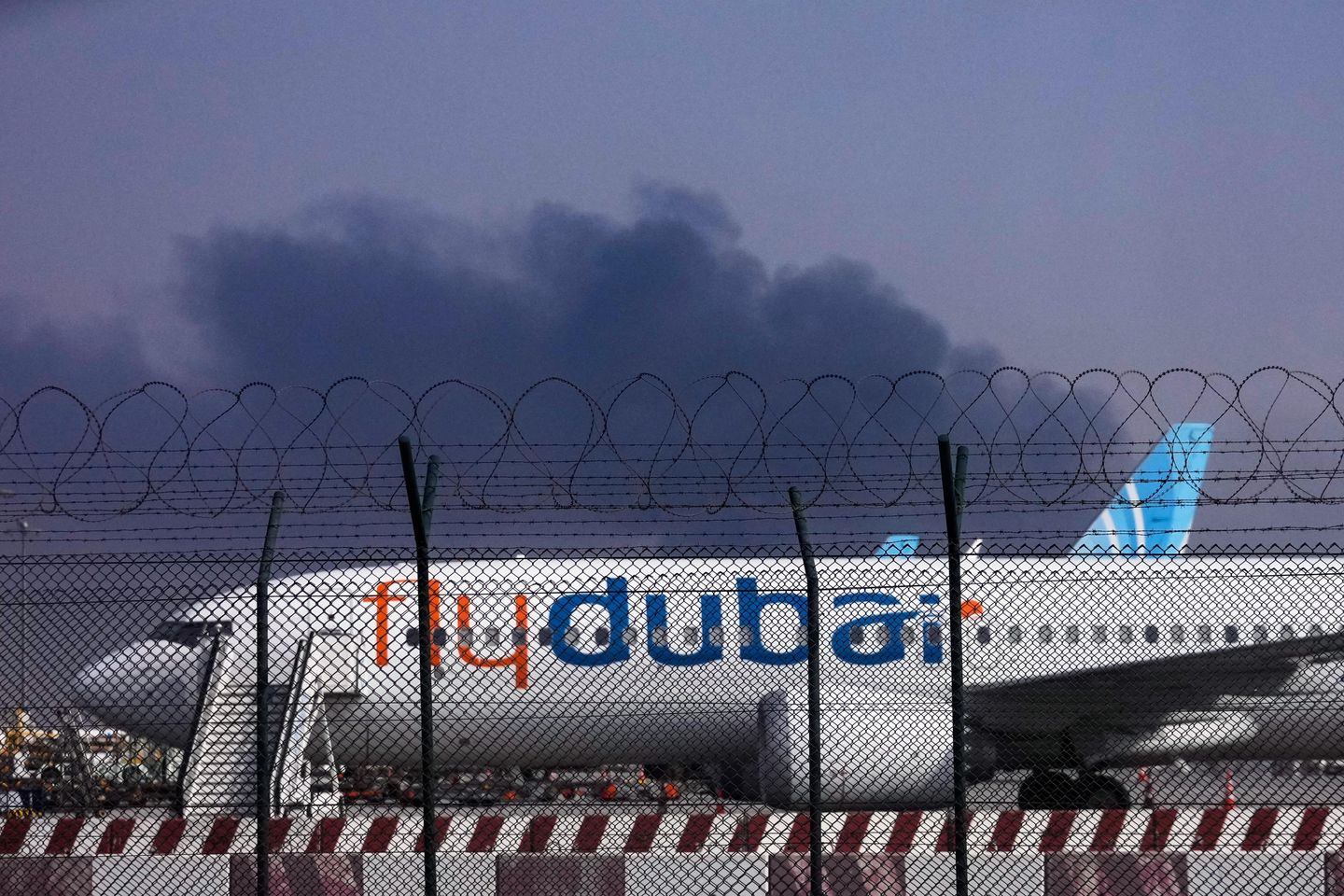
Safety concerns have forced widespread airway closures across the Gulf, cutting the region off from one of its most lucrative business ventures. Airports in the UAE, Qatar and Saudi Arabia have seen steep drop-offs in traffic since the war began in late February. The Dubai International Airport, one of the busiest international passenger hubs, suspended all operations last week, stranding thousands of passengers.
According to the flight tracking platform Flightradar24, over 21,000 flights have been cancelled across the region’s seven major airports since fighting began.
Iran announced last week that it would also soon begin attacking Western banks and tech companies whose technology has been used in the war. Those companies include titans in the industry like Google, Microsoft, Palantir, Nvidia and Oracle.
Iran has focused much of its missile and drone attacks on the UAE and its two most populous cities, Dubai and Abu Dhabi. Some reports suggest that Iran has launched more than 1,700 missiles and drones at the country since the start of the war, comparable to the amount it has launched at Israel.
The costs of defending against the attacks have been staggering, with some estimates suggesting the total UAE expenditure on air defense standing somewhere between $1.3 billion and $2.6 billion. The UAE, like most other Gulf nations, has been able to intercept the vast majority of ballistic missiles and drones fired from Iran, but Tehran spends comparatively little in their attacks and interceptors are expensive and difficult to replace quickly.
Additionally, while Gulf nations may be able to intercept over 90% of all attacks launched by Iran, even a small chance of getting hit by a missile can be enough to deter investors.
“Even if you account for some shading of the truth and some covering up bad instances, it’s actually quite good. But, there are going to be a lot of people who could invest there or move there, who are going to be much more concerned about the 7% that didn’t get shot down and than the 93% that did,” Andrew Leber, nonresident scholar in the Carnegie Middle East Program, said.
Diplomatic impact
Gulf leaders have reacted with frustration and outright anger at both Washington and Tehran over the conflict.
Qatari Prime Minister Sheikh Mohammed bin Abdulrahman Al Thani said the attacks constituted a “betrayal.” Qatar had been mediating indirect negotiations between Iran and the U.S. immediately before the war began and Foreign Minister Badr Albusaidi told Western media that the two sides would reach an agreement soon, just days before the U.S. strikes.
The UAE’s Ministry of Foreign Affairs strongly condemned Iran’s attacks on the Gulf as an obvious violation of international law and subsequently closed its embassy in Tehran and withdrew its diplomats. Saudi Arabia, too, declared that Iran’s attacks cannot be justified since it had publicly disallowed the U.S. military to launch attacks from its bases in the country.
Still, Gulf states have been reluctant to directly intervene against Iran during the war thus far, which has left some American leaders frustrated.
Sen. Lindsey Graham, a close ally of U.S. President Trump, has consistently urged Gulf allies to join U.S. and Israeli forces in attacking Iran.
The South Carolina Republican’s most recent hawkish advice drew a sharp and rare rebuke from Dubai billionaire Khalaf Al Habtoor, who said the Gulf states “know who dragged the entire region into this dangerous escalation without consulting those he calls his ’allies’ in the region,” before quickly deleting the post.
Mr. Al Habtoor’s post hints at lingering resentment in the region over the decision of the U.S. and Israel to launch the war despite the concerns or objections of many Gulf leaders.
Badr al-Busaidi, Oman’s foreign minister, told state-affiliated media this week that the goals of the U.S.-Israeli offensive are mainly to reshape the region to prioritize security reliance and diplomatic recognition of Israel.
Other Gulf officials are reportedly angry that Washington has not dedicated enough resources to defending their territories, with the U.S. focused mainly on protecting U.S. troops and assets in the region along with Israel.
Ultimately, Washington’s resistance to mediation efforts by Gulf leaders underscores a clear imbalance in the partnership, Mr. Leber said.
“It doesn’t seem like these states, if they want to end the conflict, have much leverage with the United States in one direction, and don’t have much leverage with Iran and the other,” he told The Washington Times. “The fact that they can’t even get U.S. officials to stop hinting at a role played by Gulf States is, I think, a sign that they are very much not in control of the narrative, and have currently, at least, very little inroads into the administration’s decision making.”
The effects of the war have raised the possibility that the Gulf will reconsider its reliance on U.S. security agreements to keep its country safe, especially as it tries to rebuild its image of stability.
However, Gulf states have so successfully integrated U.S. military training and assets into their security apparatus that fully disentangling these would be an expensive and lengthy process that could downgrade their security.
Still, Gulf nations have few alternative security partners. China remains focused only on expanding its economic footprint in places like Saudi Arabia and European nations are in the process of expanding their domestic militaries to counter Russian aggression. It remains more likely, some experts say, that the Gulf will use public criticism of the U.S. and Israel to leverage concessions.
“The problem here for the Gulf states, going forward, is this war has demonstrated that they need a security partner, they’re tied into the American military right technologically in terms of intelligence training, all that stuff,” Mr. Gause said. “But finding an alternative to that is really hard. Even though I think that every Gulf leader will be asking themselves, ’how did we let ourselves get dragged into this?’ They just don’t have any good options.”