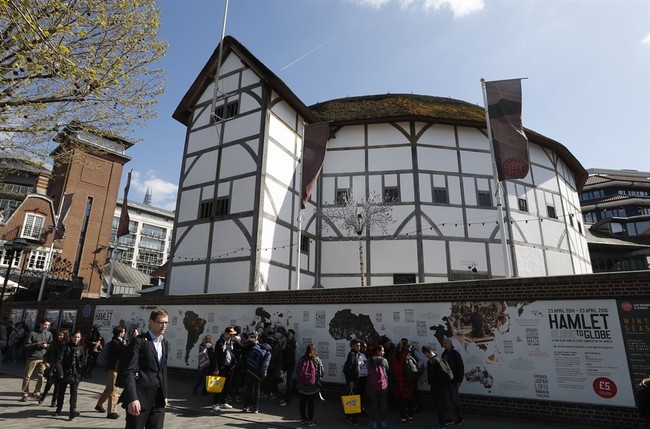
“All the world’s a stage,
And all the men and women merely players;
They have their exits and their entrances;
And one man in his time plays many parts,
His acts being seven ages.”— from Shakespeare’s As You Like It, Act II, Scene VII
In 1595, William Shakespeare’s Romeo and Juliet was performed for the first time. The audience it played in front of expected passion, beauty, wit, and death, but not neatly packaged good and evil. Theirs was a culture accustomed to instability. Plague could empty a household in days. Public executions were routine. Life expectancy was short, desire was dangerous, and social order unforgiving.
Shakespeare’s audience was not sentimental about human nature. They assumed what Christian theology and daily experience alike reinforced: human beings are fallen, contradictory, capable of love and cruelty at the same time. Error was normal and failure expected. That assumption is the soil in which tragedy grows.
Shakespeare’s audience would have recognized themselves in his famous observation that “all the world’s a stage.” The line is often read sentimentally today, but it was not originally meant that way. A stage is a place of constraint. Roles are entered, not chosen freely. Lines are delivered under pressure, not in comfort. What matters, particularly in tragedy, is not moral purity, but whether the part is played well and what it costs when incompatible roles collide.
Shakespeare’s tragedies do not hinge on villains in the modern sense. They hinge on collisions between differing goods, loyalties, duties, desires, and limits that cannot be reconciled. In Romeo and Juliet, love, family, and honor culture are not corrupt. Youthful passion is beautiful, not monstrous. Every major character behaves in ways that make sense within their moral framework. And yet everyone is destroyed.
The catastrophe does not arise because someone sins uniquely or maliciously. It arises because the world itself makes incompatible demands on decent people.
This is what tragedy assumes: moral symmetry. No one stands fully outside the disaster. No one is clean enough to be innocent, and no one is evil enough to explain what happens. The genre does not offer justice. It offers recognition.
That recognition is driven by hamartia, not a “fatal flaw,” as it is often defined, but rather error, misalignment, missing the mark. Tragedy turns on the gap between human perception and reality. Disaster occurs not because someone is wicked, but because someone is human.
Classical literature is explicit about this. In the Odyssey, Odysseus is brave, clever, and loyal. His suffering does not arise from villainy, but from misjudgment and limited vision. The world is ordered, but its order exceeds human grasp.
Tragedy does not deny meaning. It denies moral superiority.
For centuries, this framework held. Then it broke.
The First Modern War
The Napoleonic Wars shattered Europe’s confidence in inherited moral order. Under Napoleon Bonaparte, rational planning, bureaucratic efficiency, and moral confidence were applied directly to mass slaughter. Reason did not restrain violence. It organized it. The royal houses in Europe fell one after another, realigning power structures permanently and altering civilizations, even after Napoleon’s defeat.
This posed a problem tragedy could not easily absorb.
To say “we are fallen” invites humility. To say that ordinary human reasoning, pursued with confidence and multiplied at scale, can destroy nations and civilizations is far harder to bear. After Napoleon, tragedy begins to feel less like wisdom and more like cruelty. Recognition no longer consoles. Acceptance begins to look like surrender.
Cultures do not sit comfortably with that conclusion. When existing moral frameworks can no longer absorb reality, they adapt.
The nineteenth century adapts by reaching for certainty.
The Angel and the Rise of Melodrama
Victorian culture does not abandon morality. It removes it from the tragic frame and elevates it into something sacred and enforceable. Innocence becomes imaginable again — not as a fleeting state, but as a stable condition embodied by particular roles.
This shift is crystallized in The Angel in the House by Coventry Patmore. The Angel — essentially the idealized housewife and mother — is morally pure, self-effacing, and redemptive. She does not struggle toward virtue. She is virtue. Harm done to her cannot be tragic. It must be unjust.
To modern eyes, the Angel often reads as a caricature. That reaction is understandable — and slightly mistaken. The Angel was never meant to describe women as they actually were. She was not an ideology claiming to explain reality. She was an ideal, elevated precisely because it could not be fully embodied. Her function was symbolic, not descriptive.
That distinction matters.
Ideologies claim to explain the world. Ideals anchor it. The Angel existed because Victorian culture needed to believe that moral purity could exist somewhere, untouched by conflict, error, or compromise.
This is also the inversion of Eve. Earlier Western literature treated woman as morally significant because she was capable of error. Eve is not a villain, but she is not exempt. She chooses, misjudges, and bears responsibility (something the Angel lacks) alongside Adam. Tragedy requires that symmetry. The Angel abolishes it.
Once innocence becomes a moral category, narrative reorganizes itself. Tragedy gives way to melodrama.
Melodrama is not exaggerated emotion. It is a moral system. It divides the world into innocents and perpetrators, victims and villains. Suffering must always be unjust and therefore caused by someone. Pain ceases to be a condition of life and becomes evidence of wrongdoing.
From there, the logic generalizes. Innocence expands from the domestic sphere to children, the vulnerable, and eventually entire classes of people defined by presumed moral purity. Villains become structurally necessary.
A World That Needs Villains
By the Edwardian era, this moral framework hardens into ideology. In the work of Karl Marx, suffering is no longer tragic but systemic. Remove the corrupt structure, and tragedy ends. Marxism, socialism, social Darwinism, and fascism differ radically in content, but they share the same promise: a world without tragedy.
They are believed because tragedy itself has been declared intolerable.
That logic now saturates contemporary culture. We live inside melodrama. Reality television, news coverage, and social media all demand heroes and villains. Even as we insist that moral judgments are relative, we cast about endlessly for someone to blame. Limits become oppression. Error becomes harm. Disagreement becomes malice.
A tragic culture expects loss and plans accordingly. A melodramatic culture expects purity and reacts with shock and fury when reality refuses to comply. We have both today, and it’s not hard to see which is which.
Classical tragedy never promised salvation. It promised only truth: that human beings are limited, that good intentions collide, and that loss is sometimes the price of living in an ordered but unforgiving world.
The cultures that followed decided this was no longer acceptable. They sought innocence where tragedy insisted on shared fallenness. They sought villains where tragedy offered misjudgment and constraint.
They believed tragedy could be abolished, and in trying to abolish it, they produced the worst tragedies of all.
Editor’s Note: Merry Christmas from all of us at PJ Media! You can support our work with a special Christmas discount this year.
Join PJ Media VIP and use the promo code MERRY74 to receive 74% off your membership.