Immediately upon his return to the White House for a second term, President Trump and his team adopted an aggressive new press strategy to avoid constantly playing defense, as they had during his first term.
Mr. Trump, who always had a combative relationship with the Washington press corps, assembled a communications team to shake up what he saw as an outdated media landscape.
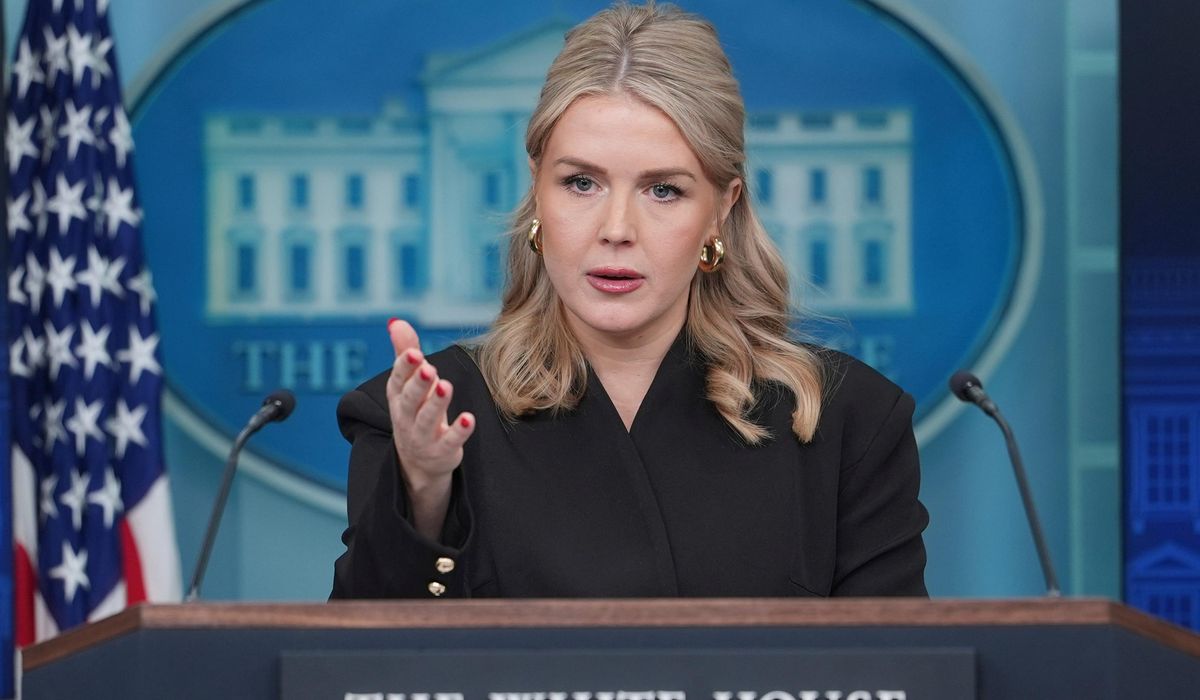
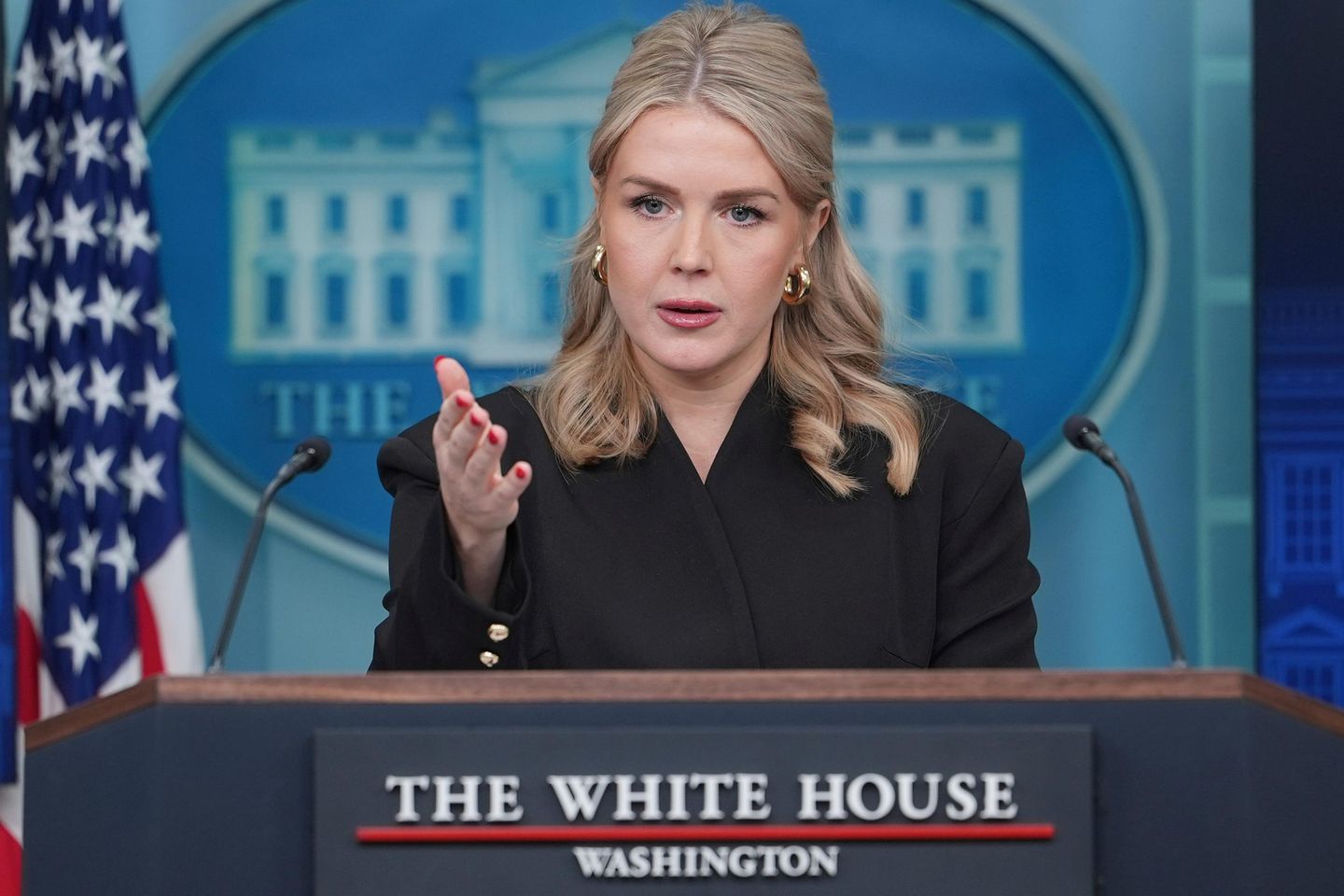
White House press secretary Karoline Leavitt said the communications shop is now more closely aligned with Mr. Trump’s style.
“We respond to nearly every single inquiry — no matter the reporter or outlet,” she told The Washington Times. “We provide the clear facts to shape good coverage. … When we see fake news, we call it out and aggressively push back to set the record straight.”
One of the biggest changes between Mr. Trump’s first and second terms is the increased presence of conservative news outlets in the White House Press Corps.
The Trump White House restored all the press passes revoked under President Biden. It issued new ones to new media, such as podcasters and other alternative news sites, including The Daily Wire, The Daily Signal, Right Side Broadcasting, Real America’s Voice and Lindell TV. That added nearly 500 new passes.
They also added a new media seat in the briefing room, which is filled by a different new media correspondent at each briefing. That correspondent also kicks off the briefing with the first questions, a privilege once reserved for The Associated Press.
Sean Spicer, who served as Mr. Trump’s first press secretary in his first term, said many of the new media outlets have readerships and audiences that were largely shut out when Mr. Trump first took office in 2017.
“I don’t think we had any indication of the level of hostility the legacy media was approaching,” Mr. Spicer said. “This time, clearly, he has the ability to see everything through the lens of how things went the first term.”
Mr. Spicer, who often found himself in heated briefing room exchanges with CNN’s Jim Acosta or ABC News’ Jonathan Karl, said that now, at least 10 outlets in the briefing room cover Mr. Trump “much more fairly.”
Ms. Leavitt also said that having conservative media in the briefing room has a positive impact on how news is presented to Americans, including the 80 million voters who supported Mr. Trump in 2024.
“The campaign revealed that the majority of the American people receive their news outside of the legacy media bubble, which is why it is essential that we meet Americans where they are and allow media from across the ideological spectrum to cover the White House,” she said.
When Mr. Spicer and the rest of Mr. Trump’s first-term team came in, they tried to follow the traditional White House press shop protocols. They soon realized that it wasn’t working.
“The idea was, ‘Why are we conforming to all this? Just because someone said that and this was the ‘tradition?’’’ he said. “And I think what [Trump’s second administration] recognized is we do what we want, when we want.”
The second-term team also brought the hammer down on legacy media outlets and correspondents. They took control of picking the members of the handful of reporters from TV, radio, print, new media and wire services who cover the president’s public events.
Taking control away from the White House Correspondents’ Association, the administration became the arbiter of which outlets get access to small events and travel with the president.
What’s more, AP lost its “special access” to White House events, such as the Oval Office, after refusing to adopt Mr. Trump’s renaming of the Gulf of Mexico to the Gulf of America.
The Wall Street Journal was restricted from the White House press pool in July for a presidential trip to Scotland after publishing stories critical of Mr. Trump’s relationship with sex trafficker Jeffrey Epstein.
It didn’t sit well with some White House reporters.
“This term, the administration has been far more hostile to media organizations and to the press corps as a group,” one White House reporter privately told The Times.
However, the same reporter said the second-term press team is sometimes better than their predecessors.
“Basic queries would often result in press staffers screaming at you [during the first term], but this time around they actually make the effort to get you information or statements, even if they might not particularly appreciate the lines of inquiry.”
In October, the White House began requiring reporters to make an appointment to speak with senior press officials such as Ms. Leavitt or White House Communications Director Steven Cheung.
White House reporters are also being reprimanded more often by Ms. Leavitt or Mr. Trump himself when they press for further responses or challenge the White House statements.
Ms. Leavitt said that the American people “recognize and appreciate that President Trump is the most transparent and accessible President in the history of our country.”
She added, “Meanwhile, the legacy media has largely doubled down on their anti-Trump, hysterical coverage, and it has backfired on them. In fact, new polling from Gallup shows that Americans’ confidence in the mass media has fallen to a new low.”
Mr. Spicer said Mr. Trump is now more aware of who he is dealing with in the Washington press corps.
“It’s not like before when there was a newness to it,” he said. “You didn’t know if they just made an honest mistake or if they really just didn’t like you, and I think we’ve come to realize, you know who they are and what their agenda is.”
If Mr. Trump and Ms. Leavitt do not publicly shame reporters at press briefings, the communications team continues the effort on social media and tracks down reporters that the White House deems errant.
The White House launched a “media offenders” website to highlight what it sees as biased or inaccurate reporting by journalists and news outlets.