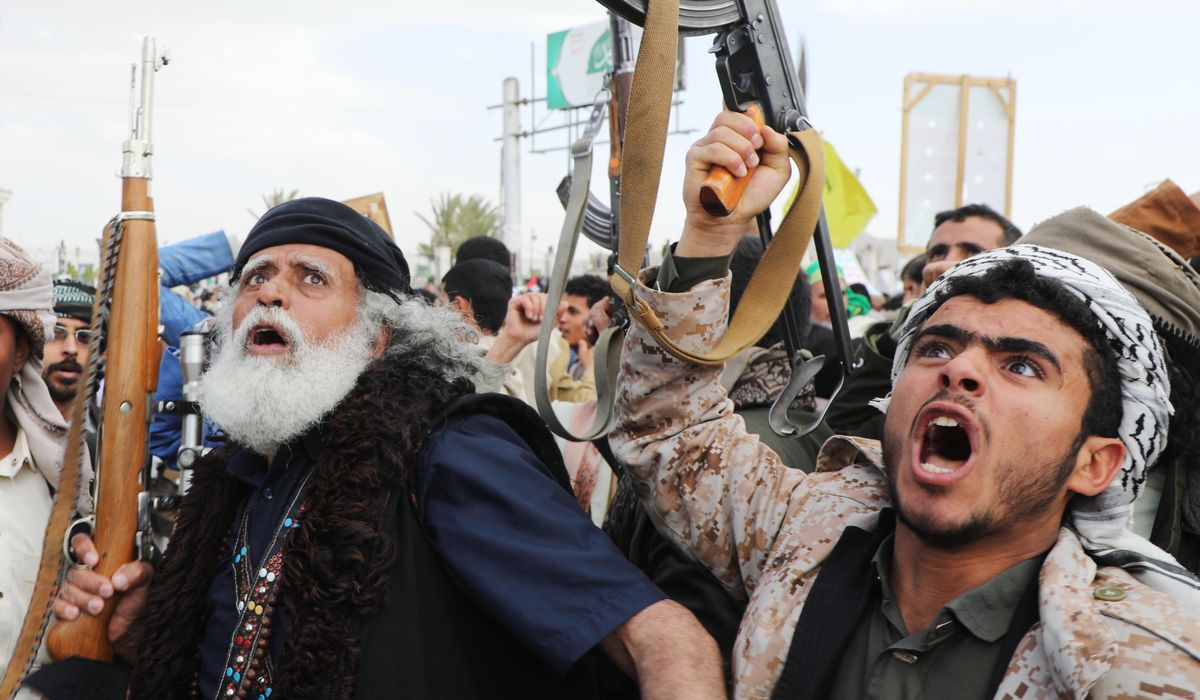
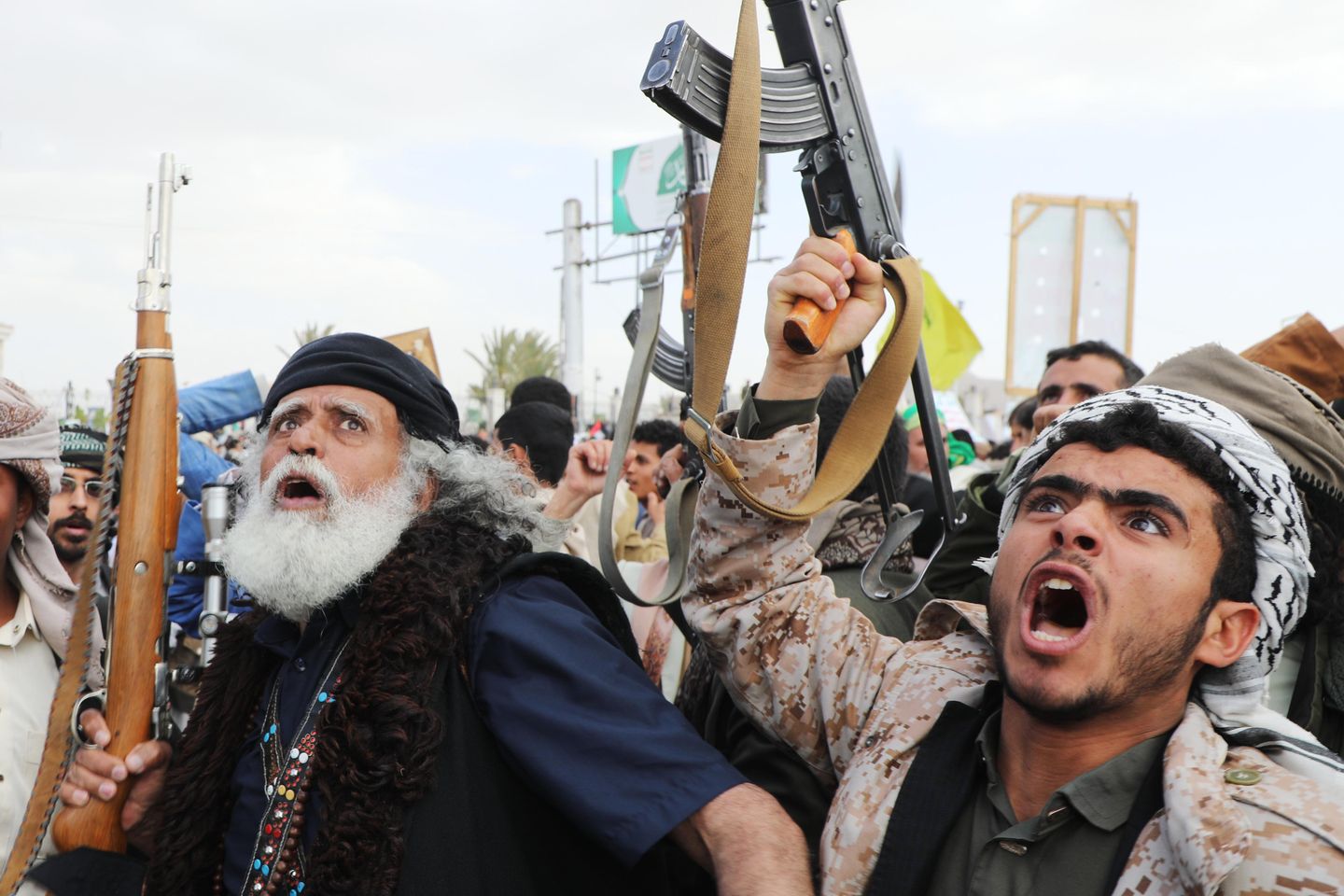
LONDON — As American and Israeli forces wage an air campaign with far-reaching implications for the Middle East, Iran’s Houthi allies have so far stayed out of the fight. The Yemeni militants may be calculating that direct involvement would invite devastating retaliation, analysts say.
For years, the anti-Western Yemeni rebels chanted “Death to America, Death to Israel” — and since the Feb. 28 start of the U.S.-Israeli strikes on Iran, the U.S.-designated terrorist group has reiterated that their “hands are on the trigger” and that they are ready to enter the fight.
But so far, Yemen’s Houthis have been content to stay on the sidelines.
Analysts say the Houthis may have calculated that with Yemen on the verge of a famine, rebel leaders may have calculated that dragging the impoverished country into the Iran war could alienate the group’s dwindling support among the population.
“Retaliation would devastate what they have been rebuilding from last year’s wave of U.S. and Israeli strikes. This would derail the fragile truce agreement with Saudi Arabia,” said Hisha Al Omeishy, a senior adviser to the European Institute of Peace, a think tank. Mr. Omeishy previously worked for the U.S. Embassy in Yemen.
An April 2022 U.N.-brokered truce officially expired in October that same year, but has largely held. The truce is between the Houthis, who control large swaths of the country, and Yemen’s internationally recognized government.
The fortunes of Yemen’s government have been improving. The United Arab Emirates has sharply reduced support for the secessionist-minded Southern Transitional Council. The Yemeni military has recaptured territory from the Southern Transitional Council. They are now “right at the gates” of Houthi-controlled areas of Yemen, said Mr. Omeishy.
Though the Houthis practice a different form of Shia Islam than Iran or other proxy groups in Hezbollah and Iraq, Iran has invested heavily in the group.
The region of Yemen that the Houthis control allows Iran to threaten the Bab El Mandeb, a vital strait linking the Red Sea to the Gulf of Aden.
Last year, the Houthis had the unusual distinction of being bombed by three nuclear powers: the United States, Israel and the United Kingdom. This occurred in two overlapping conflicts tied to Israel’s conflict with Hamas.
The U.S.-led Operation Rough Rider took place from March to May of last year. During the operation, the United States and the United Kingdom launched air strikes on Yemen to protect Red Sea shipping routes. It was the largest military operation authorized by President Trump until the war with Iran.
Separately, on May 4, 2025, a bloody Houthi missile attack on Ben Gurion Airport in Tel Aviv, Israel, prompted a separate Israeli bombing campaign.
The combined air and naval campaigns targeted Houthi radar systems, ballistic missile launchers and Houthi weapons depots. Scores of weapons experts were also killed. Houthi capabilities have yet to recover, though they retain offensive strength through drone stockpiles.
“The Houthis are conniving and calculating, patiently monitoring the situation. If an opportunity presents itself where limited kinetic action will help feed their public image as the vanguard of the ’Axis of Resistance,’ they will strike,” said Mr. Omeishy.
The Houthis were once considered the most technically capable members of Iran’s “Axis of Resistance” — a loose alliance of Iranian-supported armed Arab groups, designated as terrorist organizations by the United States. The coalition includes Hezbollah in Lebanon, Hamas in Gaza, and various Shiite militias in Iraq.
Were the Houthis to join the current fight on behalf of Iran, they could strike at shipping in the Red Sea or launch strikes on Saudi Arabia’s oil infrastructure.
Both have been targets of previous Houthi attacks. Saudi Arabia has announced plans to ship more oil through a 750-mile pipeline from the Abqaib oil field in Eastern Saudi Arabia to the Red Sea Yanbu Port—a potentially tempting target.
Conversely, the Houthis may seek to intervene less directly, through Somali pirate groups or operations on the Horn of Africa.
“With much of the international community focused on the conflict with Iran, the Houthis or terrorist groups operating from Somalia may seek the opportunity to launch military actions against Somaliland. This is particularly likely given the potential presence of Israeli forces there,” said Gad Yishayahu, an Israeli affairs analyst.
Saudi Arabia is watching developments in its poor southern neighbor through sober eyes.
The Saudis have long supported Yemen’s government in its struggle against the Houthis. The Saudi Development and Reconstruction Program for Yemen announced last week that it would provide the Yemeni government with $346 million in fresh funding and aid.
A United Nations report published in January noted that many families in Yemen are skipping meals, withdrawing children from school, and begging.
The report also noted that child marriages were on the rise due to the hunger crisis in the country. Any new war would threaten the food supply to a country where as much as 90% of cereals are imported.
A longstanding driver of Yemen’s chronic food shortages is the country’s thriving khat trade. Much of Yemen’s scarce arable land is devoted to growing the leafy stimulant, a water-intensive crop chewed daily by an estimated 90% of Yemeni men.
It is often consumed communally. Even senior militants partake. Houthi Chief-of-Staff Muhammad Abd Al-Karim Al-Ghamari was reportedly attending a khat-chewing session when an Israeli airstrike killed him in October, according to Israeli media reports.
“The Yemeni people are starving in silence,” wrote Samiha Awad Bataher of the International Rescue Committee in a March 14 op-ed for Al Jazeera.
She warned that more than half of Yemen’s population — about 18 million people — could face worsening food insecurity in early 2026. “To grasp the scale of the crisis,” she wrote, “imagine the entire population of the Netherlands going hungry.”