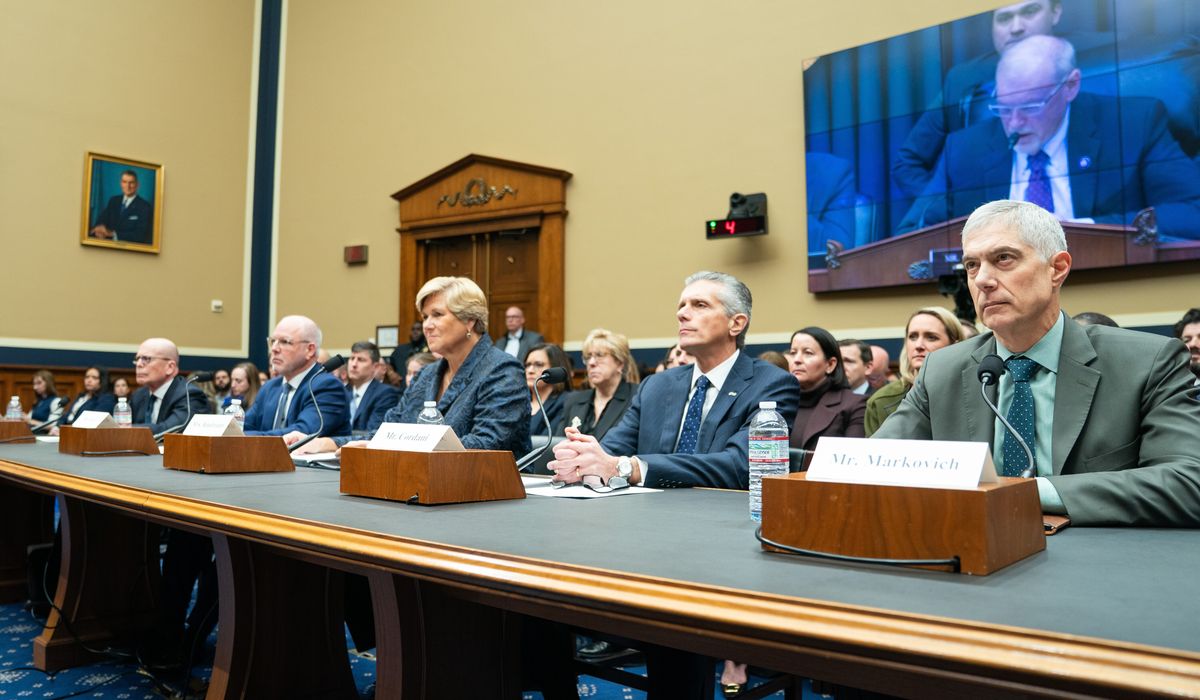
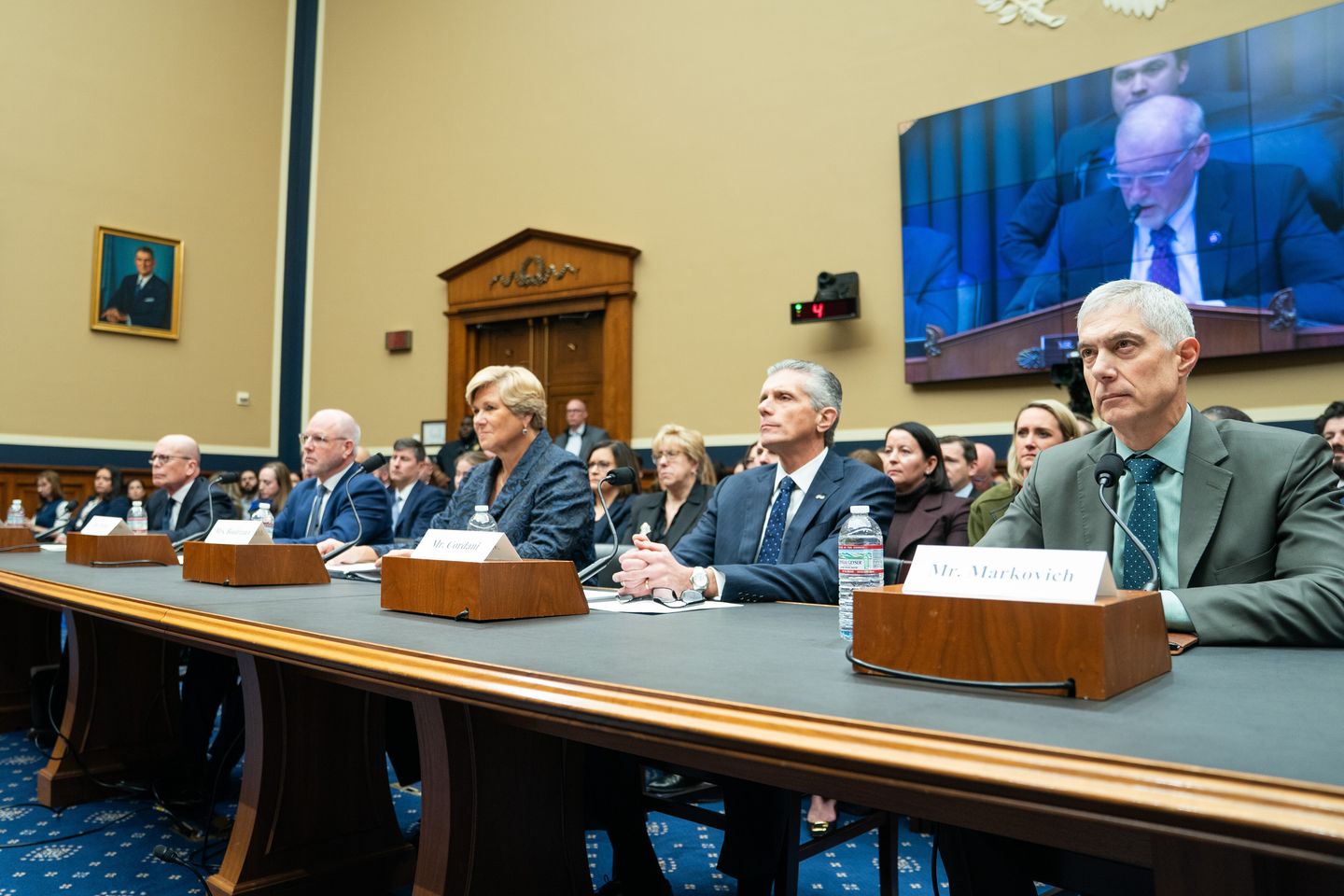
Health insurance company CEOs testifying in the House on Thursday said they generally do not profit off their plan offerings in the Obamacare marketplace, which are largely subsidized by the government.
“We lost money in the exchange all but two years since 2014,” Cigna CEO David Cordani said.
The testimony dealt a blow to arguments President Trump and Republicans have made against extending enhanced Obamacare premium subsidies that expired Dec. 31 as a giveaway to insurance companies.
House Energy and Commerce Chairman Brett Guthrie, Kentucky Republican, used his time questioning the CEOs to assert that an Obamacare rule known as the medical loss ratio, or MLR, incentivizes insurance companies to continue increasing premiums.
The MLR requires health insurers to spend at least 80% of premium revenue on medical services, meaning their profits and administrative costs cannot exceed 20%.
Mr. Guthrie said the MLR disincentivizes insurers to negotiate lower costs with providers and drug companies because those prices justify higher premiums, which increases their profit potential.
“Effectively, it’s an incentive for your premiums to be higher, because you’re penalized when you try to curtail health costs,” he said.
The CEOs disagreed, saying the competition in the insurance marketplace gives them enough incentive to curtail costs so they can offer lower prices to attract more customers.
“We compete based upon price and premiums,” UnitedHealth Group CEO Stephen Hemsley said. “So it is very competitive, and premiums really reflect the actual cost of health care services.”
Mr. Hemsley said UnitedHealth negotiated nearly $300 billion in savings for its customers last year.
“Without those efforts, recent premium increases would easily have been twice as high,” he said.
Nearly 90% of United Health premiums go to direct medical care, Mr. Hemsley said, and the company’s profit margins for Medicare and Medicaid are around 5% and “far less than that” for Affordable Care Act plans.
“With respect to ACA individual plans, we will voluntarily eliminate and rebate our profits this year for these coverages,” he said.
David Joyner, CEO of CVS Health, which acquired health insurer Aetna in 2018, said the company’s costs for offering plans on the Obamacare exchange exceeded the premiums it collected last year.
“So regardless of the MLR, we underperformed and actually gave back money to the government,” he said.
Elevance Health CEO Gail Boudreaux said her company also did not make any money in the individual exchange last year.
In 2024, Elevance Health spent 88.5% of Obamacare premium revenue on medical costs, exceeding the MLR requirement.
Paul Markovich, CEO of Ascendiun, a nonprofit under parent organization Blue Shield of California, said that for the past 15 years, they have voluntarily capped profits at 2% of revenue, so the MLR does not factor into their pricing decisions.
As a result of that profit cap, he said, the company has given back more than $800 million to its customers.