TLDR:
- Long Island architect Rex Heuermann pleaded guilty Wednesday to murdering seven women in the long-unsolved Gilgo Beach killings and admitted to an eighth slaying.
- He will be sentenced in June to life in prison without parole.
- Heuermann killed his victims over 17 years while living as a seemingly normal family man just 25 minutes from where he dumped their bodies.
- Investigators cracked the case with DNA lifted from a discarded pizza crust.
For 17 years, Rex Heuermann commuted to his Manhattan architecture office, came home to his wife and children in Massapequa Park and lived the life of an ordinary Long Island professional — while secretly strangling women and dumping their remains along a remote coastal highway just 25 minutes from his front door.
On Wednesday, that double life came to an end.
Heuermann, 62, pleaded guilty to murdering seven women in the long-unsolved Gilgo Beach killings, admitting in open court that he strangled all eight of his victims, dismembered some of them, used burner phones to lure them and wrapped their bodies in burlap before discarding them. He also acknowledged killing an eighth woman, Karen Vergata, in 1996, though he was not formally charged in her death.
He will be sentenced in June to life in prison without the possibility of parole.
“There came a point in this defense where Rex said, ’I want to plead guilty,’” his defense attorney, Michael Brown, told reporters, adding that Heuermann’s concerns included sparing victims’ families and his own family from a lengthy trial.
The case had tormented investigators, victims’ relatives and a true-crime-obsessed public for more than a decade — through five police commissioners, more than 1,000 tips and little hope of resolution. It broke open in 2022, just six weeks after a new Gilgo Beach task force was formed, when detectives connected a pickup truck to Heuermann through a vehicle registration database.
From there, investigators obtained more than 300 subpoenas, reviewed burner phone billing records and scrutinized Heuermann’s internet history — which showed an intense interest in the very investigation into his crimes. They also found a file on his computer that amounted to a step-by-step “blueprint” for the killings, complete with checklists for before, during and after each murder.
The decisive break came when a surveillance team watched Heuermann toss a box of leftover pizza into a Manhattan sidewalk trash can. Investigators retrieved it, and crime lab analysts matched DNA from the crust to a male hair found on burlap used to restrain one of his victims. He was arrested in July 2023.
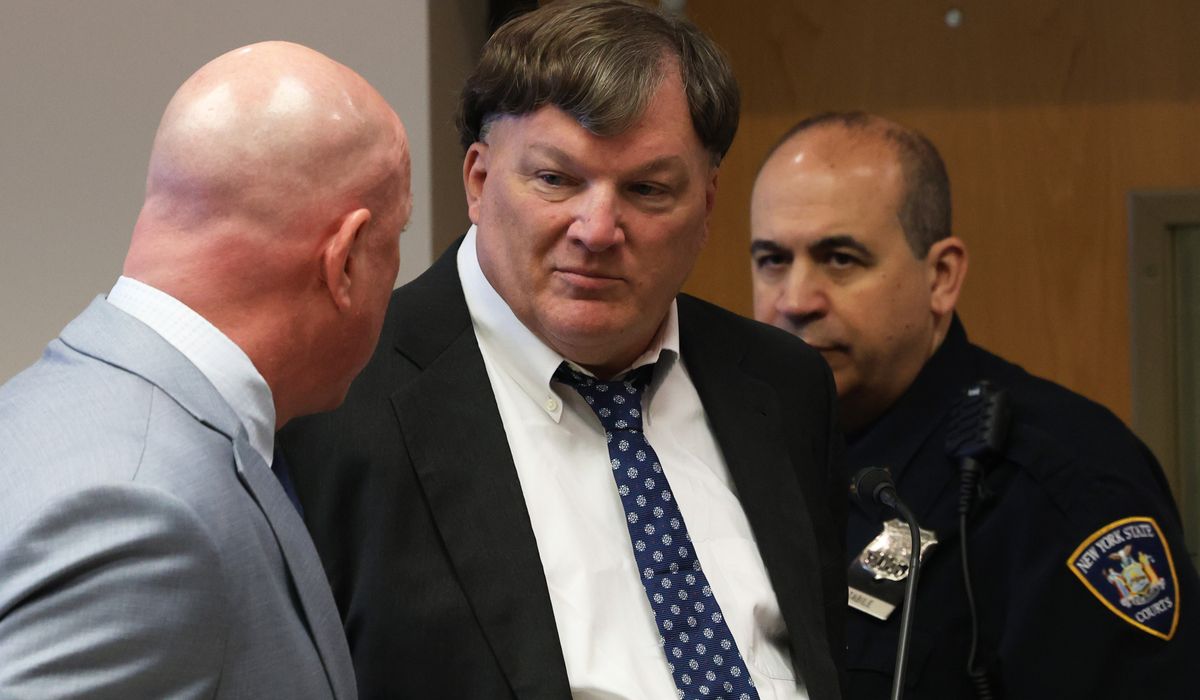
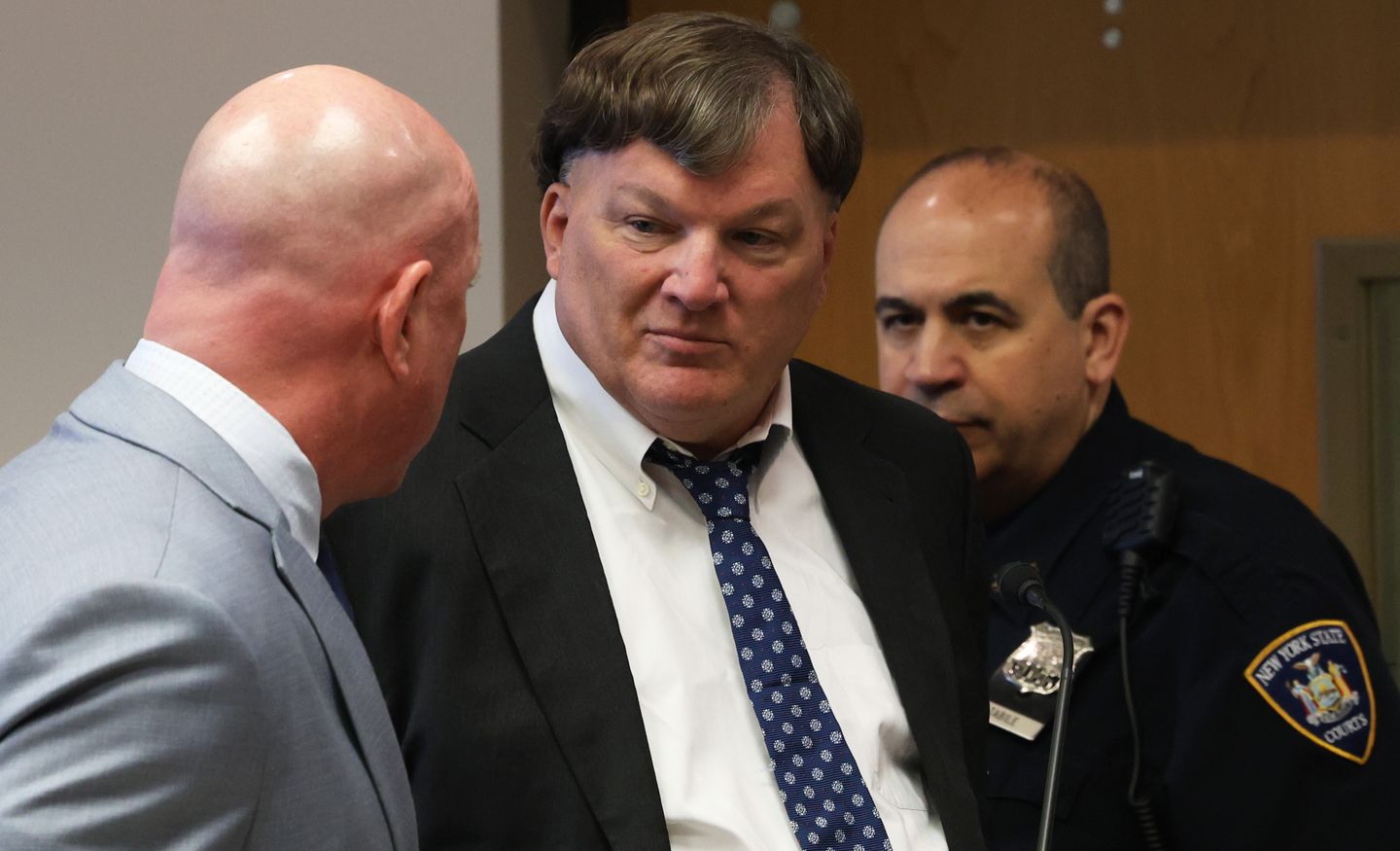
Heuermann appeared matter-of-fact and unemotional throughout Wednesday’s hearing, fixing his gaze straight ahead and never once looking back at the packed courtroom gallery.
His ex-wife, Asa Ellerup, who attended the hearing, said afterward that she never saw warning signs.
“My thoughts and prayers are with the victims and their families,” Ms. Ellerup said. “Their loss is immeasurable.”
Suffolk County District Attorney Ray Tierney was set to hold a news conference later Wednesday alongside victims’ family members.
Read more:
• Long Island architect Rex Heuermann pleads guilty to murdering 7 women and admits he killed another
• Suspect in Gilgo Beach serial killings is charged in the death of a seventh woman
This article was constructed with the assistance of artificial intelligence and published by a member of The Washington Times’ AI News Desk team. The contents of this report are based solely on The Washington Times’ original reporting, wire services, and/or other sources cited within the report. For more information, please read our AI policy or contact Steve Fink, Director of Artificial Intelligence, at sfink@washingtontimes.com
The Washington Times AI Ethics Newsroom Committee can be reached at aispotlight@washingtontimes.com.