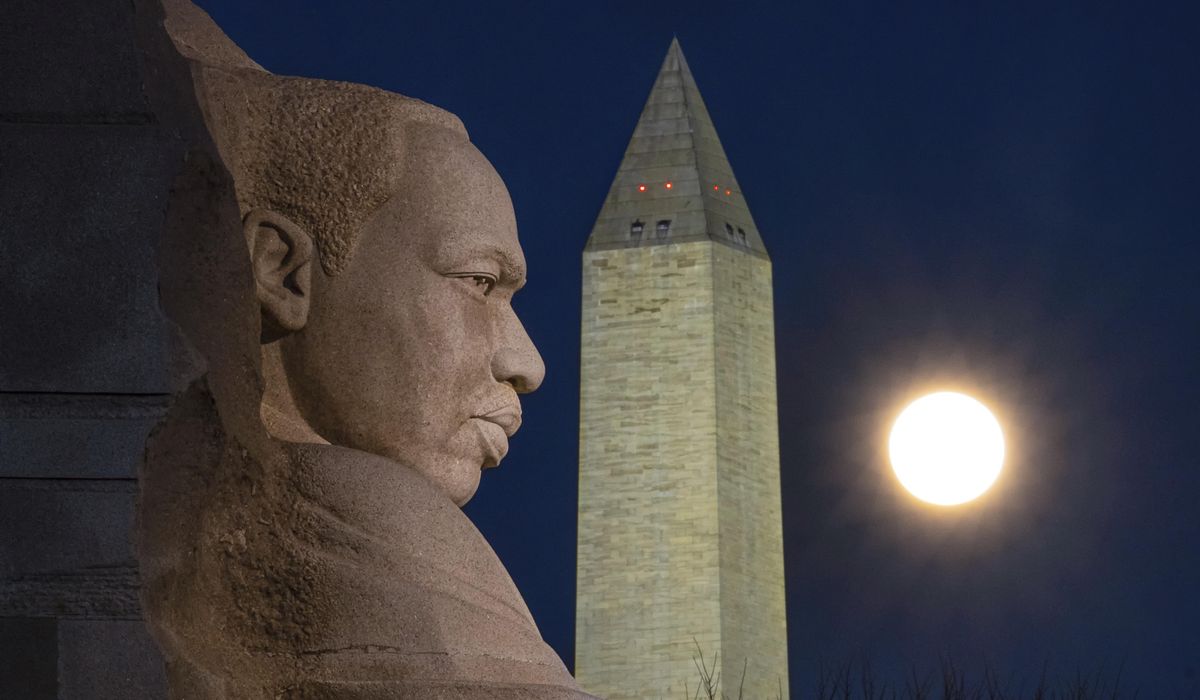
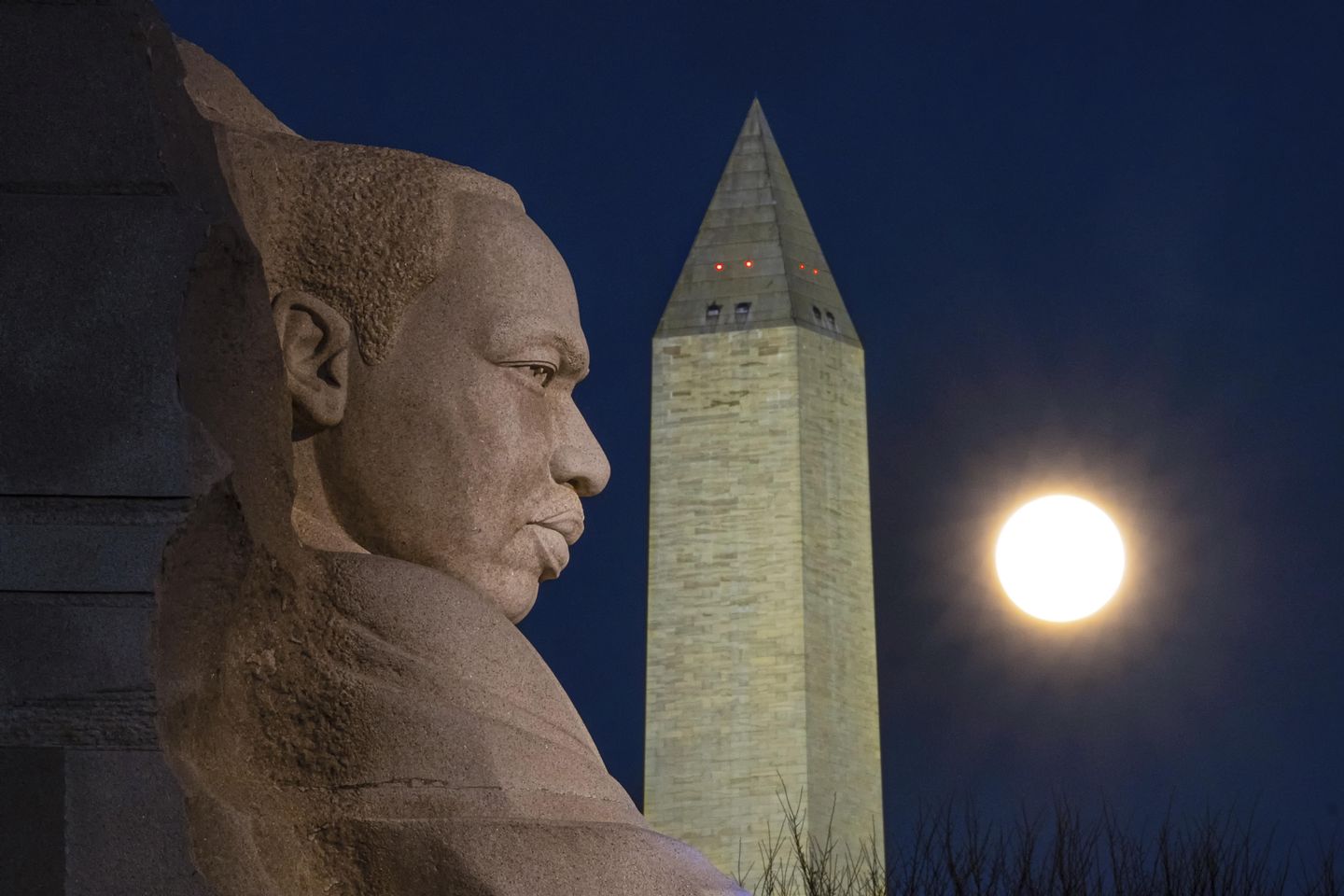
Residents across the Washington region will have a chance to see February’s full moon this weekend, as the so-called Snow Moon reaches peak illumination Sunday evening.
The full moon will peak at 5:09 p.m. Eastern time on Feb. 1, occurring close to sunset in the District, according to astronomical tracking cited by EarthSky and the Old Farmer’s Almanac. While the moment of peak illumination happens in late afternoon, the moon will appear brightest to most observers later in the evening once skies darken.
Although the moon becomes full at a precise time, it appears completely illuminated to the naked eye for several nights. The Snow Moon will look full to many skywatchers on Saturday, Sunday and Monday evenings.
Best viewing in Washington
In the Washington area, the moon will rise in the east shortly after sunset. For the best view, skywatchers should find a location with an open look toward the eastern horizon, away from tall buildings or heavy tree cover.
Popular viewing areas include the National Mall, East Potomac Park and waterfront spaces that offer wide sightlines across the sky. No special equipment is needed to enjoy the full moon, though binoculars or a small telescope can reveal surface features such as craters and darker plains.
Noah Petro, chief of NASA’s Planetary Geology, Geophysics and Geochemistry Laboratory at the Goddard Space Flight Center in Greenbelt, Maryland, encouraged residents to take time to observe the moon not only at its brightest but throughout its changing phases. “Go out and look at it when it’s full, when it’s partially full, and learn its geography,” Mr. Petro told CNN.
Why it is called the Snow Moon
February’s full moon is traditionally known as the Snow Moon because it coincides with one of the snowiest and coldest times of year across North America.
The Old Farmer’s Almanac notes that February has historically been associated with heavy snowfall, giving rise to the moon’s seasonal name.
Other cultural traditions have used additional names tied to winter weather, wildlife activity and the harsh conditions often faced during late winter.
What else to look for
Skywatchers in the Washington area may also notice the bright star Regulus near the moon as it rises. With binoculars or a small telescope and clear viewing conditions, observers could also spot the Beehive Cluster, an open star cluster located along the moon’s path, according to FOX 5 DC.
Winter air can sometimes make the moon appear especially crisp compared with warmer months, though clouds will ultimately determine visibility.
Weather will play a key role in viewing conditions Sunday night. Forecast maps from the National Oceanic and Atmospheric Administration suggested that more than half of the United States could have clear skies around 7 p.m. Eastern time, though cloud cover was expected to shift later overnight.
Looking ahead
The Snow Moon is one of 13 full moons expected in 2026, including a Blue Moon in late May
The next full moon, known as the Worm Moon, will occur March 3 and will coincide with a total lunar eclipse, sometimes called a blood moon because of the reddish color the moon can take on as Earth’s shadow passes over it.
Two supermoons are expected later in the year, in November and December, when the moon’s orbit brings it closer to Earth and makes it appear slightly larger and brighter than usual.
Full moons in 2026 (Eastern time)
- Snow Moon: Feb. 1, 5:09 p.m.
- Worm Moon (total lunar eclipse): March 3, 6:38 a.m.
- Pink Moon: April 1, 10:12 p.m.
- Flower Moon: May 1, 1:23 p.m.
- Blue Moon: May 31, 4:45 a.m.
- Strawberry Moon: June 29, 7:57 p.m.
- Buck Moon: July 29, 10:36 a.m.
- Sturgeon Moon (partial lunar eclipse): Aug. 28, 12:18 a.m.
- Harvest Moon: Sept. 26, 12:49 p.m.
- Hunter’s Moon: Oct. 26, 12:12 a.m.
- Beaver Moon (supermoon): Nov. 24, 9:53 a.m.
- Cold Moon (supermoon): Dec. 23, 8:28 p.m.
This article is written with the assistance of generative artificial intelligence based solely on Washington Times original reporting and wire services. For more information, please read our AI policy or contact Steve Fink, Director of Artificial Intelligence, at sfink@washingtontimes.com
The Washington Times AI Ethics Newsroom Committee can be reached at aispotlight@washingtontimes.com.