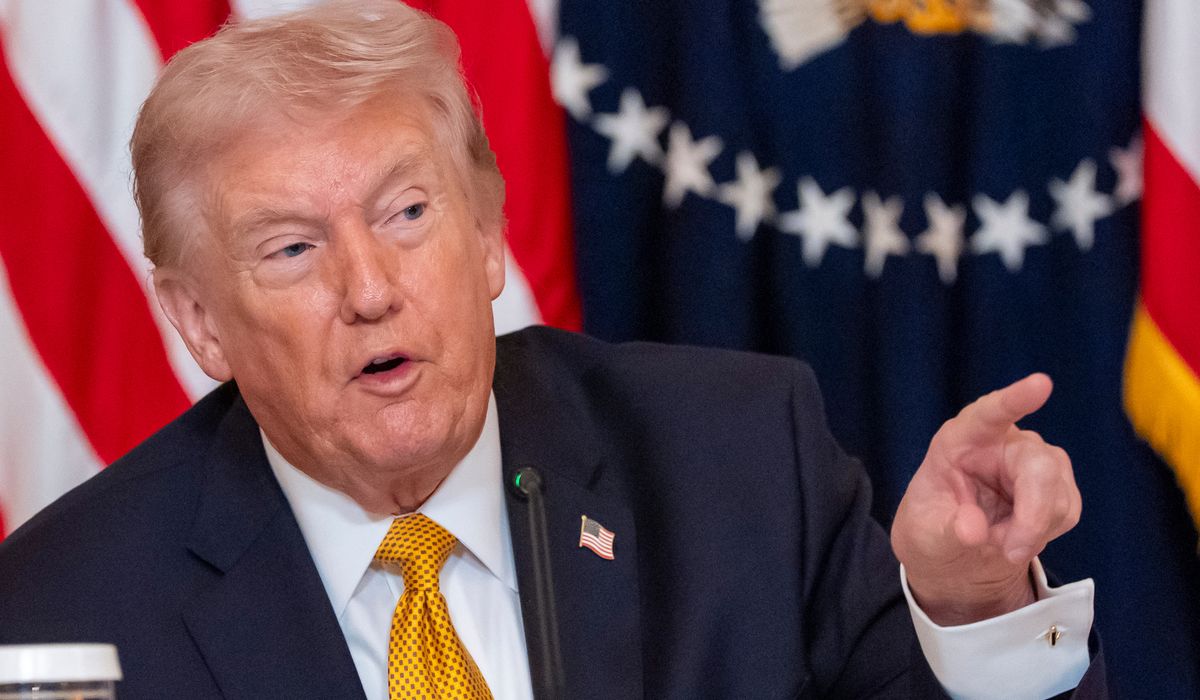
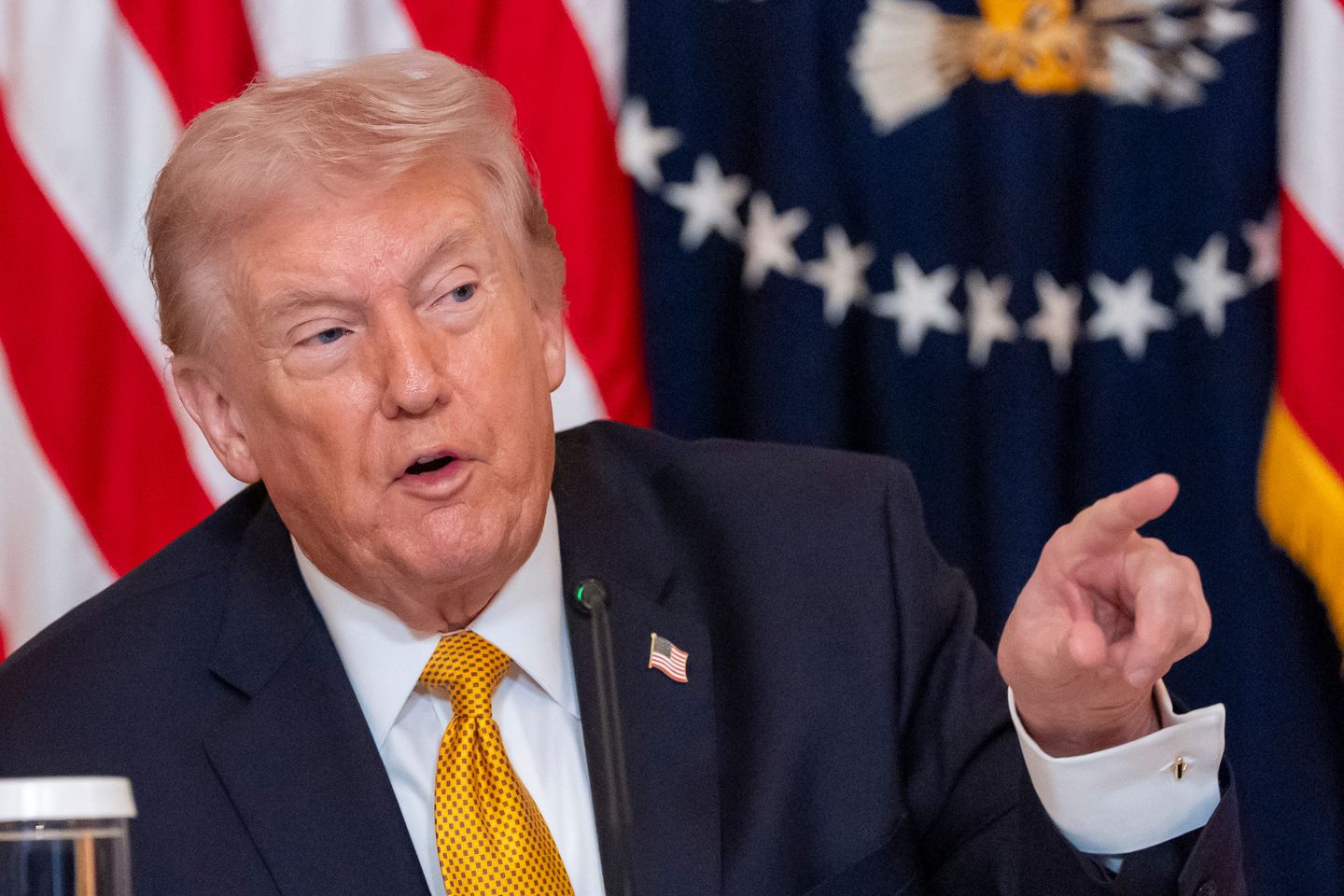
President Trump said Monday he is keeping a close watch on which countries help the U.S. break Iran’s chokehold on the Strait of Hormuz and reopen the critical passage to oil traffic.
At a White House press conference, Mr. Trump vented his frustration at countries that were skeptical of sending naval assets to the region to help U.S. forces reopen the strait, through which at least 20% of the world’s oil travels each year.
He mocked foreign leaders who had told him that they would “rather not get involved” and said “numerous countries” were enthusiastic about the effort, without naming them.
Mr. Trump said French President Emmanuel Macron told him Sunday that France was “going to help,” though Mr. Trump offered no further details. Mr. Trump added that Secretary of State Marco Rubio would soon provide a list of countries backing U.S. efforts to reopen the waterway.
Mr. Trump said resistance among some nations to send warships confirmed his belief that some allies would not come to the U.S.’s aid when needed.
“They should be in here very happily helping us,” Mr. Trump said. “I’ve been saying for years that if we ever did need them, they won’t be there.”
The president said Iran seems to want to negotiate a deal to end the war, but he was not sure who was leading the country.
“They’re all dead. We don’t know who we’re dealing with,” Mr. Trump said.
In a social media post on Saturday, Mr. Trump called on China, Britain, France, Japan and South Korea to assist the U.S. Navy in reopening the Strait of Hormuz, which Iran has kept effectively closed by threatening to strike any Western vessel traveling in the critical waterway.
The closure has kept crude oil prices hovering around $100 a barrel for the past week, putting significant political pressure on the Trump administration as U.S. consumers face gas prices reaching close to $4 a gallon.
International leaders responded coolly on Monday to Mr. Trump’s demands, with most offering noncommittal statements and some issuing outright denials.
U.K. Prime Minister Keir Starmer did not officially agree to send any British warships to the Persian Gulf in a news conference, but he said his government is drafting a workable plan to safely reopen the Strait of Hormuz for business. He insisted, however, that Britain would not be “drawn into a wider war.”
Japanese leader Sanae Takaichi issued a similar statement on Monday in an address to Japanese lawmakers.
“The Japanese government is currently considering how to take the necessary measures,” Ms. Takaichi said. “Of course, this will be within the scope of Japanese law, but we are considering how to protect the lives of Japanese-related vessels and their crews, and what we can do.”
She also said there are no plans to send Japanese naval ships to the Middle East to assist in escort missions.
Ms. Takaichi is expected to meet with Mr. Trump in Washington on Thursday, and Mr. Rubio spoke with his Japanese counterpart, Toshimitsu Motegi, by phone on Monday to discuss the Iran war.
President Lee Jae-myung of South Korea said his administration is cooperating closely with Washington but made no commitments to the American-led war effort.
His comments Monday came after the U.S. moved critical air defense batteries from South Korea to the Middle East to bolster operations there.
China, one of the largest importers of Iranian oil, has not directly responded to Mr. Trump’s demand.
In an interview with the Financial Times on Sunday, Mr. Trump said he may have to delay his scheduled summit with Chinese President Xi Jinping later this month if China does not agree to help reopen the Strait of Hormuz.
A spokesperson for China’s Foreign Ministry said Monday that Beijing was still in contact with Washington to coordinate Mr. Trump’s visit.
Treasury Secretary Scott Bessent said Monday that if the summit is rescheduled, it will be because Mr. Trump has to monitor the war in Iran, not because of any demands made of China.
Germany issued the strongest rejection.
“This is not our war; we did not start it,” Defense Minister Boris Pistorius said at a press conference.
Government spokesperson Stefan Kornelius reiterated the position later, confirming there were no plans to send German troops or warships.
Australia, too, said no. Transport Minister Catherine King told Australian media that the U.S. has not officially asked for support and that Canberra is not prepared to give it.
Mr. Trump’s call for aid on Saturday marks the first time the president has strongly signaled a desire to build an international coalition to support the war against Iran.
The White House reportedly did not consult with many of its long-standing allies before the war began on Feb. 28 and even got into a public feud with the U.K. over the use of its airbases.
The Trump administration has had a fractious relationship with allies in Europe and Asia during Mr. Trump’s second term, with the president and his subordinates frequently attacking NATO and its members and others for not doing enough for their own defense or for enacting left-leaning domestic policies.
Some analysts say the lack of support for Mr. Trump’s plan is the fruit of that treatment.
“I suspect some of that response is a reflection of how they feel they’ve been treated. You know, we kind of know this, that if you want to keep allies, you want to benefit from allies, you have to invest in the relationship,” said Mark Montgomery, executive director at the Cyberspace Solarium Commission.
However, Mr. Montgomery added that several nations that loudly dissented aren’t necessary fro the effort to succeed, and that several of the countries with larger navies, such as the U.K., South Korea and Japan, may come around.
Mojtaba speaks
Iran’s supreme leader, Ayatollah Mojtaba Khamenei, issued the second decree of his rule on Monday, insisting that officials appointed by his father, the previous supreme leader, would remain in their positions for the time being.
He urged military and civilian leaders across Iran to continue with their responsibilities in accordance with the policies and guidelines laid out by former Supreme Leader Ali Khamenei.
“Following inquiries from some managers and officials of bodies who were directly appointed by the martyred leader, I hereby announce that none of them need a renewal of their appointment for now,” the statement reads.
The decree, first reported on by Iran International, hints at Mr. Khamenei’s desire to maintain continuity of government as Iran suffers debilitating daily strikes by Israel and the U.S. Many senior Iranian leaders, including Khamenei, were killed in the opening hours of the war last month.
Mr. Khamenei has not yet made a public appearance as Iran’s new supreme leader, and some reports suggest he may have been severely injured by U.S. or Israeli airstrikes. Mr. Khamenei was reportedly present when his father was killed.