A neighborhood of wealthy residents hires a security guard, then spends years skipping payments and trusting the guard will show up regardless. Finally, when the guard asks for more shared responsibility, the loudest voices complain about his tone rather than their obligation, and move to fire him.
Europe’s Latest Outburst
They’re at it again! Calls surfaced inside parts of the European Union, urging NATO to generate distance between the organization and the United States. The timing wasn’t accidental; President Donald Trump has pressed European governments to pay for their own defense, rather than rely on American taxpayers.
It’s genuinely a case where accountability replaced comfort, followed by irritation.
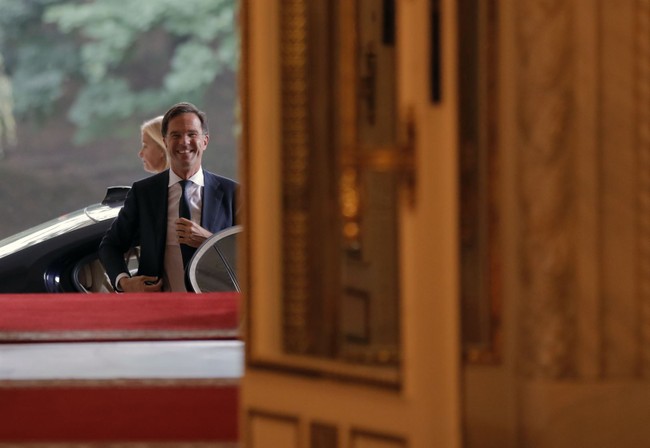
NATO Secretary General Mark Rutte rejected that idea; he stated with confidence that the United States remains fully committed to the alliance.
It was the proper response at the exact time, cutting through the noise, while reminding everyone where NATO actually stands.
Trump has repeatedly blasted NATO allies for failing to meet the alliance’s agreed-upon goal of spending 2% of GDP on defense, arguing that American taxpayers were underwriting Europe’s security while many countries treated defense like an optional subscription.
But multiple NATO members have significantly increased defense spending, adding hundreds of billions of dollars collectively.
Even NATO leadership acknowledged that Trump’s relentless pressure accelerated commitments that had been ignored for years.
Years ago, European leaders signed agreements committing to defense spending targets. However, many ignored them, relying on the United States to cover gaps through troop deployments, weapons stockpiles, intelligence sharing, and nuclear deterrence.
Trump, the great disruptor, spoke up, not by threatening abandonment, but by demanding seriousness. Some EU officials reacted as if a slice of cheese had been tossed on their foreheads, wailing as if their safety net for generations had vanished overnight, even though that net is still firmly in place.
Rutte’s remarks that NATO remains intact reinforces the reality that American backing hasn’t wavered. But what changed involves expectations, not loyalty.
A Short Memory Problem
As an American taxpayer, the tone coming from parts of Europe is bloody insulting; our country twice crossed an ocean to pull the continent out of catastrophe. American soldiers bled and died on European soil, American industry fueled their victory, and after World War II, American power held the Iron Curtain in check for decades.
NATO is built on that history, but it also led to bad habits. Some European governments grew used to our security as a given, something provided rather than shared.
When the president challenged that comfort, howls of outrage erupted. Rutte’s response cut right through that reaction, proving that gratitude doesn’t require silence, but honesty requires memory.
NATO Versus the EU Mood
The European Union and NATO don’t operate as a single voice; NATO focuses on defensive reality, while the EU often speaks through politics and posture. Calls to withdraw the United States from NATO are based on frustration, not strategy.
Rutte has acted wisely, choosing clarity over appeasement, acknowledging American commitment, while rejecting symbolic tantrums that weaken deterrence. It’s a stance that’s become critical, especially when our adversaries are keeping a close eye on things, because alliances survive through strength and clarity, not sitting in a corner, sulking because mom told you to do something, such as dry the dishes for a change, instead of having your sister do it all the time.
Why Rutte’s Stance Matters
Leadership, much like compromise, sometimes means disappointing people who want everything, but don’t get it. In the EU, countries prefer comfort to taking responsibility. Acting like the adult in the room, Rutte’s response fought against childish reactions, reminding Europe that NATO functions because of shared duty, not shared complaints.
Trump’s pressure forced overdue conversations among petulant countries, leaving governments that had delayed investments for decades feeling uncomfortable. But despite the whiny child-like countries believe, discomfort doesn’t represent betrayal.
NATO continues to survive because leaders such as Rutte refuse to conflate accountability with abandonment.
Final Thoughts
Any security guard who continues to show up without timely payments deserves more than excuses; he needs clearer direction to remain a partner. NATO is still standing because the United States continues to keep watch, even while doing something truly dastardly, demanding fairness.
Europe can stomp, shout, whine, complain, and posture, but its responsibility never disappears. Because Rutte understands that, NATO remains stronger for it.
PJ Media’s YUGE Christmas and New Year’s sale is on — now at our lowest rate of the year! This huge sale on our VIP Memberships ends on January 1, so make sure you join the club to get our special behind-the-scenes look at the news. Receive 74% off by following this link and using our promo code MERRY74.