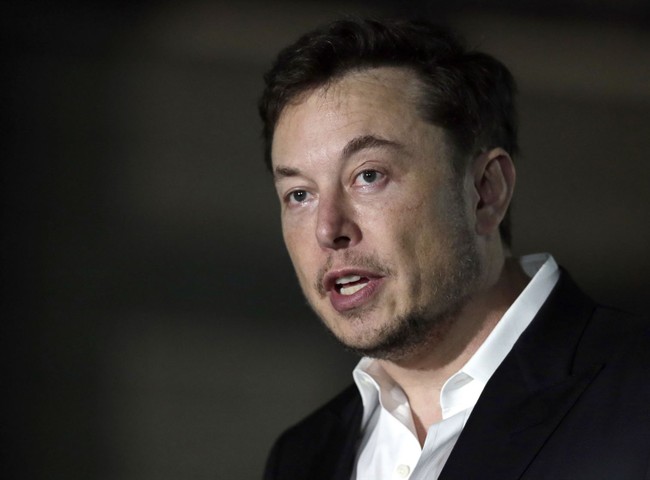
Tesla isn’t just a car company, and SpaceX isn’t just a space exploration company. Elon Musk’s two marquee companies, and his many other ventures have a lot in common and complement each other by design. The common thread is that Musk wants to leave his mark on this world having changed civilization’s footprint. If he does that, he would be one of the most consequential humans who ever lived.
To accomplish that, he had to create technologies that didn’t exist. Benchmark accomplishments have had to happen and still need to happen that, each one in its own right, is almost equivalent to the significance of Christopher Columbus discovering America.
In the course of creating self-driving, electric vehicles (EVs) at Tesla, Musk has been advancing robot and artificial intelligence (AI) technologies. At SpaceX he’s led the way on space travel innovation in ways NASA once monopolized.
He’s not doing these things just to say he did them. He’s got a vision, which he constantly talks about. He wants to colonize the Moon and Mars. He wants mankind to start to think bigger.
His company Neuralink has created a brain-computer interface that translates neural signals into actions. The initial applications for this are for disabled people who can be aided by his devices which control computers and robotic arms with thought. As this technology evolves, it’s not hard to imagine how it can be used by able-bodied or disabled astronauts and human colonizers on other celestial bodies.
Neuralink allows an ALS patient to control a robotic arm with his mind.pic.twitter.com/guL20lHWqR
— Joe Rogan Podcast News (@joeroganhq) March 28, 2026
Musk’s satellite internet provider company Starlink is yet another capability that may become critical to realizing his vision in space. Already, the company operates thousands of satellites in low-Earth orbit to give users on the ground wireless internet access. While rural users and people in Third World have been some of the early beneficiaries of the technology, its future applications are limited only by Musk’s imagination.
Another little-known Musk company is called The Boring Company, which is a tunnel-building firm. Right now, that company’s technology and capabilities are used to more efficiently build affordable tunnels faster. In Las Vegas, you can go to the Convention Center Loop and see how Teslas are used underground to transport people rather than use rail cars.
Newest Vegas Loop Station at the beautiful Fontainebleau Resort @fblasvegas pic.twitter.com/uzG0qYbSJX
— The Boring Company (@boringcompany) March 31, 2026
It’s never a good idea to judge a tech company by the first uses of its technology or platform. If you did that when Amazon first started, you would have just seen that company as an online bookstore, which is what it was at first, but that was never founder Jeff Bezos’s full vision for the company.
The same is true here. Long before anyone took him seriously on any of this, Musk started seriously looking at what it would take for him to realize his vision. He knew he had the money to get started, and he knew if his ventures were successful, the money to further invest in his ideas would come.
So he worked backward. He started with that wild vision, and then he followed the pathway back to our current reality. With that, he had a list of technologies and solutions that needed to be invented. He knew the kind of companies that needed to be started. And he knew what problems those companies needed to solve in their infancy before they could do the big stuff.
To date, all the headlines around Tesla was its EV advantage, helping people and governments realize the benefits of electric vehicles. But already, it’s possible to see that this was just a baby step for Tesla. The autonomous vehicle development at the company made it as much a robot company as an automotive one.
In March, Musk’s Tesla and SpaceX launched a joint venture to consolidate all phases of semiconductor production in the same plant. That venture is called Terafab.
Self-sufficiency
To more fully appreciate what Musk is doing, a term comes to mind – self-sufficiency.
Musk realized he couldn’t achieve his master vision if he were counting on others and other firms for key parts of the puzzle. He needed the self-sufficiency it will take to get to Mars. He needed it to generate all the sustainable energy you need from the sun, to use that energy to power satellite networks. He’s needed it to go about city-building, for underground tunnel construction, and to do all of this while creating your own chips, doing the work with your own people, your own robots, and using your own AI platforms.
Compatibility is just as important and is part of the self-sufficiency equation. Anyone who has worked in tech knows that once you have two separate companies, a good deal of time, effort and work is focused on helping two companies’ technologies to talk to each other and work with each other. Musk’s consolidated approach eliminates a lot of that.
When you look at it that way, the tunnel company makes perfect sense. Underground tunnels enable you to create more controlled environments on planets and moons. They reduce certain risks associated with living in these harsh environments, and they make the notion of living there more sustainable and a pragmatic possibility.
My colleague Rick Moran wrote about the potential opportunities that could come from mining asteroids, and in the process, he touched on the planned SpaceX Initial Public Offering (IPO). He also mentioned Musk’s role in all of this, which cannot be overstated.
At the moment, Musk is even looking at ways to build datacenters in space which would generate power to be used here on Earth. Once again, Musk focuses on solving a real problem on Earth that falls right in line with giving him the new tools he needs to achieve his goal of expanding the human race to the moon and beyond.
Since Musk is who he is and has lived the life he’s lived, he’s learned not to hit people with his grand vision all at once. It’s too easy to laugh off a guy like that. He’s learned to reveal his master vision over time to provide context by emphasizing his near-term focus.
Henry Ford spent his entire life on the automobile, and society was never the same as a result. Steve Jobs and Bill Gates spent their active careers personalizing computer technology, and once again, society was never the same. Musk has always thought so much bigger than that, that he’s had to learn to rein himself in so that he tends to talk about each step in its own time.
NASA’s Artemis mission to the moon, along with increasing disclosures centered on that SpaceX IPO are making it more obvious that Musk’s disparate ventures are starting to converge. It’s becoming more apparent what he’s ultimately trying to do, and it’s not just talk.
🚨Update: Artemus 2 just lifted off for what NASA says is a trip around the Moon! pic.twitter.com/DDGZhWG2EI
— US Homeland Security News (@defense_civil25) April 1, 2026
NASA has already selected the SpaceX Human Landing System (HLS) for Artemis as the means to land people on the moon. SpaceX’s Raptor engines and reusable rocket technology may also come to play.
❗️🚀🇺🇸 – SpaceX has revealed an enhanced version of its Starship Human Landing System (HLS), tailored for NASA’s Artemis program to return astronauts to the Moon’s surface.
This lunar lander variant stands approximately seven times taller than the Apollo lunar modules and… pic.twitter.com/jy1BtkzgF2
— 🔥🗞The Informant (@theinformant_x) November 7, 2025
Not coincidentally, SpaceX this week took a major first step towards its IPO which will generate the cash SpaceX will need to further realize its potential and Musk’s vision.
According to Bloomberg, SpaceX’s IPO could be the largest public offering ever after filing with the U.S. Securities Exchange Commission (SEC). The newswire reported that SpaceX could raise up to $75 billion through the IPO.
Reuters has reported that while the company is valued at $1.25 trillion right now, Musk and SpaceX are seeking a valuation of $1.8 trillion through the IPO. While no official date has been disclosed, reports are to expect it in June.
If you’ve only been casually paying attention to Musk and his various business ventures because they may have seemed too far out for you to get your head around, now may be the time to start paying closer attention. Even if all you have is a 401(k) or an IRA account, chances are pretty good that a part of your own nest egg will depend on Musk to achieve some of those goals of his.
Some day in the not-too-distant future, when you see those reusable rockets and lunar landers on your screen, not only may that do something for you in a very human and patriotic sense, but it could be good for your retirement savings, too.
Find out what you’re missing behind the members-only wall. It’s time for you to take advantage of the full catalogue of common sense thinking that comes with a PJ Media VIP membership. You’ll get access to content you didn’t even know you wanted, and you’ll be hooked. The good news is, PJ Media VIP memberships are on sale! Get 60% off of an annual VIP, VIP Gold, or VIP Platinum membership! Use promo code FIGHT to get 60% off a VIP membership!