
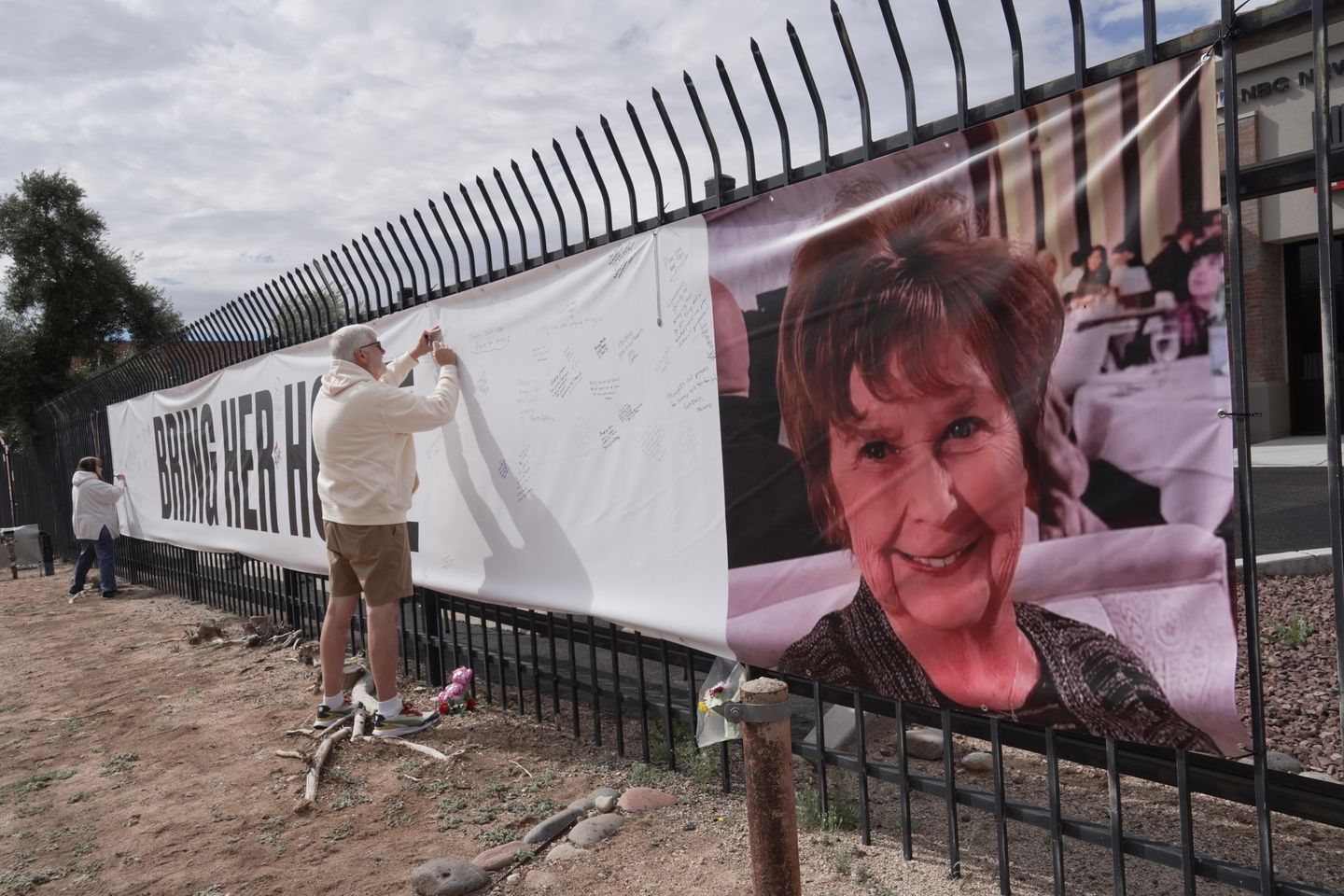
The shocking disappearance of Nancy Guthrie has captured the nation’s attention, but high-profile abductions committed by strangers are rare, and most kidnappings involve family or custody disputes.
Investigators are treating the 84-year-old’s disappearance as a suspected kidnapping, and she’s now been missing since Feb. 1 as authorities have yet to identify any suspects in the puzzling case.
If Ms. Guthrie was abducted by a stranger, that would make her case extremely rare.
In the past 12 months, there were 50,654 abductions and kidnappings in the U.S., according to FBI data.
Of those cases, roughly 67% (33,980) involved an offender with a relationship to the victim, such as a parent, spouse, ex-spouse, acquaintance, grandparent, former romantic partner, or other connection. In only 9% of the cases (4,903) was the kidnapper a stranger.
In the remaining cases, the crime wasn’t solved, so the relationship is unknown.
About 23% of all kidnappings involve individuals under the age of 18, according to the FBI’s data. That is the largest demographic in the FBI database.
Only 182 kidnappings, or 0.3%, involved a person over the age of 80, such as Ms. Guthrie.
The Justice Department’s National Crime Information Center tracks kidnappings as part of its missing persons records. It counted 563,389 missing persons in 2023, according to its most recently available information. Yet it deemed only 8,401 of them, or 1.5%, as “involuntary” disappearances such as a kidnapping or abduction.
The vast majority of those who disappeared were attributed to other factors such as a person who vanished because of a mental health issue or cognitive disease, went missing after a catastrophe, including a flood or earthquake, or a juvenile runaway.
Tara Kennedy, the media representative for the Doe Network, a volunteer group that works to identify missing and unidentified persons, called involuntary abductions a “rare, rare occurrence.”
“If you look at these involuntary abductions, they are in the thousands compared to other categories, which are in the tens of thousands and even hundreds of thousands,” she said. “These are not regular occurrences. Involuntary abductions like the one that happened, unfortunately, to Nancy Guthrie, do not happen frequently.”
Law enforcement officials say the number of kidnappings has dropped dramatically over the years because the crime is much more difficult to carry out in an era of surveillance cameras, license plate readers and cellphone tracking data.
The FBI’s clearance rate on kidnapping/abduction cases is about 60%.
“The risk-reward is not feasible,” said Betsy Brantner Smith, a spokeswoman for the National Police Association. “It’s extremely risky, especially now when everyone leaves a digital footprint. You can’t carry out a kidnapping without a cellphone or being on camera. The reward is fairly unattainable.”
Another reason why such crimes are rare is that celebrities who have the kind of money that could pay a steep ransom have stringent security and bodyguards, while non-celebrities don’t have the wealth to make an abduction worthwhile.
A handful of kidnapping cases have involved people being held at gunpoint, taken to an ATM to withdraw cash, but even those are rare.
Ms. Kennedy said she couldn’t remember the last time she heard about a ransom in a disappearance case. Police are investigating purported ransom notes sent to TMZ and other media outlets, but have not confirmed if they were sent by an individual or individuals in the Guthrie case.
Going back nearly 100 years, only a small number of kidnapping cases have riveted the nation’s attention. Those include the abduction of the 20-month-old son of aviator Charles Lindbergh and his wife Anne Morrow Lindbergh in 1932; the kidnapping of Adolph Coors III, the heir to the Coors brewing fortune in 1960; the abduction of the Frank Sinatra Jr., son of the legendary entertainer in 1963; the grandson of oil tycoon John Paul Getty in Italy in 1973, and Patty Hearst, heir to the Hearst fortune, who was held for ransom in 1974.
“These are the cases that come to mind because it happens so infrequently,” Ms. Kennedy said.
Most kidnappers have some connection to the victim in these cases. For example, Elizabeth Smart was 14 when she was kidnapped from her bedroom at knifepoint in 2002. She was discovered when her sister remembered the voice she heard during the kidnapping belonged to a handyman who had worked on the Smarts’ home.
In 2016, high school freshman Elizabeth Thomas was abducted by her teacher, Tad Cummins, who spent a year making sexual advances toward the student.
The abduction and murder of Adam Walsh from a Sears department store in Hollywood, Florida in 1981 sparked fears of child abductions. No one was ever charged with Walsh’s murder; a convicted murderer confessed in 1983 and then recanted in 1996.
That sparked a nationwide panic in the mid-1980s, fueling untrue claims about child kidnappings, including that more than 50,000 children were being taken by strangers every year.
Those myths dissipated after the Denver Post won a Pulitzer Prize in 1986 for a series of stories examining the belief that most missing children had been abducted by strangers. The series concluded that most missing children were runaways or involved in custody disputes.
“The stranger situation is extremely rare. After Adam Walsh and the kids on the milk carton, parents were terrified that strangers were going to grab kids off the streets,” said Ms. Brantner Smith. “But someone picking that house or that child for no reason whatsoever is very unlikely.”
Experts say there needs to be more data and an increase in forensic scientists to process DNA and other evidence to help catch kidnappers quickly.
There is no standardized data for missing persons, and various agencies use different definitions to track data. Local law enforcement is only required to report missing persons cases to the federal government if they involve minors.
In addition to the National Crime Information Center and the FBI, the National Missing and Unidentified Persons System (NamuS) also collects missing persons data. But only 16 states require mandatory reporting to the NamUs database.
As the emphasis on forensic evidence across the country grows, there is a shortage of personnel to test blood, DNA and other evidence, stalling police investigations and creating difficult choices about what gets tested and what doesn’t when seconds matter in kidnapping cases.
“We need more resources to process that kind of data because DNA is really a solid scientific tool that can really definitively point out the identity of someone,” Ms. Kennedy said. “We need a plethora of resources put into that.”