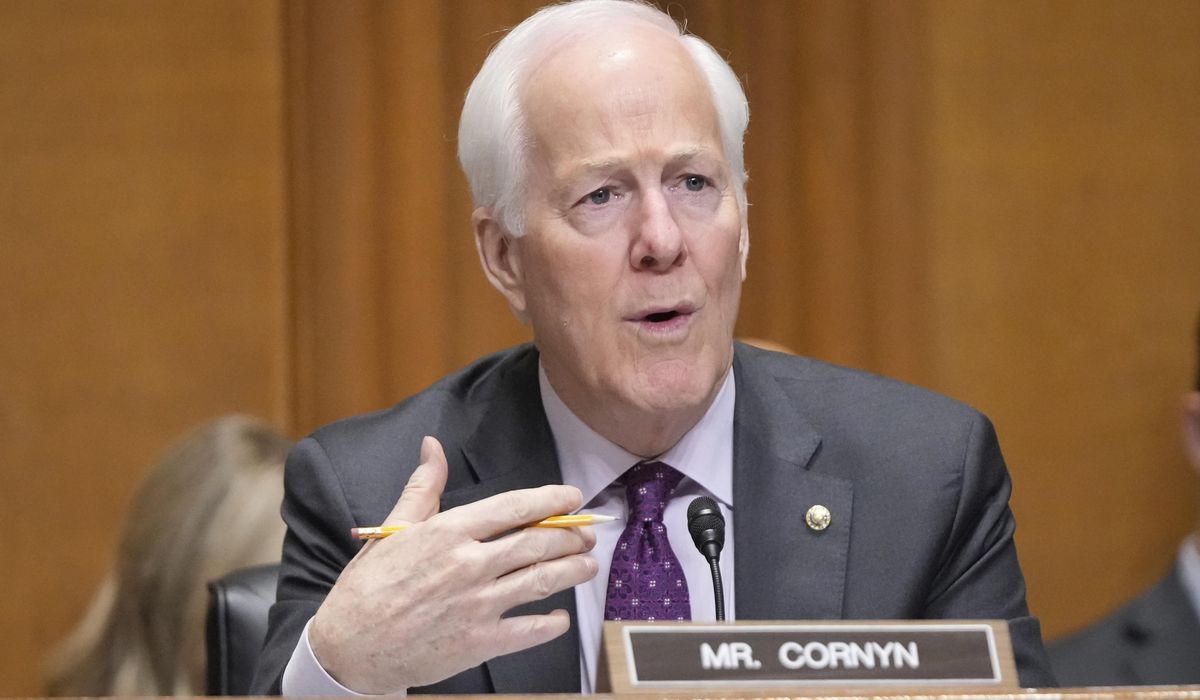
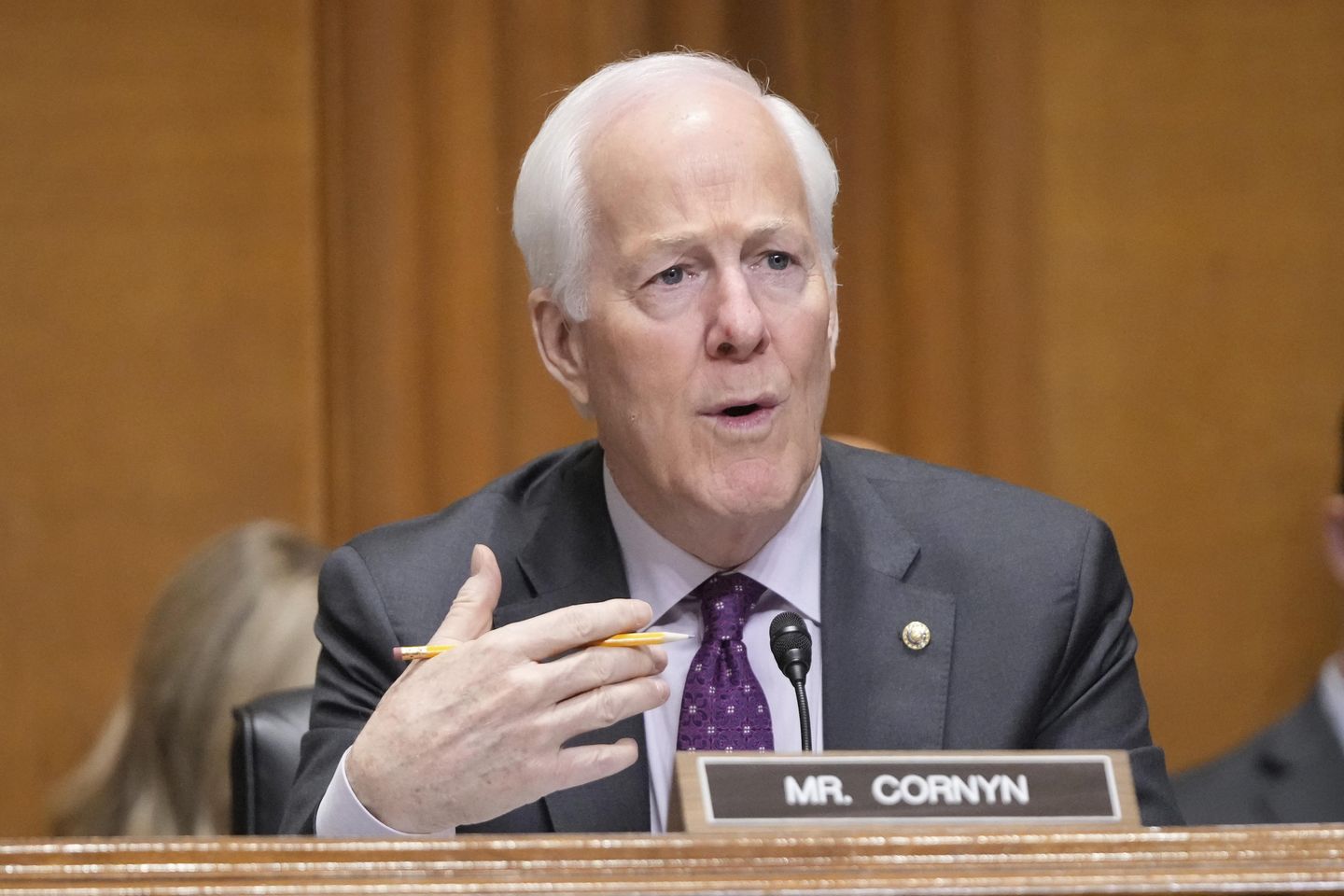
Sen. John Cornyn’s allies say the GOP’s surprising loss in a recent state legislative special election is yet another sign that making Attorney General Ken Paxton the party’s Senate nominee this fall is a gamble Republicans shouldn’t take.
Mr. Cornyn’s critics aren’t buying it. They argue he’s grasping for anything that might help him, because his standing with the GOP base has cratered.
They say he has little chance against Mr. Paxton in a nomination battle that also includes Rep. Wesley Hunt — even if he somehow lands an endorsement from Mr. Trump, who is now hinting he may get involved in the race.
Republican alarm bells went off after Democrats flipped a state Senate seat in the Fort Worth-area district that Mr. Trump won by 17 points in 2024. This time around, independents and Republicans drifted away from the party, helping union leader Taylor Rehmet score a headline‑grabbing 14‑point win.
The upset also scrambled the Democratic primary. It gave state Rep. James Talarico — a liberal who often leans on his Christian faith — fresh material for his electability pitch. His rival, Rep. Jasmine Crockett, a fiery anti‑Trumper, and her allies have brushed off that argument as an underhanded suggestion that a Black woman can’t win a general election. They say the party craves a fighter.
In short, the special election has sent political shock waves across Texas, giving every faction something to latch onto, including new reasons to ask donors for cash.
“A vote for Ken Paxton is a vote to jeopardize the Texas Senate seat and make Chuck Schumer majority leader,” said Matt Mackowiak, Cornyn campaign senior adviser. “As the GOP nominee, Senator Cornyn takes Texas off the map, so Republicans can focus on growing our majority in other races.”
The Cornyn team argues Democrats would have a field day with Mr. Paxton’s political baggage — including a cheating scandal, messy divorce and other well-documented legal troubles — forcing Republicans to pour tens of millions of dollars into defending him in a general election.
They say that money would be better spent in competitive Senate races in North Carolina, Michigan, Maine and Georgia.
The special election shows the GOP nominee must appeal beyond the base and win over independents and moderate Republicans, according to Cornyn supporters.
The Paxton camp sees it differently. They argue the results show the party needs to “be laser-focused on turning out low-propensity, Trump-supporting America First voters” — and that Mr. Paxton, a die‑hard Trump ally, is the best candidate to do that.
“John Cornyn is the worst possible choice on that front,” said Nick Maddux, a Paxton adviser.
Mr. Maddux questioned whether Mr. Cornyn will even make the runoff race despite more than $50 million being spent on his behalf — money he says could have gone to key Senate races elsewhere.
“Texas voters don’t like him, don’t trust him, and won’t show up to vote for him in November,” he said.
Joshua Blank, director of research for the Texas Politics Project at the University of Texas at Austin, said the special election isn’t just another sign that Republicans may be heading into a tough political climate. It also adds a new wrinkle to the ongoing debate over how much electability should matter in the GOP Senate primary.
“It’s been pretty much accepted that Ken Paxton has an advantage in the Republican primary here in Texas,” he said. “It’s also generally been accepted that he would be at a disadvantage relative to John Cornyn in a general election against whoever the Democrats nominate.”
Mr. Blank said the post-special election skepticism about Mr. Paxton’s bid is coming from the same Republican elites who have questioned him since he launched his campaign. He also noted that Mr. Trump’s recent openness to weighing in suggests those concerns “are making their way up the ladder and all the way to the White House.”
“There’s no world in which Donald Trump wants to oversee Texas Republicans losing their first statewide race in 30 years,” he said.
Mark P. Jones, a political science professor at Rice University, said he would be surprised to see Mr. Trump jump into the race before the March 3 primary. Unless someone tops 50%, the top two finishers will head to a May runoff.
Meanwhile, the Democratic race between Talarico and Crockett will almost certainly be decided in the primary, giving Mr. Trump even more information to consider if he chooses to endorse.
“If you’re content with Cornyn and Paxton being your two runoff options, then what’s the urgency to endorse before March 3?” Jones said. “Because then you can see sort of where they finish, and then you also know who the Democrats have nominated.”
Still, there’s uncertainty about how Mr. Trump might engage.
Some wonder whether he could endorse more than one candidate, something he’s done before — perhaps most memorably in 2022, when he endorsed “Eric” in the Missouri Senate race without clarifying whether he meant then — Attorney General Eric Schmitt or former Gov. Eric Greitens.