Top Democrats argued Tuesday against applying a 25-year-old AUMF on the strikes against Iran while simultaneously suggesting the U.S. has been at war with the Islamic Republic for decades.
Although the White House has not leaned into the 2001 Authorization to Use Military Force as a reason for the U.S. air strikes in Iran last weekend, one congressional Republican took note.
Rep. Blake Moore of Utah said in a statement Monday that “this weekend’s military campaign against Iran has dealt a major blow to the largest state sponsor of terrorism in the world.”
He added, “Iran provided a safe harbor to Al Qaeda militants immediately after the 9/11 attacks and allowed its senior leaders to base their operations there. President Trump took decisive action to halt Ayatollah’s power under the 2001 Authorized Use of Military Force approved by Congress.”
The 2001 AUMF passed not long after the September 11, 2001, terrorist attacks, authorizing the president to use all “necessary and appropriate force” against those responsible for the attacks and any nations, organizations or persons who planned, authorized, committed or aided the 9/11 attacks or gave them safe harbor.
Senate Democrats scoffed at the idea that this resolution could provide legal justification for the U.S. to strike Iran.
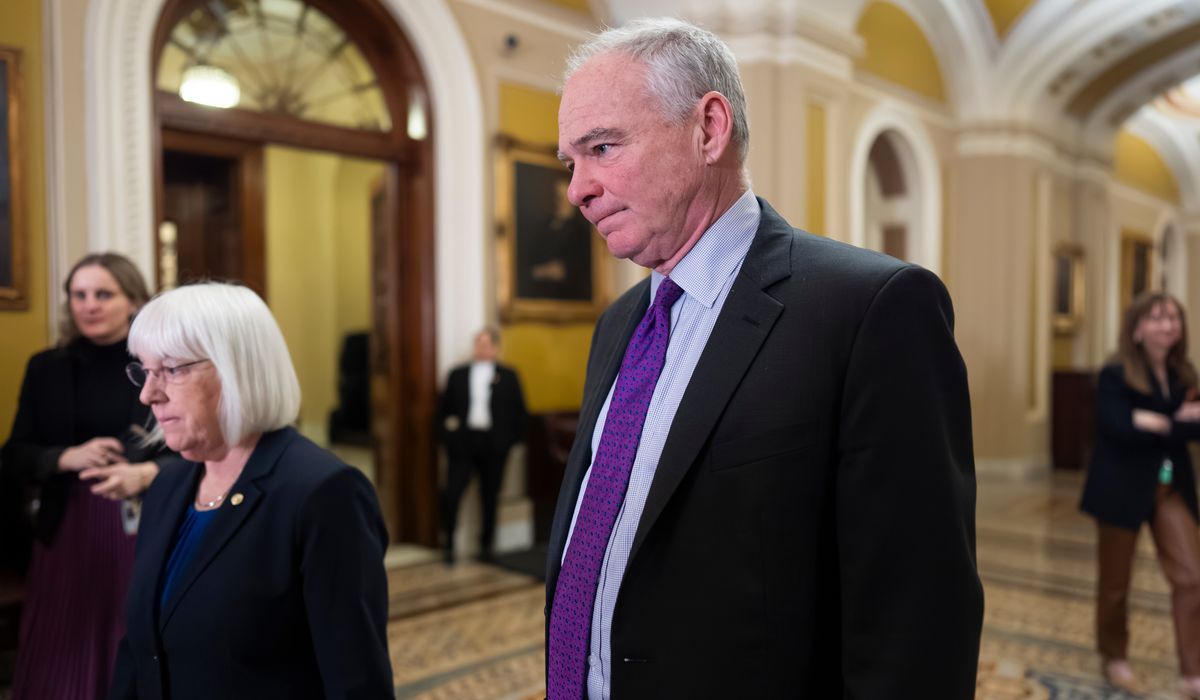
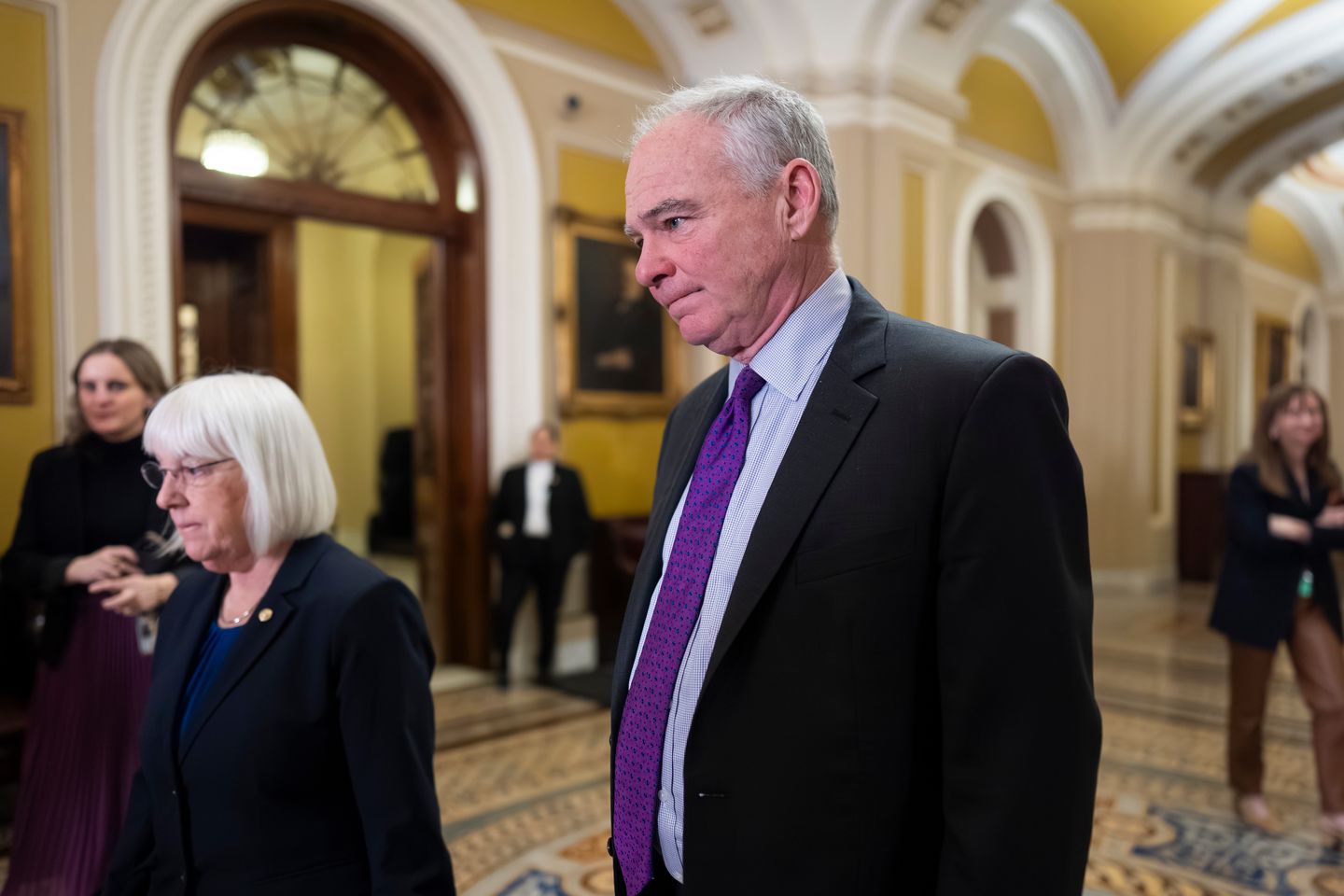
“They sent us a war powers notice yesterday, and they did not rely upon that as the legal justification. They relied on Article Two powers,” said Sen. Tim Kaine, Virginia Democrat. “They’ve never claimed that either the ‘01 or ‘02 AUMF was a legal justification for actions against Iran.”
House and Senate Democrats are currently demanding a war powers resolution to mandate President Trump get Congress’ approval before taking additional military action against Iran.
The White House, along with House and Senate Republicans, are pushing back on such a legislative requirement saying that the Iranian regime has killed and maimed thousands of Americans since 1979.
In that year, the U.S.-allied Shah of Iran was toppled and the Islamic Republic under Ayatollah Ruhollah Khomeini took the power he and his successors hold to this day.
In the nearly half-century since, the Iranian regime has targeted Americans by taking U.S. diplomats hostage; using their terrorist proxies to kidnap, torture and kill American hostages; aided in the murder of American military personnel in Lebanon, Iraq and Afghanistan; blown up airliners with Americans on board; and killed Americans in Israel.
Mr. Kaine, who wants a war powers resolution, told The Washington Times that the “U.S. and Iran have essentially been in a hostile position” for decades, and blamed the U.S. for a 1953 coup in which “we toppled their government.”
“We put in a dictator [whom] Iranians hated. Iranians overthrew the government, took over embassy, then we gave weapons to Iraq to bomb Iran. They bombed our embassy. We shot down an airliner. I mean, this has been going back [and forth],” he said.
“If more war was the answer, we would have found it after 70 years. The right answer is diplomacy. One other thing was working at the end of the 2010s, and Donald Trump tore up a deal, and now we’re at war instead of being in diplomatic relations.”
The White House on Tuesday said the Iranian regime was not negotiating in good faith when the administration decided to launch Operation Epic Fury in response to its nuclear ambitions.
A senior White House official said Iran proposed a “needs-based” agreement allowing enrichment at five times the 2015 Iran nuclear deal level. Although the U.S. offered free nuclear fuel, albeit at enrichment levels that could not be used for weapons, Iran rejected it.
The International Atomic Energy Agency confirmed Iran’s stockpiling and deceptive practices, underscoring the urgency of military action, the White House officials said.
Sen. Chris Murphy, Connecticut Democrat, told The Times that Iran never gave safe harbor to Al Qaeda, so the 2001 AUMF would never apply as an authorization for the president to continue take further action.
“We shouldn’t be proceeding to legislation providing votes to proceed to legislation until they put an authorization for military force on the floor of the United States Senate,” he said.