The last remaining nuclear arms control agreement between Washington and Moscow expires Thursday, ending measures that have provided transparency into both nations’ arsenals for more than a decade.
The sunset of New START, enacted in 2010, comes amid rising U.S.-Russia tensions and against the backdrop of a Chinese nuclear arsenal that is growing rapidly. It’s unclear whether the treaty’s death will help or hurt U.S. security, as some analysts say the expiration could offer overdue relief from outdated constraints.
Other scholars warn that an unchecked nuclear arms race could erupt without the pact’s guardrails, especially given recent rhetoric from top Russian officials about their willingness to use nuclear weapons if they deem it necessary.
The Trump administration is pushing for China to be involved in any discussions about future nuclear arms treaties. Secretary of State Marco Rubio said Wednesday that any talks to impose limits on nuclear weapons should include the communist power, noting China’s “vast and rapidly growing stockpile.”
A Pentagon report released in December said that China aims to have at least 1,000 nuclear warheads by 2030.
Advocates and diplomats who have worked on nuclear arms control for decades see China as an emerging nuclear player, but view New START in radically different ways. Some are prepared to discard it as a “mistake” that constrained the U.S. government, while others warn that losing the agreement could create a massive intelligence gap for Washington and limit the visibility into Russian and Chinese nuclear activities at a critical moment.
Mark Schneider, a senior analyst at the National Institute for Public Policy who has worked on nuclear arms control negotiations since 1979, called New START the “worst arms control treaty negotiated after Ronald Reagan.” The treaty placed an undue burden on the U.S. to maintain lower levels of nuclear weapons while allowing both Russia and China to go unchecked, he said.
Russian President Vladimir Putin suspended Russia’s participation in the treaty in 2023, saying that his country would need the U.S. to cut off support for Ukraine and bring France and the United Kingdom into arms control talks in order to resume the regime of nuclear checks and balances.
That move by Russia, Mr. Schneider said, essentially removed the teeth from New START.
“We don’t get notifications. We don’t get demonstrations. We don’t get on-site inspections,” Mr. Schneider said. “We just basically get nothing now.”
New START — which stands for “Strategic Arms Reduction Treaty” — came on the heels of START I and START II, signed in 1991 and 1993, respectively. Both deals cut U.S. and Russian nuclear inventories in the immediate post-Cold War period.
From 1987 to 2019, the two nations were also constrained by the Intermediate-range Nuclear Forces treaty. That agreement prohibited both nations from developing missiles with a range of between 310 and 3,400 miles — specific restrictions meant to reduce the chances of the two sides launching attacks from European bases during the Cold War.
The U.S. withdrew from the INF in 2019 after alleging that Russia had been cheating on the deal and developing weapons that violated it.
The end of New START also comes just a few months after President Trump said that the U.S. will resume nuclear-weapons testing, saying such tests are warranted because Russian and Chinese nuclear stockpiles are approaching U.S. levels and because other nations are already involved in some degree of testing.
Nuclear landscape
Public estimates put Russia’s non-strategic arsenal somewhere between 5,000 and 10,000 nuclear warheads, according to Russian sources. The available information from the U.S. government is scarce, with the intelligence community keeping a tight hold on their estimates.
Mr. Schneider isn’t convinced that those numbers are necessarily accurate.
“That can’t tell you how many warheads are on the nose of a missile unless you’re Superman, and we’re not,” he said.
He points to Russia’s exit in 2023 and their suspension of the New START verification regime in 2022 as reason enough to think the treaty was doomed to fail, and that Russia has drastically increased their stockpile.
The U.S. has more than 5,000 nuclear warheads, according to Arms Control Association data.
Former Secretary of State Mike Pompeo told The Washington Times that the strategic environment has fundamentally changed since former President Barack Obama signed New START in 2010.
“The New START Treaty was negotiated fifteen years ago amid a very different set of circumstances. Since then, Russia has firmly established itself as an American adversary and an all-around global menace,” Mr. Pompeo told The Times. “Putin has formally aligned Russia with China, another American adversary, while China has massively expanded its own nuclear capabilities. Given that context, renewing the treaty as it stands would be diplomatic malpractice of the highest order.”
Mr. Pompeo, who also served as the CIA director during Mr. Trump’s first term, said he sees the war in Ukraine as yet another pressure point on the treaty, saying that Mr. Putin started “the largest land war in Europe since World War II” and that Russia’s “covert warfare against NATO infrastructure” made renewing the current treaty a nonstarter.
He and Mr. Schneider agreed that any renegotiations of the treaty would have to include both Russia and China.
Modernizing nuclear forces
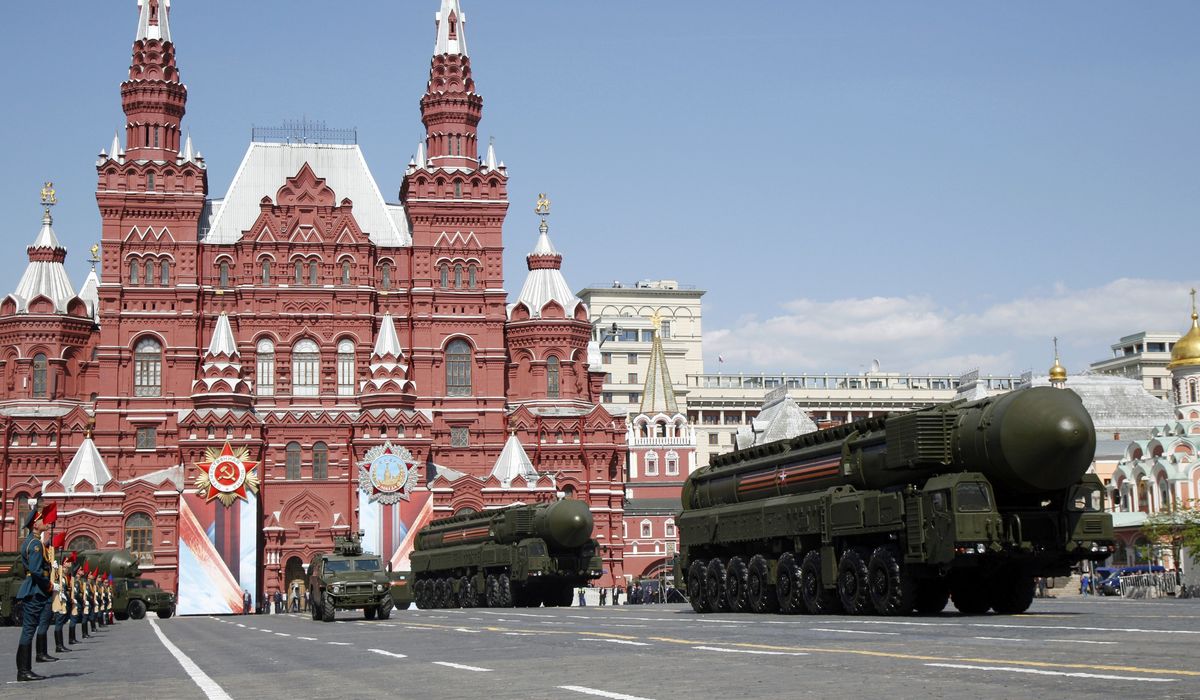
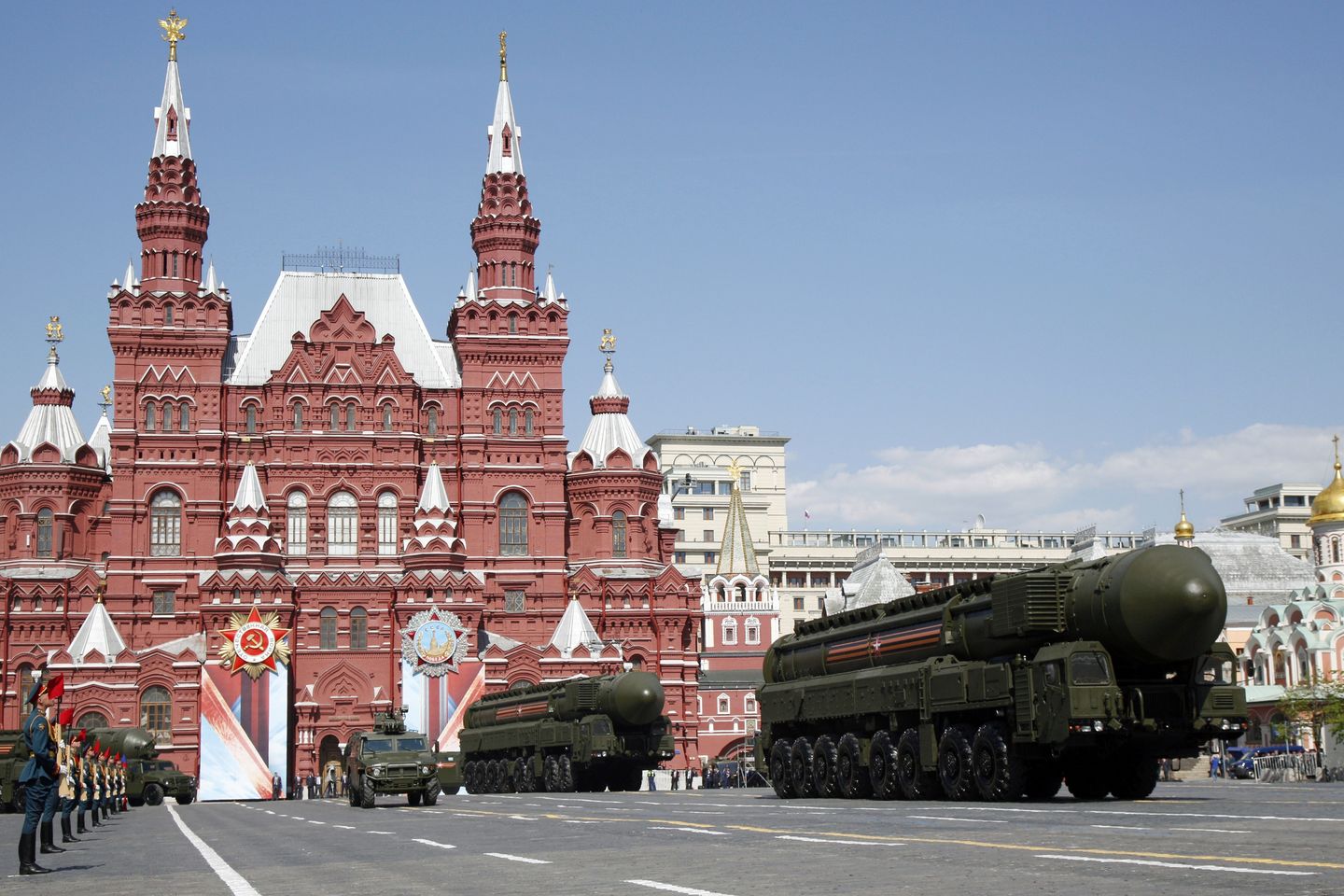
There is a race among the U.S., Russia and China to modernize what’s known as the nuclear triad, a combination of land-based and submarine-launched ballistic missiles as well as nuclear-capable strategic bombers.
Many U.S. programs aimed at modernizing the nuclear triad, such as the new nuclear-capable B-21 bomber, aren’t expected to be completed until after Mr. Trump leaves office. The U.S. also is building new Sentinel land-based intercontinental ballistic missiles, along with the new Columbia-class ballistic missile submarines.
Russia, meanwhile, says that more than 90% of its force has already shifted its strategic arsenal to more modern, post-Cold War systems.
Russian officials revealed last October that they had recently conducted tests of two different nuclear weapon delivery vehicles: the Burevestnik RS-SSC-X-09, a nuclear-powered and nuclear-capable intercontinental cruise missile known as Skyfall, as well as the Poseidon, a large nuclear-powered and nuclear-capable uncrewed underwater vehicle.
Furthermore, Russian President Vladimir Putin has suggested that some U.S. military initiatives — such as the proposed Golden Dome missile shield — negate the need for his country to restrict weapons development.
“Particular attention should be given to plans to increase the strategic components of the U.S. missile defense system, including preparations for placing interceptors in outer space,” Mr. Putin said last September, according to Russian media.
“We will be working on the assumption that putting such destabilizing actions into practice is able to reduce to nothing our side’s efforts to maintain the status quo in offensive strategic weapons. And we will react accordingly,” he said.
Specialists say the new reality leaves the U.S. with little choice but to bolster its own capabilities.
“The only thing we can do right now to, in any way, deal with this threat is increase the number of weapons deployed on our strategic missile forces,” Mr. Schneider said.
But other specialists fear that path will spark a new nuclear arms race.
Daryl Kimball, the executive director of the non-governmental Arms Control Association, warned that removing constraints without any replacement could “accelerate the pace” of nuclear buildup without any agreed-upon limits.
“We need to stay ahead of the combined forces of Russia and China. The problem with that is that the Russians are going to follow suit,” Mr. Kimball said. “They’re going to take corresponding measures.”
All analysts interviewed by The Washington Times agreed that China needs to be part of arms control negotiations in the future. Senior Chinese officials are willing to engage in a serious discussion with the U.S. for nuclear talks and possibly strike a deal with the U.S. in its own bilateral agreement, Mr. Kimball said.
“Nothing about New START has prevented us from engaging, or trying to engage, with China on nuclear-risk reduction and arms control,” he said. “The Chinese will look at the U.S. and Russia and see that these forces are increasing. That will only deepen their concern about a sufficient strategic retaliatory force to counter the U.S. in the case of a war.”
The dance of any of these bilateral negotiations is that it requires some form of give-and-take, and that as it stands, the U.S. would be expected to make the first move after the current treaty lapses.
“Adding more nuclear weapons is only going to add to the number of eventual nuclear weapons that our opponents are going to deploy,” Mr. Kimball said.