Congressional leaders and the White House are discussing a plan to avoid a second prolonged government shutdown by passing a short-term stopgap spending bill for the Department of Homeland Security.
Democrats have said they would not pass a full-year funding bill for DHS without guardrails to rein in ICE and other federal agents tasked with carrying out President Trump’s deportation agenda.
Republicans did not want to remove the DHS bill from a broader package of spending bills that also includes funding for the departments of Defense, Education, Health and Human Services, Labor, State, Transportation, Treasury and Housing and Urban Development.
Senate Majority Leader John Thune, South Dakota Republican, said he is “hopeful” that a compromise can be reached to pass the other five full-year spending bills and a stopgap for DHS.
The plan, which is not finalized, would not totally avert a partial government shutdown set to hit at midnight Friday because the House, which is on recess this week, would need to come back to Washington to pass the updated package.
But if the House can pass it this weekend or early next week, the impacts of a brief funding lapse would be minimal.
SEE ALSO: Schumer lays out Senate Democrats’ plan on reining in ICE through DHS funding bill
“There have been very constructive discussions and conversations,” Mr. Thune told reporters. “But I don’t want to get the cart before the horse.”
He said it is up to Senate Democratic leaders and the White House to figure out how long a short-term DHS stopgap would last and what the next step for negotiations on changes to ICE operations would be.
The latter would be key to avoiding a DHS shutdown whenever the stopgap ends.
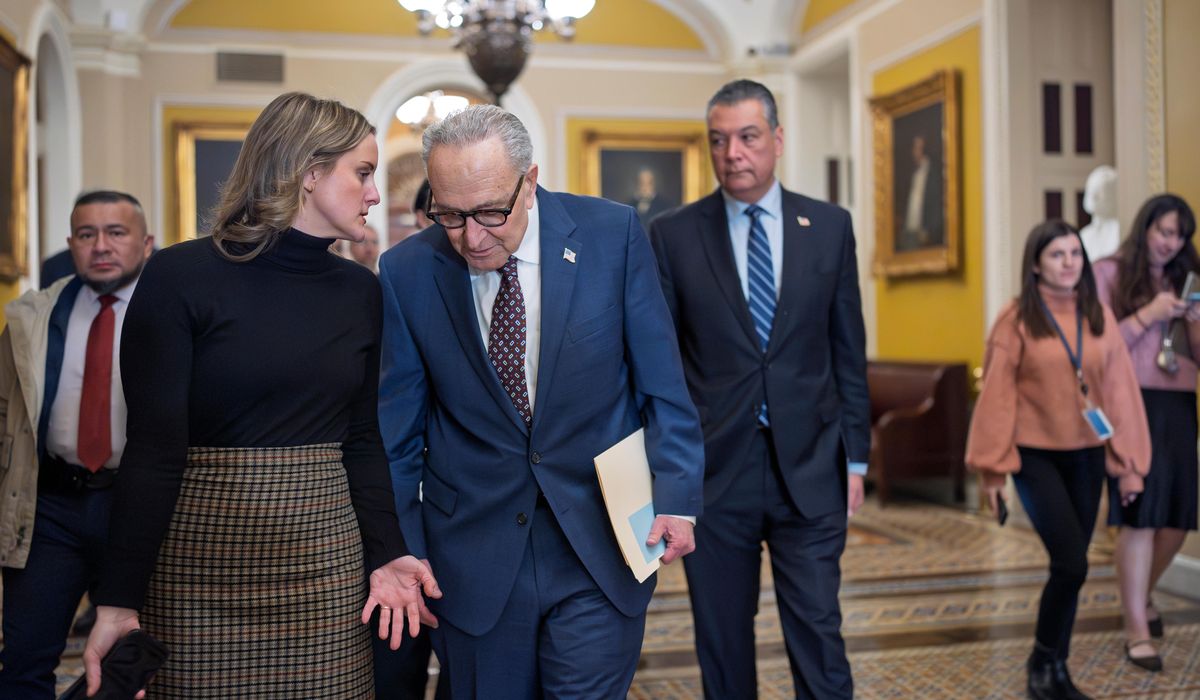
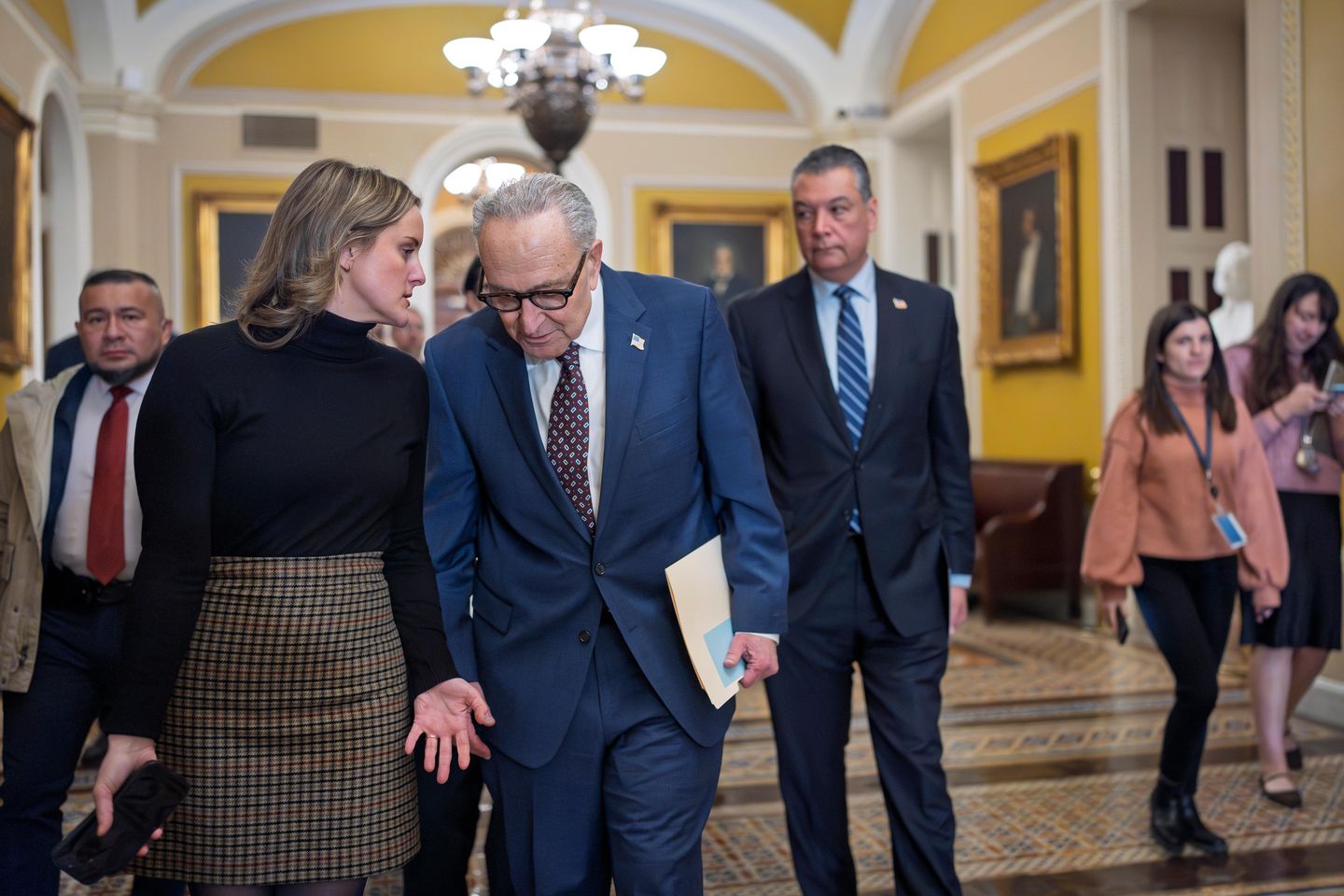
Senate Majority Leader Charles E. Schumer, New York Democrat, did not mention the potential DHS stopgap in his daily floor speech on Thursday but said Senate Democrats were prepared to pass the other five spending bills that day.
Mr. Schumer cited remarks from White House border czar Tom Homan on Thursday in which he said that people who do not like what ICE is doing would have to take up changes to the law with Congress.
“I don’t agree very much with Mr. Homan, and he’s certainly not my choice for someone to lower the temperature in Minneapolis, but he’s right saying the epicenter of change has to be Congress, not the executive branch,” Mr. Schumer said.