NEWS AND ANALYSIS:
High-profile failures of Chinese weapons and military equipment in Iran and elsewhere have resulted in the disappearance — and likely purge — of several key military developers.
Former State Department policymaker Miles Yu said Chinese military systems that were promoted as capable of detecting and deterring high-end threats, such as stealth aircraft, were ineffective against recent U.S. military operations.
“These failures did more than undermine specific platforms, as they exposed the gap between China’s claims and its actual capabilities,” said Mr. Yu, a Washington Times columnist.
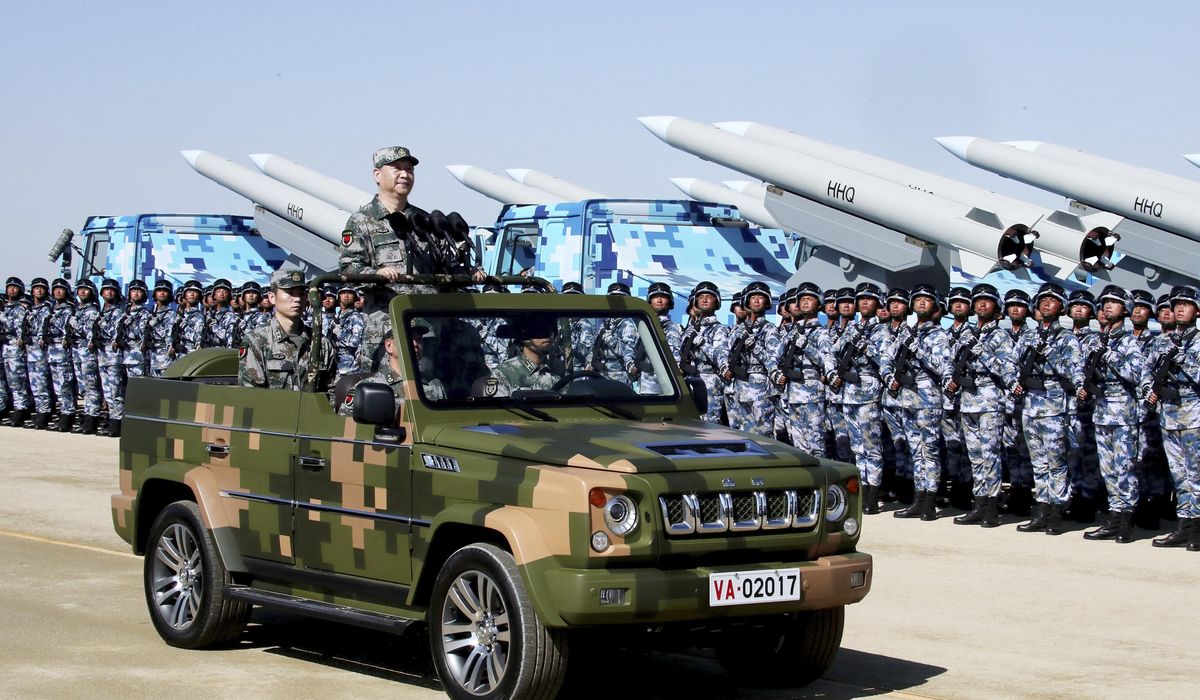
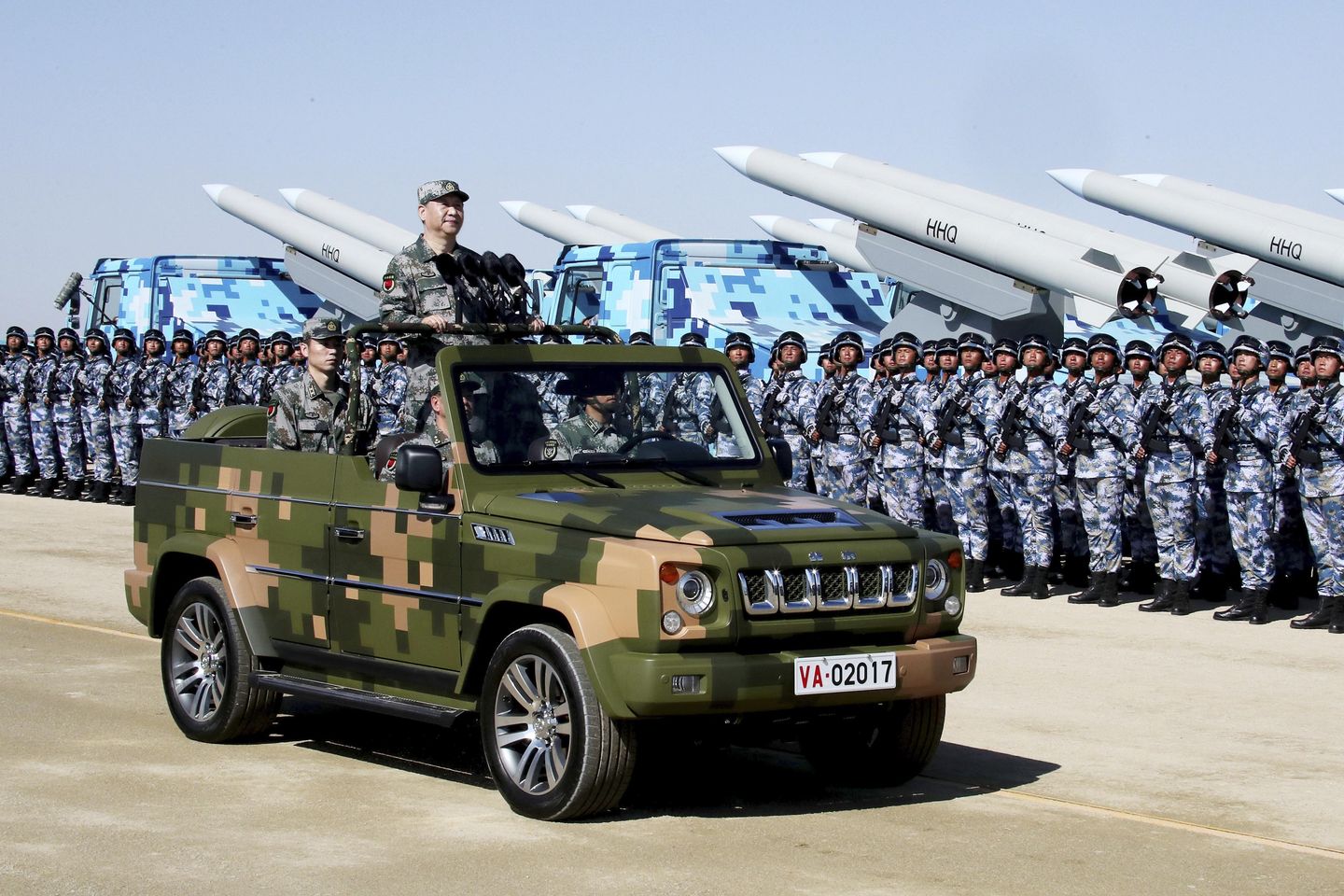
Perhaps the most glaring shortfall involved China’s highly touted HQ-9B long-range air defense system that Tehran purchased in mid-2025, reportedly as part of an oil-for-weapons deal.
The missiles and radar were deployed at key nuclear sites and other high-value military sites in Iran. They were part of a layered integrated air defense that included domestic defenses and the Russian Pansir-S1.
The HQ-9B was supposed to be able to knock out aircraft and missiles, but it proved unsuccessful when U.S. and Israeli airstrikes wiped them out before attacking other major targets.
The system’s JY-27A long-range, VHF-band 3D active phased array radar was built for early warning and purportedly capable of tracking stealth aircraft.
But when the first missiles and bombs were fired, the Chinese system proved ineffective. Its destruction was so successful that the U.S. military is now flying older B-52 bombers unthreatened in the Iranian skies despite those aircraft having a very large radar cross-section.
The Chinese Communist Party’s response to the weapons failures was not transparency but internal upheaval, with sweeping purges of military leaders and defense researchers.
The Iran war failures marked the second time China’s systems were found to be ineffective.
Earlier Chinese military equipment shortfalls in Venezuela during the U.S. raid to capture former President Nicolas Maduro led to large numbers of People’s Liberation Army commanders becoming “nonpersons” and disappearing from public view, including senior commanders, said Mr. Yu, director of the China Center at the Hudson Institute.
Full PLA generals appearing at major CCP meetings fell sharply, with six of 26 senior generals appearing at the major Party session held in early March, he noted.
Top military leaders in the Central Military Commission are also out with the purge of four of the six highest-ranking officers.
In the first four months of the year, political purges have quietly reached into the scientific and industrial sector of China’s weapons development programs.
Mr. Yu said that since January, key figures linked to major defense programs — aircraft carrier construction, advanced fighter design, radar systems, air defense missiles and strategic weapons — were removed from public life or stripped of their status.
Mr. Yu, a leading U.S. expert in mining Chinese language open-source intelligence, identified those purged as:
• Hu Yongming, the senior scientist for China’s naval aviation and carrier development.
• Yang Wei, the leading designer of advanced fighter aircraft, including J-10 and J-20.
• Wu Manqing, the PLA’s leading radar and counter-stealth specialist.
• Wei Yiyin, a senior figure in air defense missile research.
• Zhao Xiangeng, a key figure in advanced nuclear weapons design.
“All represent critical nodes in China’s defense innovation network,” Mr. Yu said. “There are scores of others.”
The sudden disappearances of the key weapons officials suggest that senior CCP leaders are engaged in a major dismantling of the technical leadership behind China’s large-scale military modernization.
In addition to the disappearances, several high-profile legal prosecutions are underway: Tan Ruisong, chairman of the massive state conglomerate Aviation Industry Corporation of China, the leading manufacturer of combat aircraft, was recently sentenced to death on corruption charges.
Several unexplained deaths of leading scientists involved in key research also highlight the CCP backlash.
Technical specialists linked to hypersonic weapons and advanced aerodynamics recently died while being active in key advanced weaponry work.
“Together, these developments point to a deeper systemic problem,” Mr. Yu said.
“The CCP’s model does not allow for open acknowledgment of failure,” he said. “Instead, when shortcomings are exposed — especially under the pressure of comparison with U.S. military performance — the response is to assign blame to individuals rather than address institutional flaws. This creates a cycle in which political purges replace technical reform.”
Bomber base on drone incursion
A recent swarm of drones that intruded on an Air Force nuclear bomber base in Louisiana remains under investigation, the Air Force Global Strike Command said.
On March 9, Barksdale Air Force Base, Louisiana, was put on temporary lockdown after “several unauthorized drone incursions that varied in duration and number of drones” disrupted operations, the command said Tuesday in a statement.
The action is believed to be criminal activity. But with the Iran conflict underway and threats of Tehran using low-cost Shahed strike drones, fears of an attack were heightened.
Barksdale is home to as many as 40 B-52s and also houses AGM-86B Air-Launched Cruise Missiles, armed with W80 nuclear warheads.
“Out of an abundance of caution in response to the initial event, Barksdale base leadership issued a Shelter in Place order for the morning of March 9 that was lifted that same morning,” the statement said, seeking to clarify what it said was unspecified misreporting. “Operations from Barksdale AFB continue unabated and the incident remains under an active federal investigation.”
The command said drone incursions are being countered as an “evolving threat,” with the Pentagon mobilizing a coordinated, multi-organization effort.
The strike command is playing a key role in a national effort to prevent drones from intruding over strategic facilities, including what the statement said are “small Unmanned Aircraft System threats to our ICBM fields, Weapons Storage Areas, Weapons Generation Facilities, and growing bomber mission.”
The command is also deploying additional counter-drone capabilities, with the details and locations remaining secret to protect operational security.
Retired Air Force Lt. Gen Dave Deptula said while there was no disruption at Barksdale due to the drone incursion, the activity is a security problem
“Unauthorized drone activity around sensitive military installations is still a serious security concern, for all the reasons one might imagine,” Gen. Deptula told NPR.
The drones may have been observing the base, and that could be turned into lethal attacks similar to the Ukrainian operation in launching strike drones from trucks inside Russia that destroyed several long-range bombers.
“So that, quite frankly, is the area of concern,” Gen. Deptula said.
Pentagon readying for cognitive war
The Pentagon’s Strategic Capabilities Office is launching an initiative to wage cognitive warfare — non-kinetic military operations short of major destructive conflict.
Sam Gray, chief technology officer in charge of autonomy and artificial intelligence at the office, said the goal is to “disrupt the cognition and the thinking ability of an adversary or person and influence” adversaries’ perceptions, senses and actions.
Mr. Gray discussed the activity at a recent conference hosted by the National Defense Industrial Association in Honolulu, which was first reported by National Defense Magazine.
The initiative will produce new cognitive warfare capabilities in three to five years in confronting high-priority challenges, he said.
In the past, influence operations were “physically observable,” such as the use of inflatable tanks to fool German military leaders in World War II.
Physically observable effects are less important today because advanced AI tools can produce similar digital impacts with greater reach.
Mr. Gray said adversaries such as China and Iran are using cognitive warfare to alter the thinking of entire populations and the U.S. needs to catch up “because we’re behind from the technology perspective.”
A new project for the program has been created called Basic Information Awareness Operations, which will leverage commercial technology for cognitive domain operations.
Its focus will be on systems that can detect and identify enemy materials, and produce actions in the information domain, including text, video and audio.
“I need the ability to deploy” those tools and “measure my effectiveness,” Mr. Gray said. “How good am I doing with this narrative? Did it resonate like we thought it was going to? And if it doesn’t, then you need to go back and retrain your models.”
China is engaged in a major cognitive warfare efforts known as the “three warfares” — public opinion warfare, psychological warfare and legal warfare, China expert Andrew B. Jensen said during a recent presentation on the subject.
Chinese military writings describe cognitive war operations as those that “directly target human will, beliefs, thoughts and psychology, aiming to alter an opponent’s cognition, thereby influencing his decisions and action.”
The new cognitive battlefield is becoming an arena for major power conflict and “a key factor for victory,” according to the official China Military Online outlet.
According to the Chinese Academy of Social Sciences: “Cognitive domain operations exert combined effects across the physical, informational, and cognitive dimensions, influencing will, thoughts, behavior, and emotions through the operation of the brain, thereby achieving the goal of ‘subduing the enemy without fighting.’”
The Chinese Communist Party uses cognitive warfare domestically to control the population and abroad to divide and demoralize its enemies and promote its communist system.
Mr. Jenson quoted China’s communist leader Mao Zedong on the subject as saying: “The Red Army fights not merely for the sake of fighting but in order to … establish revolutionary political power.”
Greater countermeasures are needed, including exposing CCP cognitive warfare lies and abuses, supporting credible Chinese voices of opposition, and highlighting the failure of China to follow its treaty obligations, Mr. Jenson said.
• Contact Bill Gertz on X @BillGertz.