Taiwan’s defense ministry reported a major surge of Chinese military aircraft operating near the island over the weekend. Radar operators tracked dozens of aircraft moving through the surrounding airspace in a pattern that drew immediate attention across the region. The activity marked one of the larger recent waves of Chinese air operations around Taiwan.
Taiwan didn’t report any Chinese military planes that went beyond the median line and entered the zone for a week from Feb. 27 to March 5. After two were detected on March 6, the next four days had none. Such flights resumed in small numbers between Wednesday and Friday.
The drop coincided with the annual meeting of China’s legislature. While such flights have fallen in the past during major events and public holidays, this year’s fall was more prominent than in the past.
Analysts said the meeting could not be the sole reason behind the recent drop. Another potential factor could be a desire to calm the waters with Washington weeks before a visit by U.S. President Donald Trump. The White House has said that Trump would travel to China from March 31 to April 2, though Beijing has not officially confirmed that.
Taiwan’s Ministry of National Defense released details showing fighters, surveillance aircraft, and support planes flying close to the island. The aircraft operated in areas near Taiwan’s air defense identification zone, which Taiwan closely monitors with radar and interceptor aircraft. Taiwan’s military scrambled its fighters and activated missile systems while tracking the formations and is treating the flights as another set of serious pressure points from Beijing.
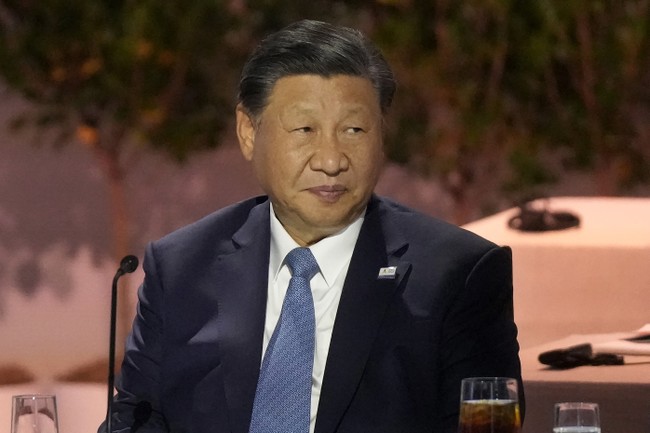
Chinese President Xi Jinping has increased military pressure on Taiwan during the past ten years, as highlighted by Chinese aircraft and naval vessels now appearing around the island far more frequently than they did ten years ago, a pattern that’s raised concerns across the Indo-Pacific region.
Several explanations could account for the latest surge of aircraft.
The first possibility involves routine military drills. The People’s Liberation Army regularly conducts exercises designed to test readiness and coordination among air units. Large formations help pilots practice joint operations and refine command procedures. Military planners often run those drills in areas close to Taiwan because the region sits near important strategic sea lanes and air corridors.
Psychological pressure may be behind a second possibility. China views Taiwan as part of its territory and has never ruled out using force to bring the island under Beijing’s control.
Large aircraft formations near Taiwan send a visible message to Taipei and to governments that support Taiwan’s security, reminding observers that China continues building military strength capable of operating around the island.
A third possibility involves distraction: governments sometimes stage military demonstrations to shift public attention away from domestic problems or to redirect international focus during sensitive political moments. China’s leadership faces economic pressure and diplomatic challenges in several areas. Military activity near Taiwan dominates headlines and draws attention away from those issues.
Another possibility centers on intelligence gathering. Modern aircraft carry advanced sensors that collect electronic signals and radar data. When Chinese aircraft operate near Taiwan’s defenses, they can observe how Taiwan responds. Pilots and mission commanders can study radar coverage, interceptor response time, frequency analysis, and communication patterns. That information helps analysts improve planning for future operations.
General Li Shangfu serves as China’s minister of national defense. His ministry oversees the People’s Liberation Army’s expanding training schedules and modernization efforts. Chinese military planners have heavily invested in aircraft, missiles, and naval power during recent years. Those investments allow larger and more complex air operations around Taiwan.
Taiwan’s leadership continues strengthening its defenses, working with partners across the Pacific while expanding its missile systems, air defense networks, and early warning technology designed to monitor Chinese movements.
Military flights around Taiwan often trigger debate about what they signal; sometimes they represent training, while other times they represent pressure or intelligence gathering. Each new wave forces analysts and defense officials to study the pattern and search for meaning behind the movements.
The surge of aircraft near Taiwan doesn’t guarantee immediate conflict. Large-scale military activity near a democratic island sitting just 90 miles from mainland China always carries consequences. Every radar track, intercepted transmission, and flight path adds another data point in a region already filled with tension.
If you value clear reporting that looks closely at global security developments, become a PJ Media VIP member and use promo code FIGHT to save 60% on your subscription and gain full access to exclusive commentary and analysis.