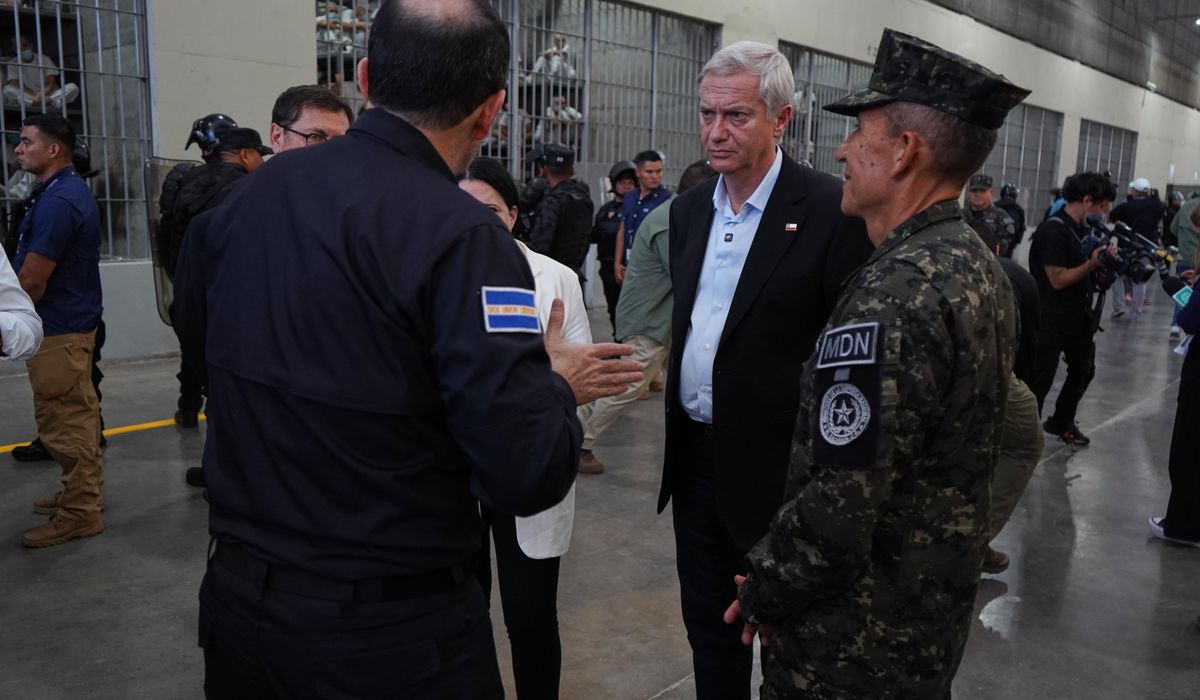
SAN SALVADOR — Chile’s far-right President-elect José Antonio Kast visited El Salvador’s mega-prison for accused gang members on Friday ahead of a meeting with President Nayib Bukele to discuss organized crime.
The Terrorism Confinement Center, or CECOT, has fueled a steady stream of accusations of human rights abuses, but has also become a symbol for many right-leaning politicians in Latin America as they seek to mirror Bukele’s rhetoric of a heavy-handed crackdown on criminal groups.
Kast, who promised to crack down on crime in the lead-up to Chile’s elections last year, posted a photo on social media platform X showing him aboard a helicopter en route to the prison, accompanied by his security minister.
He said Chile needs to “import good ideas and proposals” to combat organized crime, drug trafficking and terrorism.
El Salvador’s presidential office said Chile’s incoming government wants to learn firsthand about the country’s security model and assess how it could be adapted to Chile’s reality.
“We are ready to work hand-in-hand with our Chilean brothers,” the statement said.
The visit comes just weeks after Costa Rican President Rodrigo Chaves held a groundbreaking for a maximum security prison in his own country modeled off of CECOT to address a crime wave affecting the country. Honduras previously proposed building a prison for gangs on a remote island, and countries like Ecuador and, most recently, Guatemala have taken measures to fight gangs.
In brief remarks to the press as he entered the mega-prison, Kast said it was important for Chile to understand El Salvador’s prison system, which he described as part of a broader judicial and security framework. He said the system allows people involved in serious crimes – including gang members who have killed, tortured and terrorized families – to be held under total isolation.
Kast added that El Salvador’s prison system is different from Chile’s and said the visit was meant to study and understand it, “not necessarily to replicate it in the same way.”
The CECOT and Bukele’s war on the gangs have been heavily criticized because the government has waived some constitutional rights for years and locked up people accused of being affiliated with gangs with little evidence or access to due process. CECOT gained an international spotlight earlier this year when the Trump administration deported over 200 Venezuelans to El Salvador to be held in the prison.
The human rights organization Socorro Juridico reported this week that at least 480 people have died in detention since Bukele declared a state of emergency in early 2022. In CECOT, human rights groups have documented cases of torture and extremely harsh conditions.
It has capacity for up to 40,000 inmates and consists of eight large cellblocks. Each cell holds between 65 and 70 prisoners. Inmates do not receive visitors and are not allowed outside. There are no workshops, educational programs or initiatives to prepare prisoners for reintegration into society after completing their sentences.
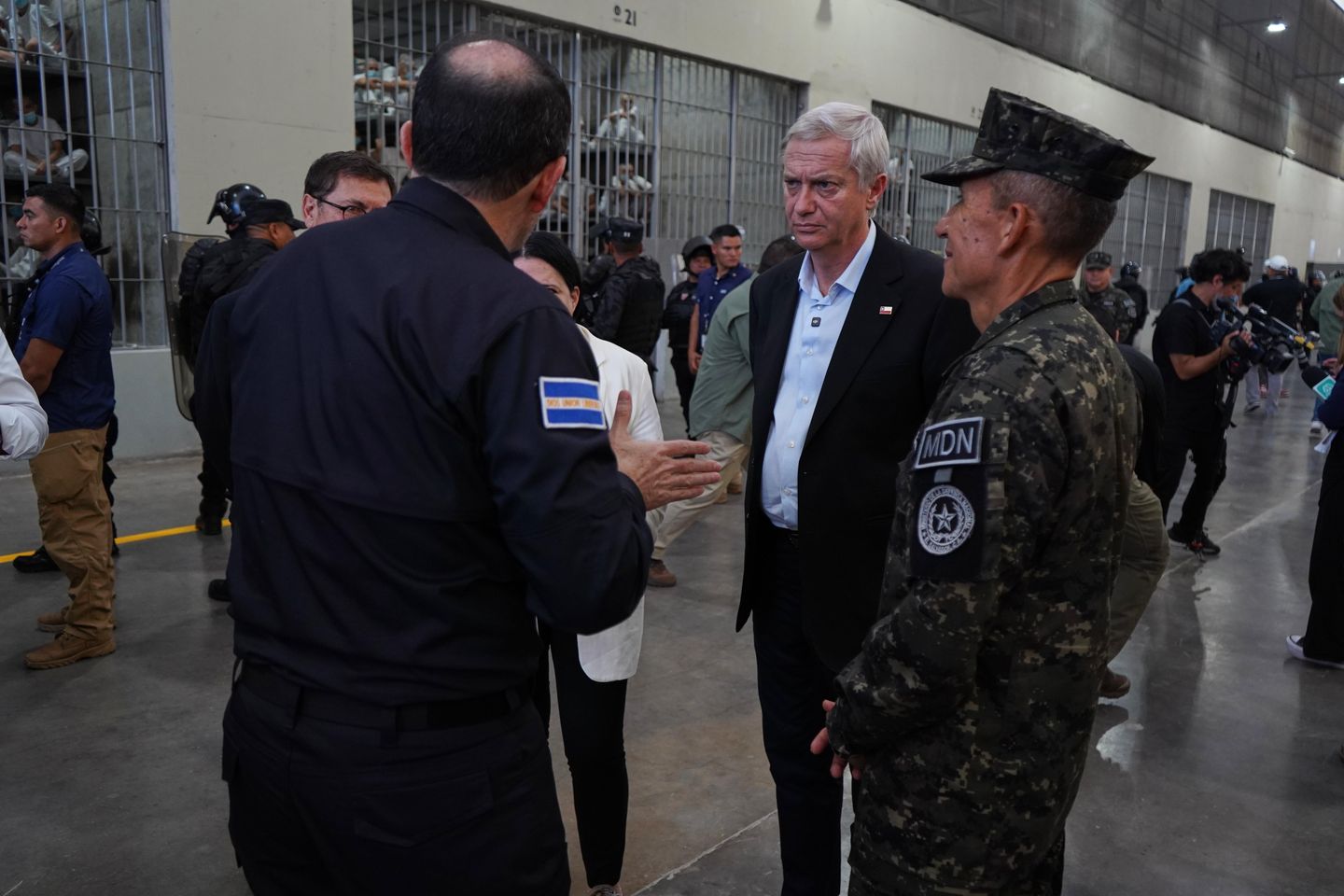
Kast and his delegation met with El Salvador’s security Cabinet before touring one of the prison’s cellblocks to observe the conditions under which the most dangerous alleged gang members are held. He was slated to hold a private meeting with Bukele at the presidential palace later in the day.