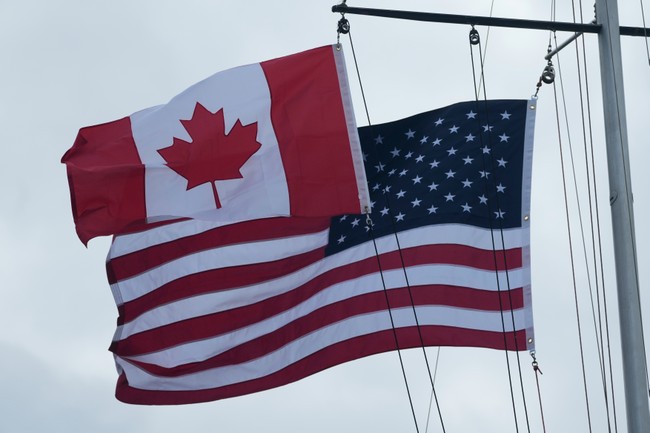
Canada’s recent decision to war-game a hypothetical U.S. invasion feels like a neighborhood watch of beer-league softball buddies holding emergency drills in case the guy who grills for everybody on the block suddenly lays claim to the cul-de-sac.
Looking serious, the guys break out clipboards and walkie-talkies. Yet everyone involved knows nothing will happen because the guys are bored, it’s winter, and there’s no beer league.
Living in the space between realism and anxiety lies military planning, which calms nerves. Acknowledging plans, however, muddies the water.
Why Canada Ran the Scenario
Defense planners described the exercise as routine contingency work. The Canadian armed forces, like those worldwide, plan for disasters, hostile acts, supply disruptions, and improbable chains of events where surprise costs lives.
On paper, testing defenses against a powerful neighbor fits that logic; no military can afford to let blind spots lead to lost territory, especially when that territory is vast, has long coastlines, and there is a northern frontier that has grown more active each year.
We’ve done similar planning for generations; American war games explore nearly every conceivable conflict, including scenarios involving our friends.
The difference between war games in Canada and the U.S. lies in discretion; U.S. planners treat those exercises like spare tires: necessary, unremarkable, and kept out of sight unless that road less traveled demands them.
Canada, however, opted for a different approach: visibility.
The Carney Factor
Canadian Prime Minister Mark Carney’s résumé shows more in global finance than in hard power; his background at the Bank of Canada and the Bank of England shaped a worldview centered on markets, stability, and institutional credibility, with defense policy seldom discussed.
Carney longer faces a geopolitical climate that isn’t so tidy.
Canada’s military is facing challenging times: struggles with recruitment shortfalls, aging aircraft, delayed naval procurement, and persistent readiness gaps. NATO has pressed Ottawa to meet spending commitments that lag behind the promises.
While Russian and Chinese activity inches closer to Canadian waters, Arctic sovereignty concerns grow louder. It’s in that environment where their war game involving the U.S. functions as the harshest possible audit; no hypothetical adversary exposes weakness faster.
How long do you think Canada will last if America invades?
Canadian military chiefs have wargamed a U.S. invasion and concluded that they would be overpowered in only two days.
Canada’s resistance would rely upon insurgency tactics similar to those deployed by the Mujahideen in Afghanistan in the fight against the Soviet Union, according to reports.
Under the plans, which officials stressed were precautionary and hypothetical, forces would use asymmetric tactics whereby a weaker army attempts to counter a dominant force. Canada would rely on drone warfare and would also request assistance from European allies, namely the former imperial powers Britain and France.
Leadership involves judgment about what stays internal and what doesn’t; allowing public discussion of such a scenario signals unease rather than resolution. Carney inherited problems with the country’s defense, but public acknowledgment of such an extreme hypothetical doesn’t project discipline; it projects drift.
Optics Matter, Even Among Allies
Once any scenario leaves a briefing room, intent matters less than perception; silently running a tabletop exercise keeps alliances steady. Openly talking about a hypothetical invasion by a close ally invites questions that planning alone never raises; allies rarely imagine one another crossing borders unless confidence fades.
From Washington’s vantage point, those optics are, at best, awkward. President Donald Trump emphasises border control, trade leverage, and hemispheric stability using the Monroe Doctrine. Continental disruption has no upside; the longest peaceful border in the world remains peaceful because economics, geography, and mutual interest reinforce one another every day.
War games ignore likelihoods, but public narratives never do.
Allies Still Mean Allies
The relationship with Canada has been highlighted by cooperation with NORAD, intelligence sharing, and joint exercises across air, land, and sea, which continue without interruption. This hypothetical scenario changes nothing; trust and coordination haven’t collapsed.
Once a lock goes on a door, even symbolically, everybody sees it; it’s an act that changes tone, not intent. Canada’s choice to make worst-case scenario planning visible generated conversation where silence would’ve preserved normalcy.
Final Thoughts
In the end, it looks like a government managing nerves rather than preparing for war; like an effort to stop us Yankees from annexing the local Little League field, the drill soothes anxiety without altering reality.
Canada and the United States are each other’s closest allies, and Canada remains deeply reliant on American power, markets, and deterrence.
Every country plays theoretical war games; imagination wanders, but the door stays locked, primarily to reassure those living inside.
Independent analysis survives because readers decide it should. PJ Media VIP supports writing that calls moments like these what they are without pretending every headline signals catastrophe. Join today and help keep commentary grounded, sharp, and honest.