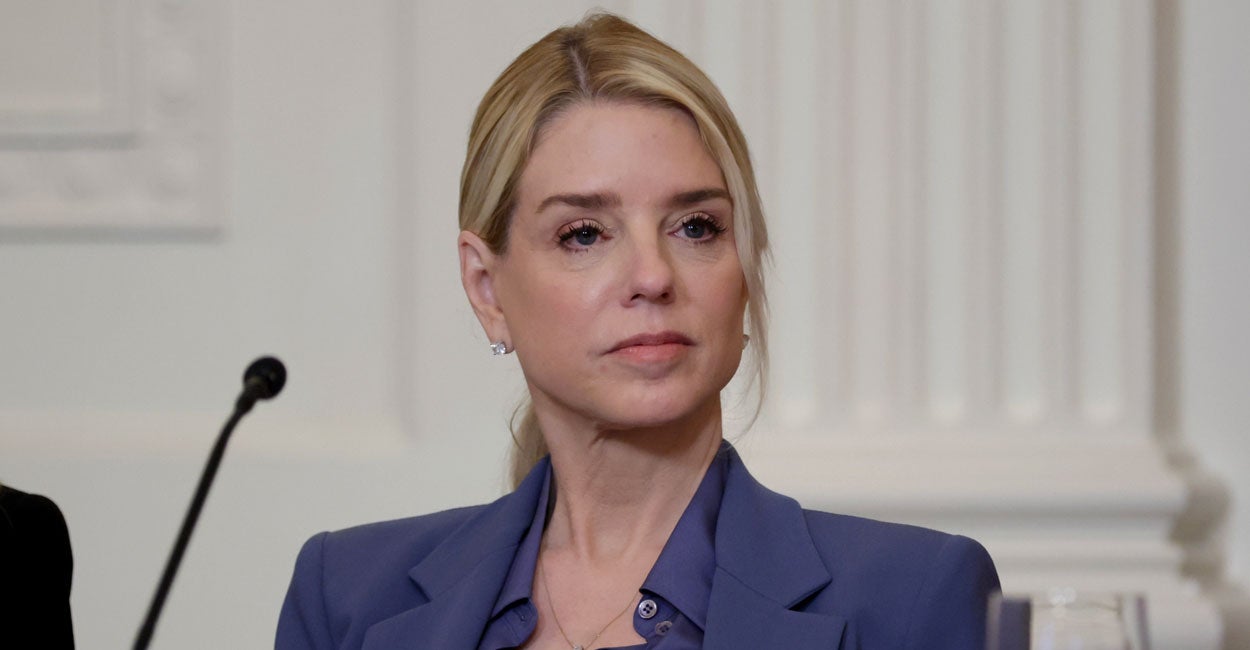
The Department of Justice is arguing that former Attorney General Pam Bondi no longer needs to testify before Congress in compliance with a March subpoena, since she is no longer top cop.
The move has drawn the ire of Democrats on the House oversight committee, who are now threatening legal consequences for Bondi if she does not appear.
“The Department of Justice has stated Pam Bondi will not appear on April 14 for a deposition since she is no longer Attorney General and was subpoenaed in her capacity as Attorney General,” a House oversight committee spokesperson told The Daily Signal in a statement.
“The Committee will contact Pam Bondi’s personal counsel to discuss next steps regarding scheduling her deposition,” the spokesperson added.
In March, five Republicans joined all Democrats on the committee March in voting to subpoena Bondi to appear at a deposition before the committee to discuss her handling of the release of documents related to the now-deceased sex offender Jeffrey Epstein.
But President Donald Trump announced last Thursday that Bondi would be leaving the administration, with deputy attorney general Todd Blanche being elevated to serve as her temporary replacement.
As the administration sees it, Bondi was subpoenaed in her capacity as attorney general, not as a private citizen.
Patrick Davis, assistant attorney general for the Office of Legislative Affairs, penned a letter to oversight committee chairman James Comer, R-Ky., asking that he confirm the withdrawal of the subpoena “because Ms. Bondi no longer can testify in her official capacity as Attorney General,” per MS NOW.
“The Department of Justice remains committed to working cooperatively with the Committee, but its subpoena to former AG Bondi was in her official capacity as Attorney General. Because of the leadership transition at the Department, the subpoena no longer applies,” a DOJ spokesperson said in a statement.
Rep. Robert Garcia, D-Calif., the committee’s top Democrat, has reacted with rancor, threatening to move to hold Bondi in contempt of Congress if she does not appear.
“Our bipartisan subpoena is to Pam Bondi, whether she is the Attorney General or not. She must come in to testify immediately, and if she defies the subpoena, we will begin contempt charges in the Congress,” wrote Garcia in a Wednesday statement.
If the committee were to vote to recommend holding Bondi in contempt, the resolution would need a simple majority on the House floor to pass.
The Speaker of the House would then have to certify to a United States attorney Bondi’s alleged noncompliance with the congressional subpoena.
In January, the oversight committee voted on a bipartisan basis to recommend holding former President Bill Clinton and his wife Hillary Clinton in contempt due to their failure to appear before the committee to discuss Epstein.
The Clintons ultimately complied with the committee’s deposition requests.
During President Joe Biden’s administration, multiple former Trump officials suffered legal consequences for defying subpoenas.
In 2022, former White House adviser Steve Bannon was sentenced by a federal jury to four months in prison and a $6,500 fine after not appearing before the House Select Committee to Investigate the January 6th Attack on the United States Capitol.
Peter Navarro, who has served as a White House trade adviser in both Trump terms, also refused to appear before the Jan. 6 committee, and served four months in prison in 2024 with an order to pay a $9,500 fine.
On Tuesday, oversight Reps. Ro Khanna, D-Calif., and Nancy Mace, R-S.C., penned a letter to chairman Comer asking him to “publicly reaffirm” that the subpoena is still in effect.
The duo argued that Bondi’s departure “makes her sworn testimony even more important, especially with respect to actions she took as Attorney General, matters already under investigation, and decisions made under leadership.”
They added, “As you know, Congress’ oversight authority does not end when an official leaves office.”
The DOJ did not immediately respond to a request for comment.