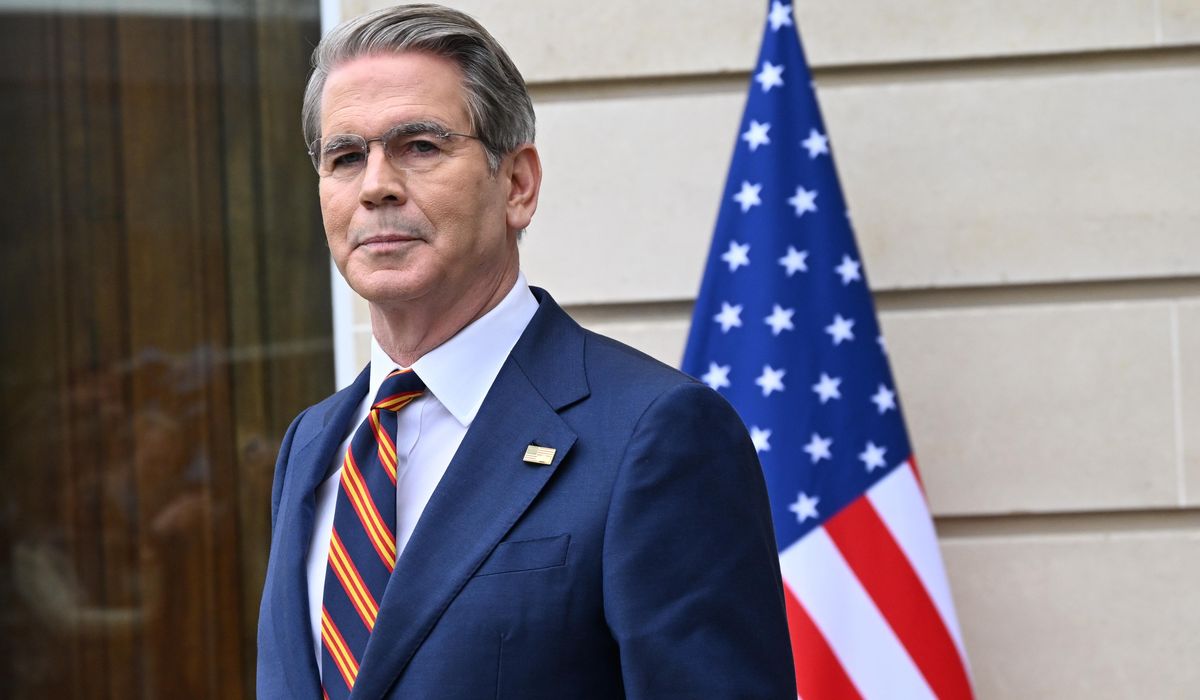
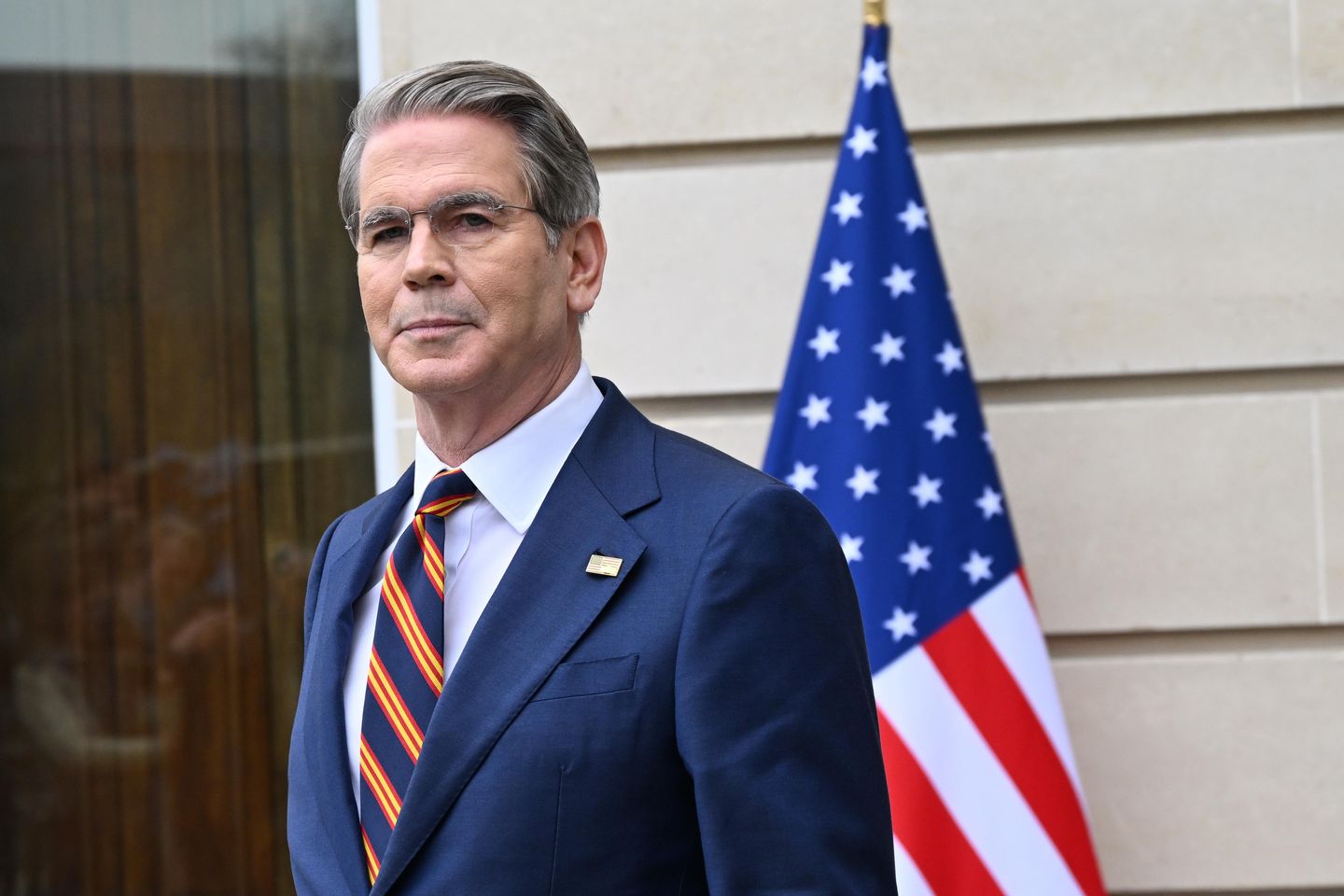
Treasury Secretary Scott Bessent said Monday that the U.S. will ultimately retake control of the Strait of Hormuz bordering Iran and restore freedom of navigation, even as ship traffic through the critical waterway slowly rebuilds.
“Over time, the U.S. is going to retake control of the straits,” Mr. Bessent said on Fox News’ “Fox & Friends.” “There will be freedom of navigation — whether it is through U.S. escorts or a multinational escort.”
Mr. Bessent’s comments came as President Trump said his administration has had “good negotiations” with Iran, with 10 vessels passing through the Strait on Sunday and 20 more making the transit Monday, through a waterway that remains a critical chokepoint for global energy supply.
“We are doing extremely well in the negotiation,” Mr. Trump told reporters Sunday night on Air Force One. “I do see a deal — it could be soon.”
Hours later, he issued a stark warning.
“Great progress has been made but, if for any reason a deal is not shortly reached, which it probably will be, and if the Hormuz Strait is not immediately ’Open for Business,’ we will conclude our lovely ’stay’ in Iran by blowing up and completely obliterating all of their Electric Generating Plants, Oil Wells and Kharg Island (and possibly all desalinization plants!), which we have purposefully not yet ’touched,’” Mr. Trump said Monday morning on Truth Social.
Secretary of State Marco Rubio, speaking Monday on ABC’s “Good Morning America,” said the Pentagon is preparing options for Mr. Trump to keep the Strait open.
“The Iranians are threatening that they are going to set up some permanent system in the Straits of Hormuz where they get to decide who goes through international waterways. That will never be allowed to happen,” Mr. Rubio said. “The president has a number of options available to him, if he so chooses, to prevent that from happening.”
Mr. Bessent said the global oil market is running a deficit of roughly 10 to 12 million barrels per day, but said the administration has taken aggressive steps to fill the gap. He pointed to what he called the largest Strategic Petroleum Reserve release in history — a coordinated International Energy Agency effort to push 400 million barrels into the market, amounting to about 4 million barrels per day.
He also said the U.S. has moved to lift sanctions on Russian and Iranian crude already on ships, though he was careful to draw a distinction.
“No extra money for either one of those regimes,” he said.
Mr. Bessent attributed much of the uptick in ship traffic to independent nations cutting their own deals with the Iranian government — a temporary workaround, he suggested, until the U.S. secures a more durable solution. The strait, for now, remains only partially open to commerce.
“So the market is well supplied,” he said.