Barbara Ehardt will be watching on Tuesday when the Supreme Court hears oral arguments on state laws that bar transgender athletes from competing in female sports.
The Idaho state legislator and former college basketball player sponsored the nation’s first Fairness in Women’s Sports Act, taking on a then-obscure issue with a bill that was signed into law in March 2020 — and promptly blocked by a federal judge.
Now the high court will hear challenges to transgender sports laws in Idaho and West Virginia that raise one of the biggest legal questions of the year: Whether Title IX and the Fourteenth Amendment’s Equal Protection Clause allow states to ban female-identifying males from girls’ and women’s scholastic athletics.
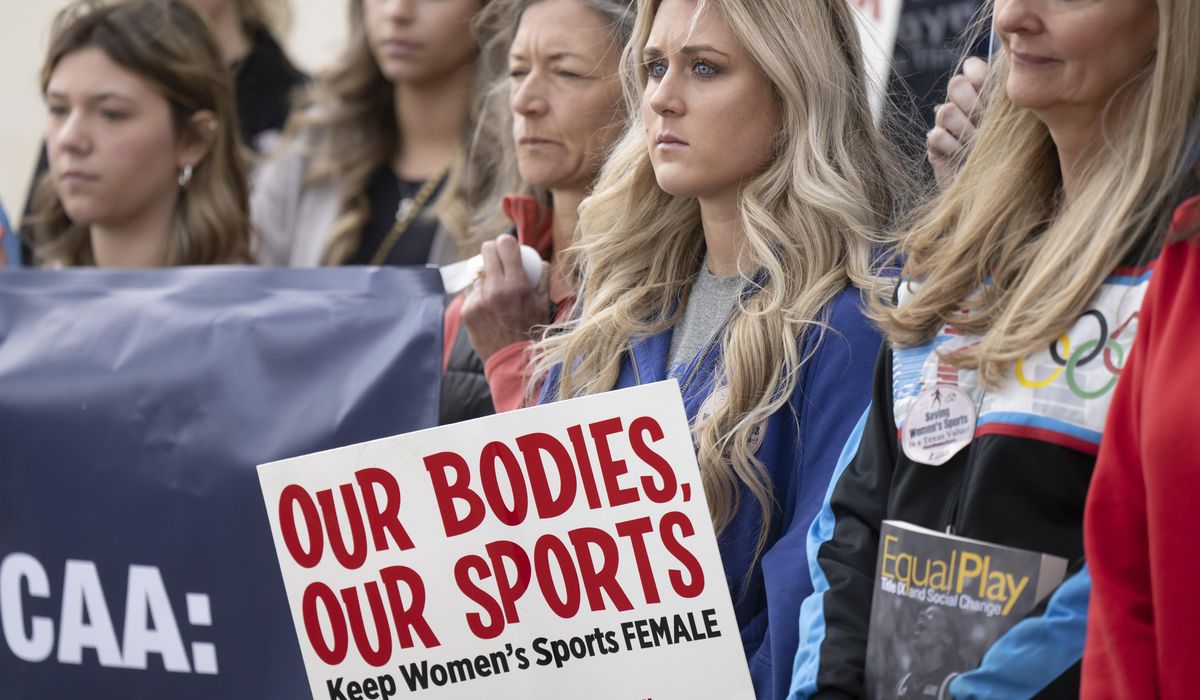
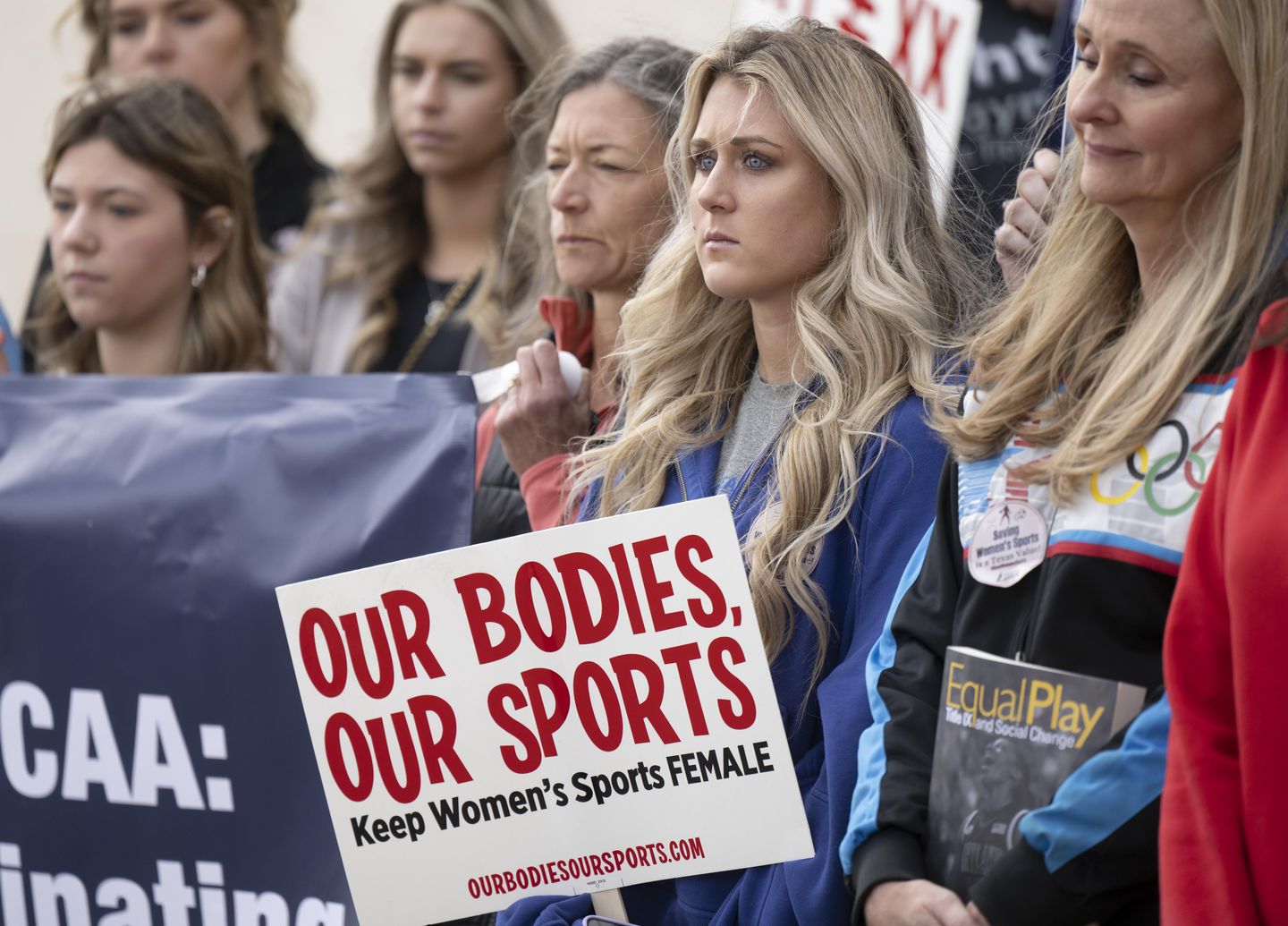
Ms. Ehardt, who plans to attend the “Our Sports, Our Spaces” rally Tuesday outside the hearing, said she’s grateful and excited that her law is finally having its day in court — but not surprised.
“I said from the beginning that it was headed to the Supreme Court,” Ms. Ehardt, a Republican, told The Washington Times.
It would be difficult to find a Republican today who doesn’t support her law, but six years ago, there were plenty of doubts about whether biological males were even participating in women’s sports, much less posing a threat to the fairness of female competition.
No state legislator was better prepared to make the case on behalf of female athletes than Ms. Ehardt.
Not only was she a conservative lawmaker trusted by her fellow Republicans, but she brought credibility and experience to the debate from her years as a player at Idaho State University, followed by her 15-year coaching career in Division I women’s basketball.
“When I first brought this legislation, opponents consistently said it wasn’t needed because it wasn’t happening,” she said. “But I understood what they wouldn’t say out loud — boys and men were about to descend on female sports and dominate us. They would steal our opportunities and claim it was their right. Except it is not.”
It turns out there was at least one transgender athlete in Idaho.
Challenging the law was Lindsay Hecox, a transgender student at Boise State University who sought to compete on the women’s track team. Now 24, Ms. Hecox is no longer participating in track and filed to moot the case, but was denied by the district court.
The Idaho law has never been enforced. Even so, it touched off a legislative wave in red states, including West Virginia, which approved its own law requiring scholastic athletes to compete based on sex at birth in 2021.
Fighting back was Becky Pepper-Jackson, known in court documents as B.P.J., a teen track athlete who has been permitted to compete on the girls’ high school team under a 2024 ruling by a federal appeals court pending the outcome of the lawsuit.
Both cases raise the legal question of whether the law discriminates based on gender identity in violation of the Equal Protection Clause. The West Virginia case also asks whether transgender athletes are covered by Title IX, the federal law banning sex discrimination in education.
As far as West Virginia Attorney General J.B. McCuskey is concerned, the primary issue is whether states may approve and enforce such laws.
“In the West Virginia case, we have both Equal Protection and Title IX questions, but the real crux of this argument is: Are states allowed to act to do this?” he said on a press call last week held by the Alliance Defending Freedom.
“Is it permissible for states to draw lines based on immutable physical-characteristic differences between biological males and biological females as they relate to the athletic playing fields?” he asked. “And the answer to that in our argument is decidedly yes.”
On the other side are Democrats, LGBTQ advocates and transgender athletes hosting a Tuesday rally outside the Supreme Court called “Together We Won: Fight for the ‘T’ in Team,” featuring speakers and a performance by an “all-queer cheerleading team.”
The American Civil Liberties Union, which represents B.P.J., said that the cases before the Supreme Court have implications for transgender individuals that extend beyond girls’ sports.
“The court is likely to rule on whether the state bans targeting transgender students violate either Title IX or the Equal Protection Clause,” said the ACLU in a statement. “What we don’t know — and won’t know until that ruling is handed down — is whether that ruling will be narrowly tailored to the context of athletics or implicate a broad range of rights for transgender people.”
A group of 130 House and Senate Democrats filed an amicus brief in November against the state laws, calling them “categorical bans” that serve no important government interest.
“This Court should not permit states to legalize sex discrimination against children who merely want to play sports with their friends on teams matching their gender identity,” said the Democrats in their brief.
The justices’ decision will determine the fate of laws and regulations passed in 29 states that ban biological males from competing in female sports. The ruling could come in June or July.
There are two sexes. Men and women are different. And women and girls deserve their own sports.
This is what’s at stake in the upcoming Supreme Court cases starting January 13.
Join @xx_xyathletics for the rally on the steps of the Supreme Court on Jan 13. pic.twitter.com/oml27BfQwN
— Jennifer Sey (@JenniferSey) January 4, 2026
Those planning to rally Tuesday with Ms. Ehardt on the Supreme Court steps include 12-time All-American swimmer Riley Gaines, who tied with transgender athlete Lia Thomas for fifth place in the 200-yard freestyle at the 2022 NCAA Division I women’s swimming championships.
Ms. Gaines may be the world’s most visible advocate for women’s sports: Last week, she relaunched her “Gaines on Girls” podcast as “The Riley Gaines Show” as part of a partnership between OutKick and Fox News Media.
Like others championing female athletes, Ms. Gaines said she’s optimistic about the chances of a favorable ruling from the court’s 6-3 conservative majority.
“It’s a long time coming. It feels long overdue,” Ms. Gaines told The Washington Times. “We’ve seen lots of wins over the last four years, and we’re anticipating hopefully a good and favorable ruling in June. Just very, very excited.”
• Alex Swoyer contributed to this report.